




- Northern Lights trips in Tromsø, Lofoten, Alta, and Svalbard
- Dog sledding, snowshoeing, and reindeer experiences
- Snowy landscapes and winter photography
- Cozy cabins, saunas, and slow travel
- Arctic adventures away from peak summer crowds
Spring and Autumn in Norway: May, September, and October
Spring and autumn are excellent times to visit Norway if you want fewer tourists, lower prices, and softer landscapes. These shoulder months are especially good for travelers who prefer a quieter trip and do not mind changing weather.
In spring, waterfalls are powerful, valleys turn green, and Hardangerfjord becomes especially beautiful when fruit trees bloom around May. In autumn, forests shift into red and gold tones, the air feels crisp, and reflections on lakes and fjords can be stunning.
Shoulder season is best for:
– Fewer crowds in popular fjord regions
– Better hotel availability compared with peak summer
– Spring waterfalls and blossom season
– Autumn colors and quieter road trips
– A more relaxed pace in cities like Bergen, Oslo, and Trondheim
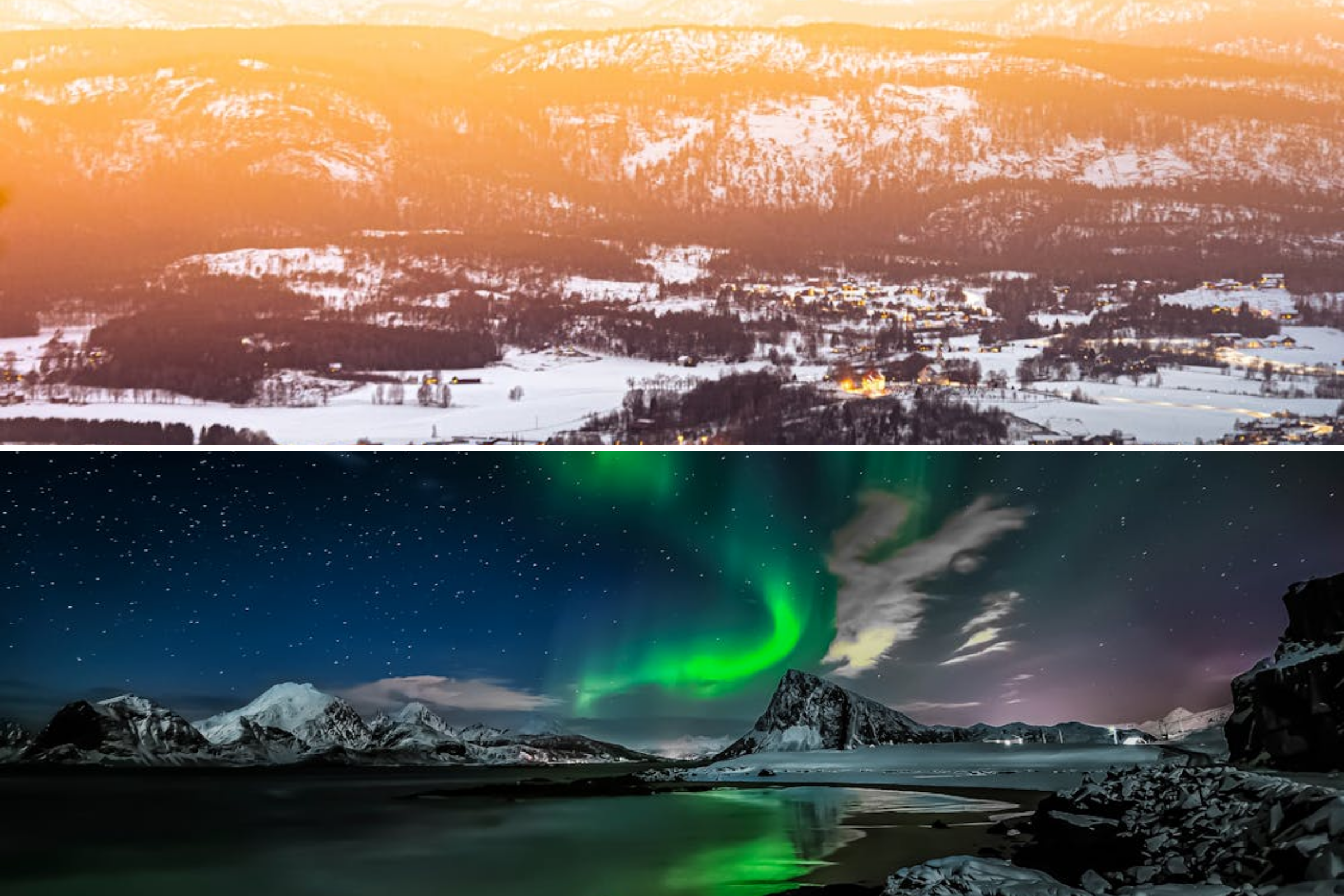
Image: Norway’s stunning seasonal landscapes with Midnight Sun in summer and Northern Lights in winter
Chasing the aurora? Here’s how to spot the Northern Lights in Iceland too — the ultimate winter twin destination for Norway travelers.
Best Fjords to Visit in Norway
No Norway itinerary feels complete without time in the fjords. These deep, glacial valleys are some of the country’s most iconic landscapes, with steep cliffs, blue-green water, waterfalls, mountain farms, and small villages tucked along the shore.
For first-time visitors, the best fjords to visit in Norway are Geirangerfjord, Sognefjord, and Hardangerfjord. Each offers a different experience: Geirangerfjord is dramatic and compact, Sognefjord is vast and majestic, while Hardangerfjord is softer, quieter, and especially beautiful during blossom season.
Geirangerfjord – A Real-Life Fairytale
Geirangerfjord is one of Norway’s most famous fjords and a UNESCO-listed landscape known for its steep cliffs, deep blue water, and powerful waterfalls. If you only have time for one classic fjord experience, this is one of the strongest choices.
The fjord is compact enough to explore by boat, but dramatic enough to feel unforgettable. Scenic cruises give you close views of waterfalls and abandoned mountain farms, while the roads above the fjord reveal some of the most photographed viewpoints in Norway.
Highlights in Geirangerfjord include:
- Seven Sisters Waterfall: One of the fjord’s most famous waterfalls, best seen from the water.
- Skageflå Farm: A historic cliffside farm that can be reached by hike, often combined with a fjord cruise.
- Eagle Road Viewpoint: A panoramic viewpoint with sweeping views over Geirangerfjord and the surrounding mountains.
Geirangerfjord is best visited from late spring to early autumn, when boat tours, viewpoints, and mountain roads are easier to access
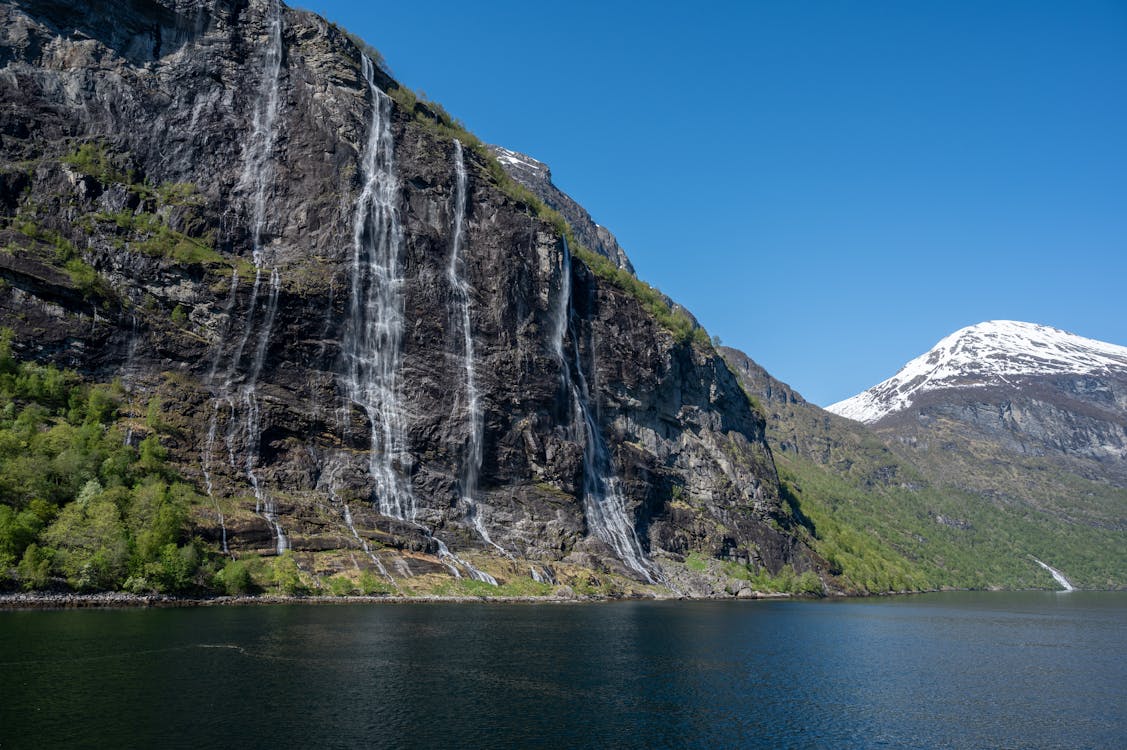
Image: Seven Sisters waterfall
Sognefjord: The Majestic King of Fjords
Sognefjord is Norway’s longest and deepest fjord, often called the “King of the Fjords.” Stretching more than 200 kilometers inland from the coast, it offers a grander and more expansive fjord experience than Geirangerfjord.
This is one of the best places to visit in Norway if you want scenic boat trips, quiet villages, mountain views, and easy access to some of the country’s most beautiful fjord branches. The region also works well for travelers who want to combine fjord cruises with train journeys, especially around Flåm.
Highlights around Sognefjord include:
- Flåm: A small fjord village known for the scenic Flåm Railway and easy access to fjord cruises.
- Nærøyfjord: A narrow UNESCO-listed fjord branch with steep cliffs and dramatic scenery.
- Aurlandsfjord: A peaceful fjord branch known for calm water, mountain views, and postcard-like villages.
- Stegastein Viewpoint: One of the best viewpoints over Aurlandsfjord.
Sognefjord is ideal for travelers who want a slower fjord experience with plenty of options for cruises, kayaking, viewpoints, and scenic train travel.

Image: Sognefjord’s dramatic cliffs and crystal-clear waters surrounded by mountains
Hardangerfjord: Norway’s Orchard Paradise
Hardangerfjord is one of the best places to visit in Norway if you want a quieter and more poetic fjord experience. While Geirangerfjord and Sognefjord often get more attention, Hardangerfjord offers a softer side of Norway, with fruit orchards, small villages, waterfalls, and mountain scenery.
The region is especially beautiful in spring, when apple and cherry trees bloom along the fjord. Snow can still cover the peaks above, while pink and white blossoms brighten the villages below. It feels like a Nordic version of blossom season, but with dramatic fjord backdrops, fresh air, and peaceful waterfront views.
Highlights around Hardangerfjord include:
- Ulvik: A quiet village known for orchards, cider farms, and fjord views.
- Lofthus: A scenic base for exploring the fjord and nearby hiking routes.
- Vøringsfossen: One of Norway’s most famous waterfalls, often visited on a Hardangerfjord road trip.
- Trolltunga: A challenging but iconic hike near the Hardangerfjord region.
Hardangerfjord is best for travelers who want fewer crowds, local food experiences, blossom landscapes, and a more relaxed fjord itinerary.
Which Norway Fjord Should You Choose?
If this is your first trip to Norway, Geirangerfjord is the easiest fjord to love because it delivers the classic scenery many travelers imagine: waterfalls, cliffs, viewpoints, and scenic cruises.
Choose Sognefjord if you want a bigger fjord region with more itinerary options, including Flåm, Nærøyfjord, Aurlandsfjord, scenic train rides, and longer boat trips.
Choose Hardangerfjord if you prefer a quieter route with orchards, waterfalls, local cider, and beautiful spring landscapes. It is especially rewarding in May and early June when the fruit trees are in bloom.
Northern Norway: Arctic Wonders Await
Northern Norway is where the country feels most wild and otherworldly. This region is known for Arctic landscapes, fishing villages, rugged coastlines, Northern Lights in winter, and the Midnight Sun in summer.
The best places to visit in Northern Norway include the Lofoten Islands, Tromsø, and Svalbard. Choose Lofoten for dramatic scenery and photography, Tromsø for Northern Lights tours and Arctic culture, and Svalbard for a remote polar adventure at the edge of the world.
Lofoten Islands – Where Mountains Meet the Sea
The Lofoten Islands are among the most beautiful places to visit in Norway, especially if you love dramatic landscapes, photography, hiking, and small coastal villages. Here, sharp mountains rise straight from the sea, red fishing cabins sit along quiet harbors, and the light changes constantly across the water.
Lofoten is also one of the best places in Norway for travelers who want both summer and winter experiences. In summer, you can hike under the Midnight Sun, kayak along the coast, and explore scenic villages by road. In winter, the islands become a striking backdrop for Northern Lights photography.
Highlights in the Lofoten Islands include:
- Reine and Hamnøy: Two of the most photographed fishing villages in Norway, known for red rorbuer cabins, mountain views, and quiet harbor scenery.
- Kvalvika Beach: A remote white-sand beach surrounded by cliffs, reached by hiking trail.
- Henningsvær: A charming fishing village with cafés, galleries, sea views, and one of Norway’s most famous football pitches.
- Reinebringen: A popular viewpoint hike with panoramic views over Reine, fjords, and surrounding peaks.
- Midnight Sun: Best experienced from late May to mid-July.
- Northern Lights: Usually visible from September to April when skies are dark and clear.
For the most authentic stay, book a rorbuer, a traditional fisherman’s cabin converted into guest accommodation. Many sit right on the water and offer direct access to Lofoten’s coastal scenery.
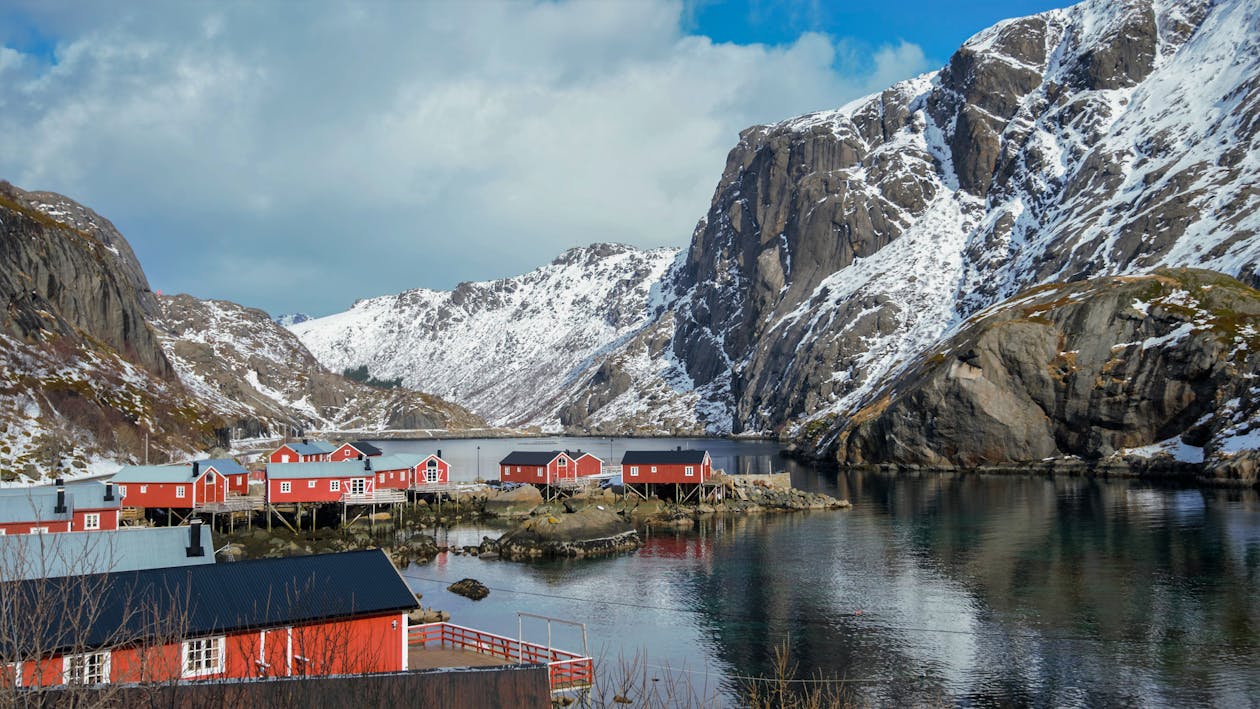
Image: Lofoten Islands with red fishing cabins against dramatic mountain backdrop
Tromsø: The Arctic Capital
Tromsø is one of the best places to visit in Norway for Northern Lights, Arctic culture, and winter adventure. Located above the Arctic Circle, the city offers easy access to mountains, fjords, snowy landscapes, and guided aurora tours, while still having the comfort of restaurants, hotels, museums, and nightlife.
For many travelers, Tromsø is the easiest Arctic destination to plan. You can spend the day exploring the city, then join a Northern Lights chase in the evening. In winter, popular activities include dog sledding, snowshoeing, reindeer experiences, whale watching, and fjord cruises.
Things to do in Tromsø include:
– Take the Fjellheisen cable car for panoramic views over the city, fjords, and surrounding mountains.
– Visit the Arctic Cathedral, one of Tromsø’s most recognizable landmarks.
– Join a Northern Lights tour between September and March.
– Learn about Arctic exploration and polar history at local museums.
– Experience Sami culture through guided reindeer visits and storytelling experiences.
– Go whale watching in the wider Tromsø region during the winter season.
Tromsø is best for travelers who want a balance of Arctic wilderness and city convenience. It is especially suitable for first-time visitors who want to see the Northern Lights without planning a remote expedition.
Svalbard: The Arctic Frontier
Svalbard is one of the most remote and adventurous places to visit in Norway. Located between mainland Norway and the North Pole, this Arctic archipelago is known for glaciers, polar landscapes, wildlife, long summer daylight, and the deep darkness of polar night.
Most visitors base themselves in Longyearbyen, the main settlement on Svalbard. From there, guided tours take travelers into the surrounding wilderness for glacier walks, boat trips, dog sledding, snowmobile excursions, ice cave visits, and wildlife-focused experiences.
Things to experience in Svalbard include:
– Longyearbyen: The main base for accommodation, restaurants, museums, and guided tours.
– Glacier and fjord tours: A chance to see Svalbard’s raw Arctic scenery from the water or ice.
– Dog sledding and snowmobile trips: Popular winter and spring activities.
– Pyramiden: A former Soviet mining settlement often visited on guided tours.
– Midnight Sun: A surreal summer period when daylight lasts around the clock.
– Polar Night: A winter period of darkness that creates a unique Arctic atmosphere.
Svalbard is best for adventurous travelers who are comfortable with cold weather, remote conditions, and guided outdoor activities. Because of wildlife and weather risks, travelers should not head into the wilderness alone. Always join qualified guides and follow local safety rules.
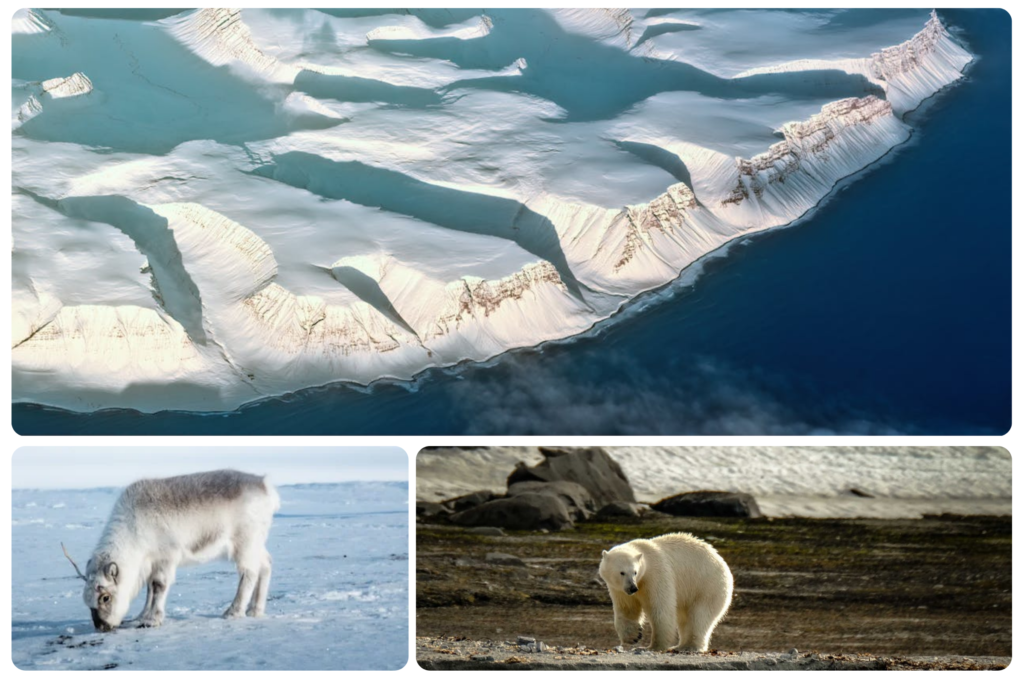
Image: Svalbard’s Arctic landscape with polar bears and glaciers
Which Northern Norway Destination Should You Choose?
Choose the Lofoten Islands if you want dramatic coastal scenery, photography, hiking, road trips, and traditional fishing villages. Lofoten works especially well for travelers who want a visually stunning trip and do not mind slower travel between remote places.
Choose Tromsø if your main goal is to see the Northern Lights or experience Arctic activities with easier logistics. It has more hotels, restaurants, tours, and transport options, making it one of the best choices for first-time winter travelers in Norway.
Choose Svalbard if you want a true polar adventure. It is more remote, more expensive, and more dependent on guided tours, but it offers one of the most unique travel experiences in Norway.
Best Natural Landmarks in Norway
Beyond the fjords, Norway is home to dramatic viewpoints, coastal roads, and rock formations that have become travel icons in their own right. These places are especially popular with hikers, photographers, and road-trip travelers.
Three of the best natural landmarks in Norway are Pulpit Rock, Trolltunga, and the Atlantic Road. Pulpit Rock is the most accessible iconic hike, Trolltunga is the most demanding, and the Atlantic Road is one of the country’s most scenic drives.
Pulpit Rock
Pulpit Rock, or Preikestolen, is one of the most iconic natural landmarks in Norway. This flat cliff rises about 604 meters above Lysefjord, creating one of the country’s most famous viewpoints.
The hike is popular because it feels adventurous without being as demanding as Trolltunga. The trail includes rocky and uneven sections, but many active travelers can complete it as a day hike in good weather.
What to know before hiking Pulpit Rock:
- Distance: Around 8 kilometers round trip
- Duration: Around 4 to 5 hours round trip, depending on pace and conditions
- Difficulty: Moderate
- Best season: Usually May to September
- Starting point: Preikestolen BaseCamp area
Start early if you want fewer crowds, especially in summer. Bring layers, water, snacks, and proper shoes, as weather can change quickly even when the hike starts under clear skies.
Pulpit Rock is best for travelers who want a famous Norway hike with a dramatic fjord view, but do not want a full-day expedition like Trolltunga.
Trolltunga
Trolltunga, meaning “the Troll’s Tongue,” is one of Norway’s most famous viewpoints. The rock formation extends out over Ringedalsvatnet lake, creating a dramatic photo spot high above the landscape.
This is also one of the most demanding hikes on a typical Norway itinerary. Unlike Pulpit Rock, Trolltunga requires a full day, strong fitness, proper gear, and careful weather planning. It is not a casual viewpoint stop.
What to know before hiking Trolltunga:
- Distance: Around 27 to 28 kilometers round trip from the main trailhead
- Duration: Around 10 to 12 hours round trip
- Elevation gain: Around 800 to 1,000 meters
- Difficulty: Challenging
- Best season: Usually June to September
- Guided hike: Recommended outside the main summer hiking season
Pack proper hiking shoes, warm layers, waterproof clothing, enough food and water, a headlamp, and a power bank. Weather can change quickly in the mountains, and the trail should only be attempted when conditions are safe.
Trolltunga is best for experienced hikers who want one of Norway’s most iconic viewpoints and are prepared for a long, physically demanding day.
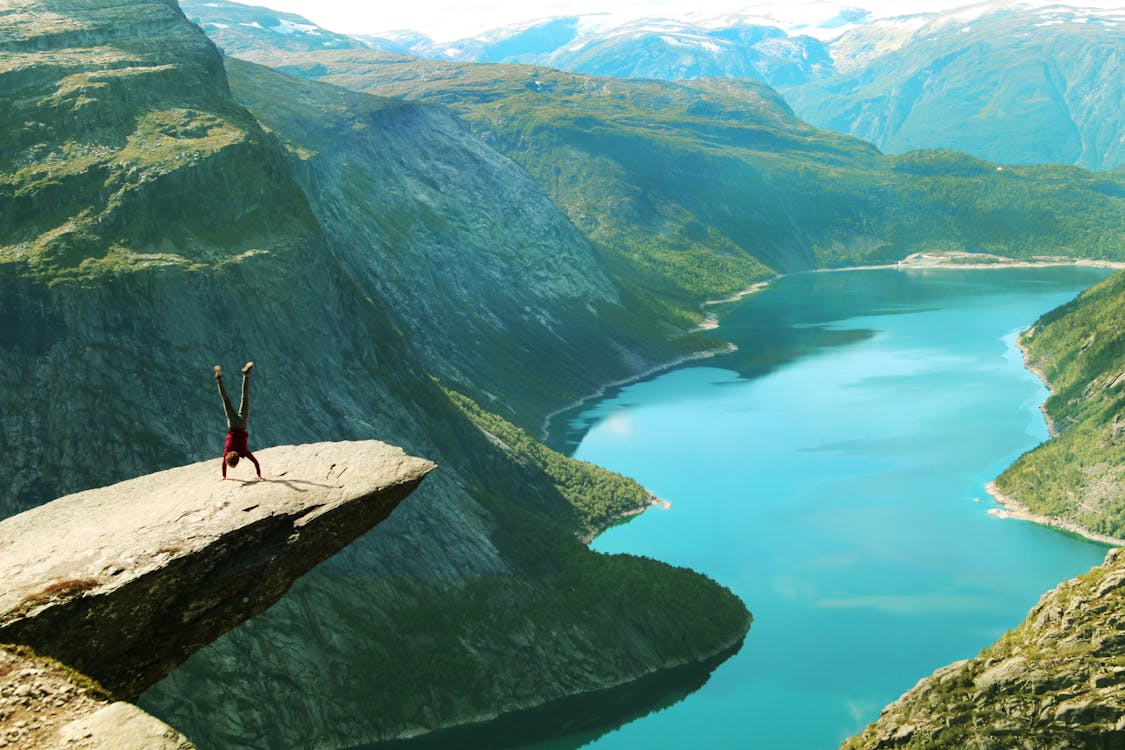
Image: Trolltunga rock formation jutting out over a stunning lake view
Atlantic Road: Engineering Meets Nature
The Atlantic Road, or Atlanterhavsveien, is one of the most scenic drives in Norway. This short but dramatic coastal route connects small islands and skerries with a series of bridges, giving travelers a close-up view of the Norwegian Sea.
The road is especially popular with photographers and road-trip travelers. On calm days, it offers wide coastal views and reflections across the water. In rough weather, the scenery becomes more dramatic, although drivers should always follow local safety advice and road conditions.
Highlights along the Atlantic Road include:
- Storseisundet Bridge: The route’s most famous bridge, known for its unusual curved shape.
- Coastal viewpoints: Several pull-off areas allow you to stop safely for photos.
- Island scenery: The drive passes low islands, open sea, fishing areas, and rugged coastline.
- Road trip access: The Atlantic Road works well as part of a western Norway itinerary between Ålesund, Molde, and Kristiansund.
The Atlantic Road is best for travelers who enjoy scenic drives, coastal landscapes, photography, and slower road trips through western Norway.
Pulpit Rock vs Trolltunga: Which Hike Should You Choose?
Choose Pulpit Rock if you want a shorter and more accessible hike with a famous fjord view. It is still a real hike, but it is much easier to fit into a Norway itinerary than Trolltunga.
Choose Trolltunga if you are an experienced hiker and want a full-day mountain challenge. The view is spectacular, but the hike is long, physically demanding, and requires better preparation.
For most first-time visitors, Pulpit Rock is the more practical choice. Trolltunga is better for travelers who are building their Norway trip around hiking and have enough time to plan around weather conditions.
Best Cities to Visit in Norway
Norway is famous for fjords and Arctic landscapes, but its cities add culture, history, food, architecture, and easier travel connections to any itinerary. For first-time visitors, Oslo, Bergen, and Trondheim are three of the best cities to visit in Norway.
Oslo is the best choice for museums, modern architecture, and a relaxed capital-city break. Bergen is the classic gateway to the fjords, with colorful wooden buildings and mountain views. Trondheim offers medieval history, riverside charm, and a quieter cultural experience.
Oslo – Where Tradition Meets Innovation
Oslo is one of the best places to visit in Norway if you want a mix of culture, design, nature, and easy city travel. The capital feels calm compared with many European cities, but it still offers excellent museums, modern architecture, waterfront areas, restaurants, and access to nearby forests and islands.
What makes Oslo special is how close everything feels. You can visit a museum in the morning, walk along the harbor in the afternoon, and take a tram or ferry toward nature before the day ends.
Things to do in Oslo include:
- Oslo Opera House: A modern waterfront landmark where visitors can walk on the sloping roof for city and fjord views.
- Vigeland Sculpture Park: One of Oslo’s most famous attractions, with more than 200 sculptures by Gustav Vigeland.
- Fram Museum: A strong choice for travelers interested in polar exploration and Arctic history.
- MUNCH Museum: A major museum dedicated to Edvard Munch and modern art.
- Akershus Fortress: A historic fortress near the harbor with views over Oslofjord.
- Oslofjord islands: Easy day trips by ferry, especially in warmer months.
Oslo is best for first-time visitors, museum lovers, design fans, and travelers who want a soft landing before heading into Norway’s fjords or northern regions.
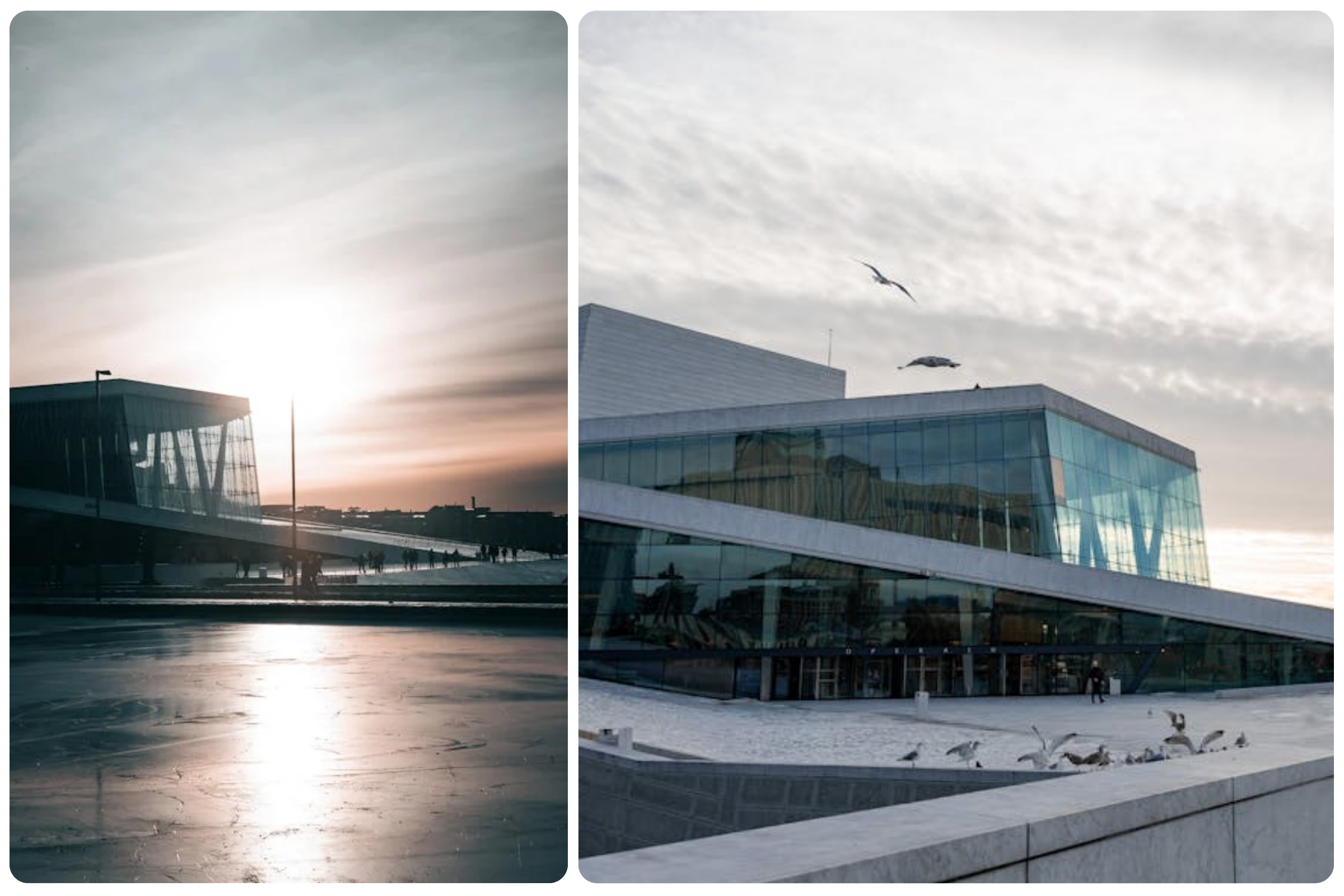
Image: Oslo’s modern architecture and cultural attractions including Opera House
Bergen: Gateway to the Fjords
Bergen is one of the most beautiful cities in Norway and a classic gateway to the fjords. Surrounded by seven mountains and facing the sea, the city combines colorful wooden architecture, harbor views, seafood, museums, and easy access to fjord cruises.
The most famous area is Bryggen, the historic Hanseatic wharf and UNESCO-listed district. Its colorful wooden buildings are one of Norway’s most recognizable city scenes and make Bergen a rewarding stop even if you are mainly visiting for the fjords.
Things to do in Bergen include:
– Bryggen: Bergen’s historic waterfront district, known for colorful wooden buildings and narrow alleyways.
– Fløibanen Funicular: A popular ride to Mount Fløyen for city, harbor, and mountain views.
– Mount Ulriken: A higher viewpoint and hiking area for travelers who want a more active city experience.
– Bergen Fish Market: A central spot for seafood, casual meals, and local atmosphere.
– KODE Museums: A group of art museums that are especially useful on rainy days.
– Fjord day trips: Bergen is a convenient base for trips toward Sognefjord, Hardangerfjord, and other western Norway routes.
Bergen is best for travelers who want a mix of city charm and fjord access. Pack a rain jacket, as the weather changes often and rainy days are part of the Bergen experience.
Trondheim: Norway’s Historical Heart
Trondheim is one of the best cities to visit in Norway for history, architecture, and a slower cultural experience. As Norway’s former capital, it has deep medieval roots, colorful riverside streets, and a lively student atmosphere.
The city feels more relaxed than Oslo and Bergen, making it a good choice for travelers who want history without the pace of a larger capital. It also works well as a stop between southern Norway and the northern regions.
Things to do in Trondheim include:
- Nidaros Cathedral: Scandinavia’s largest medieval cathedral and one of Norway’s most important historic landmarks.
- Bakklandet: A charming old neighborhood with wooden houses, cobbled streets, cafés, and river views.
- Old Town Bridge: A classic photo spot overlooking colorful wooden buildings along the Nidelva River.
- Kristiansten Fortress: A hilltop fortress with panoramic views over the city.
- Rockheim: Norway’s national museum of popular music.
- Trondheim waterfront: A good area for relaxed walks, cafés, and local dining.
Trondheim is best for travelers who enjoy history, walkable cities, local cafés, and a quieter alternative to Norway’s better-known urban stops.
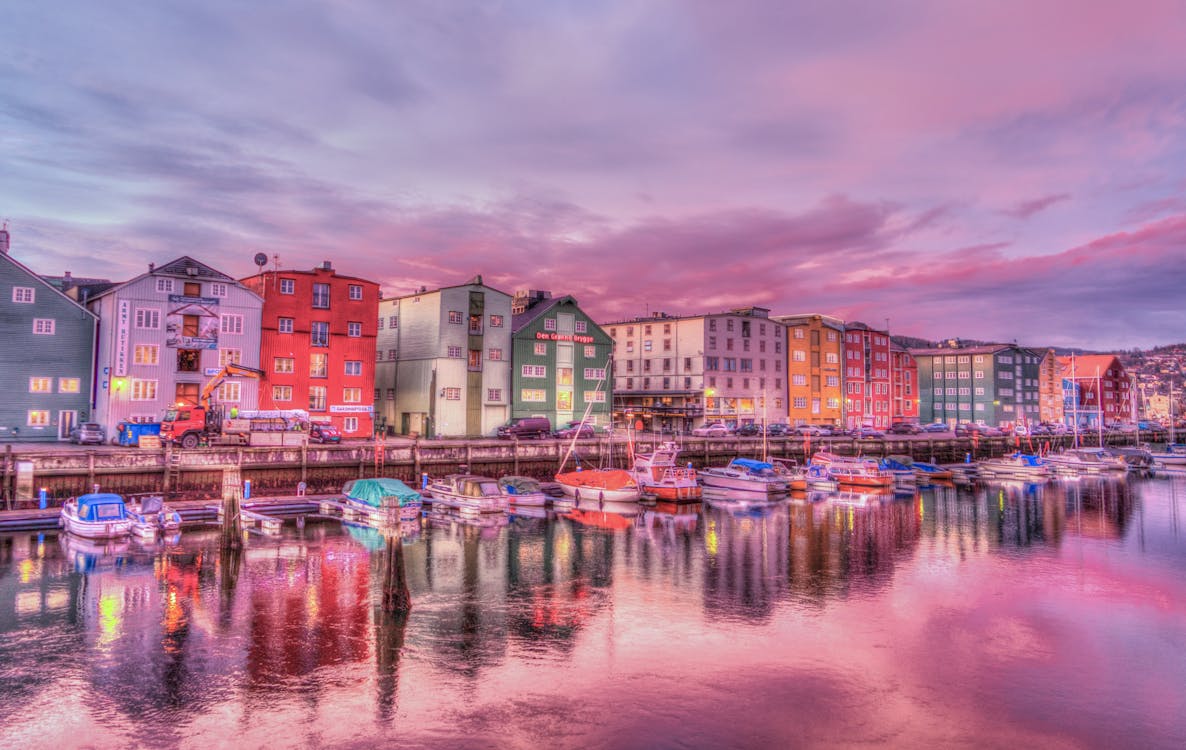
Image: Trondheim’s colorful wooden buildings along the river and historical sites
Which Norway City Should You Choose?
Choose Oslo if you want museums, modern architecture, restaurants, and the easiest international arrival point. It is the best city for starting a Norway itinerary.
Choose Bergen if you want the most classic combination of city charm and fjord access. It is one of the best bases for exploring western Norway and works especially well for first-time visitors.
Choose Trondheim if you prefer history, local atmosphere, and a quieter city experience. It is a strong choice if you are traveling north or want to see a different side of Norway beyond Oslo and Bergen.
Hidden Gems and Small Towns in Norway
Some of the best places to visit in Norway are not major cities, but smaller towns, coastal villages, and historic communities with a strong sense of place. These destinations are ideal if you want slower travel, local character, scenic views, and fewer crowds.
Ålesund is known for Art Nouveau architecture and coastal scenery. Stavanger combines old wooden streets, food culture, and access to Pulpit Rock. Røros offers one of Norway’s most atmospheric historic towns, while Reine captures the classic beauty of the Lofoten Islands.
Ålesund – Norway’s Art Nouveau Wonder
Ålesund is one of the most visually distinctive towns in Norway. After a major fire in 1904, the town was rebuilt in Art Nouveau style, giving it a unique look with decorative facades, towers, pastel buildings, and elegant details.
Set across islands on Norway’s west coast, Ålesund is also a strong base for coastal views, fjord trips, and road routes toward Geirangerfjord. It feels smaller and quieter than Bergen, but still offers plenty of charm for travelers who enjoy architecture, photography, and scenic viewpoints.
Things to do in Ålesund include:
– Fjellstua Viewpoint: Climb the steps to Aksla viewpoint for one of the best views over Ålesund, the islands, and surrounding mountains.
– Art Nouveau Centre: Learn how the town was rebuilt and why its architecture is so unique in Norway.
– Ålesund harbor: A scenic area for walks, photography, seafood, and waterfront views.
– Day trips to Geirangerfjord: Ålesund works well as a starting point for exploring one of Norway’s most famous fjord regions.
Ålesund is best for travelers who want coastal scenery, architecture, photography, and a quieter western Norway base.
Stavanger: Culinary Capital with Coastal Charm
Stavanger is one of the best places to visit in Norway if you want a mix of coastal charm, food, history, and easy access to Pulpit Rock. The city is smaller than Oslo or Bergen, but it has a strong identity shaped by the sea, old wooden streets, and a growing food scene.
Old Stavanger, or Gamle Stavanger, is one of the city’s most atmospheric areas. Its white wooden houses, cobbled lanes, and quiet corners make it a lovely place to explore on foot. The harbor area adds restaurants, cafés, and easy access to boat trips along the coast.
Things to do in Stavanger include:
- Old Stavanger: Walk through one of Europe’s best-preserved wooden house districts.
- Norwegian Petroleum Museum: A surprisingly engaging museum about Norway’s oil history and offshore industry.
- Stavanger harbor: A central area for restaurants, boat trips, and waterfront views.
- Sola Beach: A long sandy beach near the city, good for coastal walks.
- Pulpit Rock access: Stavanger is one of the main bases for travelers planning to hike Preikestolen.
Stavanger is best for travelers who want a smaller city with character, good food, coastal scenery, and convenient access to one of Norway’s most famous hikes.
Røros: Living Mining History
Røros is one of Norway’s most atmospheric historic towns. This former copper mining town is a UNESCO World Heritage Site, known for its preserved wooden buildings, mining heritage, traditional streets, and strong local character.
Walking through Røros feels very different from visiting Norway’s larger cities or fjord villages. The town has a quiet, historic mood, with old timber houses, small shops, cafés, and museums that help tell the story of its mining past.
Things to do in Røros include:
- Explore the historic wooden town center and preserved mining buildings.
- Visit the Røros Museum to learn about the town’s copper mining history.
- Walk the old streets for photography, local shops, and traditional architecture.
- Visit in winter for snow-covered rooftops, Christmas atmosphere, and cozy cafés.
- Try local food, as Røros is known for strong regional food traditions.
Røros is best for travelers who enjoy history, winter scenery, small-town atmosphere, and destinations that feel slower and more local.
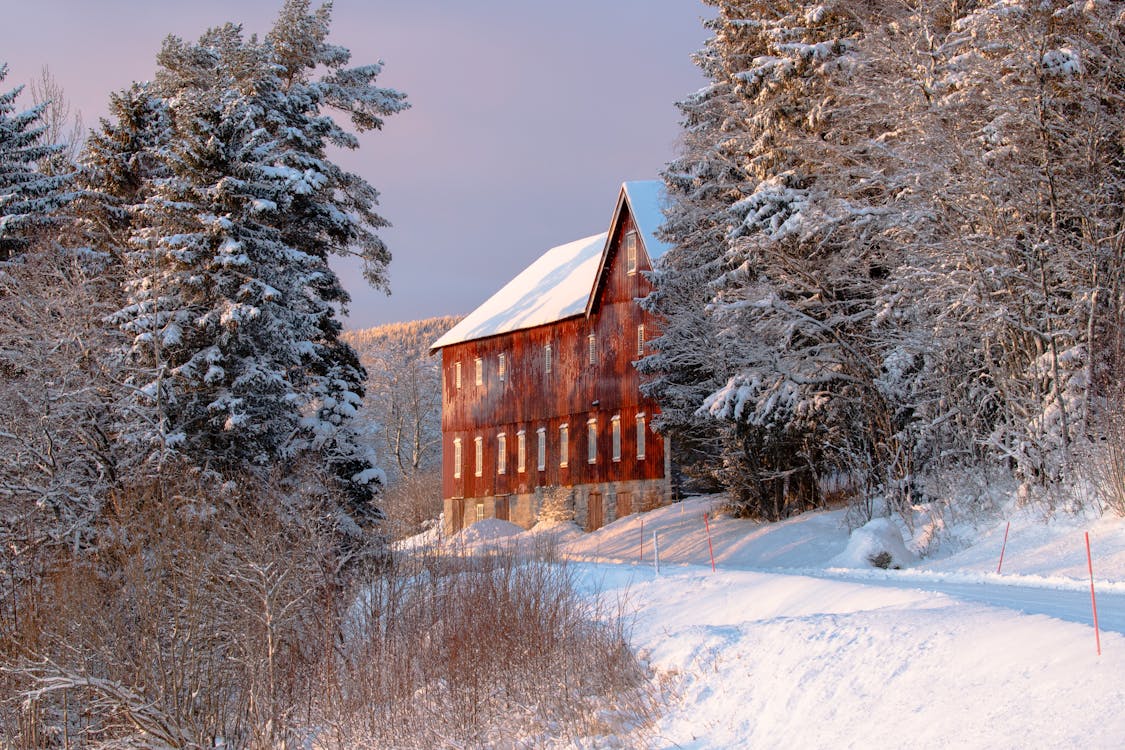
Image: Røros’ well-preserved historical wooden building in winter snow
Reine: Lofoten’s Picture-Perfect Village
Reine is one of the most photographed villages in Norway and one of the most beautiful stops in the Lofoten Islands. Surrounded by sharp mountains, calm water, red fishing cabins, and dramatic coastal scenery, it captures the classic image many travelers associate with northern Norway.
Although Reine is small, it is worth including in a Norway itinerary if you are visiting Lofoten. The village works especially well for photography, slow walks, scenic drives, and nearby hikes.
Things to do in Reine include:
– Photograph the classic Reine viewpoint from the E10 road.
– Stay in a rorbuer cabin for a traditional Lofoten experience.
– Explore nearby fishing villages and coastal viewpoints.
– Hike Reinebringen if conditions are safe and you are prepared for steep steps.
– Visit at sunrise, sunset, or during the Midnight Sun for beautiful light.
Reine is best for photographers, nature lovers, couples, and travelers who want one of the most iconic village views in Norway.
Which Small Town or Hidden Gem Should You Choose?
Choose Ålesund if you want architecture, coastal views, and a quieter base for exploring western Norway. It is especially useful if your itinerary includes Geirangerfjord.
Choose Stavanger if you want food, old wooden streets, coastal walks, and easy access to Pulpit Rock. It works well for travelers who want both city comfort and outdoor adventure.
Choose Røros if you want history, winter atmosphere, and a traditional small-town experience. It is one of the best choices in Norway for travelers who enjoy heritage destinations.
Choose Reine if you are visiting Lofoten and want one of Norway’s most iconic village views. It is best for photography, dramatic landscapes, and slow travel.
How Many Days Do You Need in Norway?
The ideal length for a Norway trip depends on how much of the country you want to see. Norway is long, mountainous, and spread out, so trying to cover too many regions in a short time can make the trip feel rushed.
For most first-time visitors, 7 to 10 days is enough to experience a good mix of cities, fjords, and scenic transport. If you want to add Northern Norway, Lofoten, Tromsø, or Svalbard, plan for at least 10 to 14 days.
Here is a simple way to think about your Norway itinerary:
- 5 to 6 days: Best for Oslo, Bergen, and one fjord region.
- 7 to 8 days: Good for Oslo, Bergen, Flåm, Sognefjord, and possibly Ålesund or Stavanger.
- 10 days: Enough for a classic southern Norway route with cities, fjords, and one major hike or scenic road.
- 14 days: Better if you want to add Lofoten, Tromsø, or another northern destination.
- 3 weeks or more: Ideal for combining southern Norway, western fjords, Northern Norway, and a slower road trip.
If this is your first trip, avoid trying to see every famous place at once. A focused route through Oslo, Bergen, the fjords, and one northern or hiking destination will usually feel better than a rushed checklist.
Suggested Norway Itinerary for First-Time Visitors
If you are visiting Norway for the first time, build your itinerary around a few strong regions instead of trying to cover the whole country. Oslo, Bergen, the western fjords, and either a major hike or a northern destination make a strong first trip.
7-Day Norway Itinerary
A 7-day Norway itinerary is best for travelers who want a compact first trip with cities, fjords, and scenic transport.
| Day | Destination | What to Do |
|---|---|---|
| Day 1 | Oslo | Visit the Opera House, MUNCH Museum, Vigeland Sculpture Park, and the waterfront |
| Day 2 | Oslo to Bergen | Take the train toward Bergen or follow a scenic route via Flåm if time allows |
| Day 3 | Bergen | Explore Bryggen, ride the Fløibanen Funicular, visit the Fish Market, and enjoy the harbor |
| Day 4 | Flåm / Sognefjord | Take a fjord cruise, ride the Flåm Railway, and visit Aurlandsfjord or Nærøyfjord |
| Day 5 | Fjord region | Continue exploring Sognefjord, Hardangerfjord, or nearby viewpoints |
| Day 6 | Ålesund or Stavanger | Choose Ålesund for Geirangerfjord access or Stavanger for Pulpit Rock |
| Day 7 | Return to Oslo or Bergen | Travel back for your flight or continue to another Nordic destination |
This route works best if you want a classic introduction to Norway without flying north.
10-Day Norway Itinerary
A 10-day Norway itinerary gives you more time to enjoy the fjords without rushing. It also lets you add either Pulpit Rock, Geirangerfjord, or a slower western Norway road trip.
| Day | Destination | What to Do |
|---|---|---|
| Day 1 | Oslo | Explore museums, the harbor, Akershus Fortress, and the Opera House |
| Day 2 | Oslo to Flåm | Travel by train and enjoy one of Norway’s most scenic routes |
| Day 3 | Flåm and Nærøyfjord | Take a fjord cruise and enjoy Aurlandsfjord or Stegastein Viewpoint |
| Day 4 | Bergen | Explore Bryggen, Mount Fløyen, the Fish Market, and KODE Museums |
| Day 5 | Bergen / Hardangerfjord | Take a day trip or drive toward Hardangerfjord for waterfalls and orchards |
| Day 6 | Ålesund | Travel toward Ålesund and explore the Art Nouveau town center |
| Day 7 | Geirangerfjord | Take a fjord cruise or scenic drive around Geirangerfjord |
| Day 8 | Stavanger or Trondheim | Choose Stavanger for Pulpit Rock or Trondheim for history and culture |
| Day 9 | Pulpit Rock or city day | Hike Preikestolen if in Stavanger, or explore Trondheim’s cathedral and old town |
| Day 10 | Return | Fly or train back to Oslo, Bergen, or your next destination |
This itinerary is best for travelers who want a balanced mix of cities, fjords, scenic routes, and one major outdoor experience.
14-Day Norway Itinerary with Northern Norway
A 14-day Norway itinerary is better if you want to combine the classic fjords with Northern Norway. Because distances are long, it is usually better to fly between southern Norway and the north instead of trying to do everything by road.
| Day | Destination | What to Do |
|---|---|---|
| Day 1 | Oslo | Start with museums, the waterfront, and city landmarks |
| Day 2 | Oslo to Flåm | Take a scenic train route toward the fjord region |
| Day 3 | Sognefjord / Nærøyfjord | Enjoy a fjord cruise, viewpoints, and quiet villages |
| Day 4 | Bergen | Explore Bryggen, Mount Fløyen, and the harbor |
| Day 5 | Hardangerfjord or Bergen | Add waterfalls, orchards, or a relaxed city day |
| Day 6 | Ålesund | Visit the Art Nouveau center and Aksla viewpoint |
| Day 7 | Geirangerfjord | Take a scenic cruise or drive around Geirangerfjord |
| Day 8 | Travel north | Fly to Tromsø, Bodø, or another northern gateway |
| Day 9 | Tromsø or Lofoten | Start your Arctic itinerary |
| Day 10 | Tromsø or Lofoten | Join a Northern Lights tour in winter or hike in summer |
| Day 11 | Lofoten Islands | Visit Reine, Hamnøy, Henningsvær, and scenic viewpoints |
| Day 12 | Lofoten Islands | Add beaches, rorbuer cabins, photography, or coastal hikes |
| Day 13 | Northern Norway buffer day | Keep this day flexible for weather, transport, or extra activities |
| Day 14 | Return | Fly back to Oslo or continue to another Nordic destination |
This route is best for travelers who want both the famous fjords and the Arctic side of Norway. In winter, focus more on Tromsø and Northern Lights. In summer, Lofoten is especially strong for road trips, hiking, and Midnight Sun scenery.
Which Norway Itinerary Should You Choose?
Choose the 7-day itinerary if this is your first trip and you want a simple route with Oslo, Bergen, and one fjord region.
Choose the 10-day itinerary if you want a more complete southern Norway trip with fjords, cities, scenic routes, and either Pulpit Rock or Geirangerfjord.
Choose the 14-day itinerary if you want to add Northern Norway, especially Lofoten or Tromsø. This is the better option for travelers who want Northern Lights in winter or Midnight Sun landscapes in summer.
If you are unsure, choose fewer places and spend more time in each region. Norway rewards slow travel, and the best moments often happen between the major stops.
Norway Travel Tips for First-Time Visitors
Once you have a shortlist of the best places to visit in Norway, the next step is planning the practical details. Norway is safe and well organized, but distances can be long, weather changes quickly, and transport often requires more planning than in smaller European countries.
These Norway travel tips will help you decide how to get around, where to stay, how to manage your budget, what to pack, and how to stay connected during your trip.
Getting Around Norway
Norway’s geography is dramatic, which means getting around can take longer than it looks on a map. Fjords, mountains, islands, tunnels, and ferries all shape the way people travel through the country.
The best way to get around Norway depends on your itinerary:
- Rental car: Best for fjord regions, scenic roads, small villages, Lofoten, and flexible road trips. Keep in mind that roads can be narrow, parking can be expensive in cities, and winter driving requires extra caution.
- Trains: Best for scenic journeys between major cities and mountain regions. The Bergen Railway and Flåm Railway are especially popular with visitors.
- Ferries: Essential for many coastal and fjord routes. Some ferries carry cars, while others are passenger-only services used for fjord cruises and local connections.
- Domestic flights: Useful for long distances, especially if you want to combine southern Norway with Tromsø, Lofoten, or other northern destinations.
- Public transport: Good in cities like Oslo, Bergen, and Trondheim, but less convenient for remote nature areas.
For first-time visitors, a common approach is to use trains and ferries for classic routes, then rent a car for fjords, coastal roads, or Lofoten.
Where to Stay in Norway
Norway has a wide range of accommodation, from city hotels and boutique stays to mountain cabins and traditional fishing cottages. Prices can be high during peak season, so it is worth booking early if you are traveling in summer, during holidays, or to popular places like Lofoten, Bergen, Tromsø, and the fjord regions.
Common accommodation options in Norway include:
- City hotels: Best for Oslo, Bergen, Trondheim, Tromsø, and Stavanger. They are convenient for public transport, restaurants, museums, and short stays.
- Boutique hotels and historic inns: Good for travelers who want more character, especially in smaller towns and scenic regions.
- Rorbuer cabins: Traditional fisherman’s cabins in Lofoten and other coastal areas. These are one of the most memorable places to stay in Norway.
- Mountain lodges and DNT cabins: Best for hikers and outdoor travelers. Some are simple self-service cabins, while others offer meals and more comfort.
- Farm stays and rural guesthouses: Good for slower travel, local food, and countryside scenery.
- Unique winter stays: In northern Norway, you can find igloo hotels, glass cabins, and aurora-focused lodges.
If your itinerary includes remote areas, check location carefully before booking. A beautiful cabin may require a rental car, ferry connection, or longer transfer than expected.
Budget Tips for Norway
Norway is one of Europe’s more expensive travel destinations, but you can manage costs with smart planning. The biggest expenses are usually accommodation, restaurants, transport, and guided tours.
Ways to save money in Norway include:
- Travel in shoulder season: May, early June, September, and October often bring lower prices and fewer crowds than peak summer.
- Book transport early: Trains, domestic flights, rental cars, and ferries can become expensive close to departure.
- Mix restaurants with supermarket meals: Grocery stores such as Kiwi, Rema 1000, and Coop are useful for breakfast, snacks, and simple meals.
- Use city passes when they make sense: The Oslo Pass or Bergen Card may be useful if you plan to visit several museums and use public transport.
- Spend time in nature: Many of Norway’s best experiences, including viewpoints, walks, fjord scenery, and scenic drives, do not require expensive entrance fees.
- Bring a reusable water bottle: Tap water in Norway is safe to drink and widely available.
- Use a travel card: Norway is largely cashless, so a card with low or no foreign transaction fees is helpful.
If your budget is limited, focus on fewer regions instead of trying to cover the whole country. A slower itinerary can reduce transport costs and make the trip more enjoyable.

Image: Norwegian accommodation options from luxury hotels to traditional cabins
What to Pack for Norway
Packing for Norway depends on the season, but one rule applies year-round: bring layers. Weather can change quickly, especially in coastal areas, fjord regions, and the mountains.
For most Norway trips, pack:
- Base layers: Useful for hiking, cold mornings, and changing weather.
- Warm mid-layers: Fleece, wool sweaters, or insulated jackets work well.
- Waterproof outer layer: A rain jacket is essential, especially in Bergen, the fjords, and coastal regions.
- Comfortable walking shoes: Cities are walkable, and many viewpoints involve uneven paths or steps.
- Hiking shoes: Important if you plan to hike Pulpit Rock, Trolltunga, Reinebringen, or mountain trails.
- Hat, gloves, and scarf: Useful outside summer and essential in winter.
- Sunscreen and sunglasses: Important in summer, especially during long daylight hours and near snow.
- Power bank: Helpful for navigation, photos, tickets, weather apps, and emergency use.
- Reusable water bottle: Tap water is safe and easy to refill.
For winter trips, add thermal base layers, insulated boots, thick socks, a warm hat, gloves, and a proper winter jacket. For summer hiking, still bring warm layers and waterproof gear, as mountain weather can shift fast.

Image: The Layering System for Norway
How to Stay Connected While Traveling in Norway
Staying connected in Norway is useful for much more than sharing photos. Many of the best places to visit in Norway involve fjords, mountain roads, ferries, hiking trails, remote villages, and Arctic regions where planning can change quickly with the weather.
Reliable mobile data helps you check maps, ferry schedules, train tickets, road conditions, hiking routes, weather alerts, restaurant bookings, translation apps, and Northern Lights forecasts while you travel.
Why Mobile Data Matters in Norway
Mobile data is especially helpful in Norway because many trips involve changing weather, long travel distances, and routes that combine different types of transport.
You may need data for:
- Navigation: Use maps for road trips, city transport, hiking trailheads, and walking routes.
- Ferry and train updates: Check timetables, delays, tickets, and route changes.
- Weather alerts: Mountain and coastal weather can shift quickly, especially in fjord regions and northern Norway.
- Northern Lights forecasts: If you are visiting Tromsø, Lofoten, Alta, or Svalbard in winter, aurora apps and cloud forecasts are useful.
- Translation: Helpful for menus, signs, booking details, and local information.
- Safety: Keep access to emergency contacts, accommodation details, and travel updates.
- Bookings: Manage tours, restaurants, hotels, rental cars, and last-minute itinerary changes.
Using a Norway eSIM or Europe eSIM
One of the easiest ways to stay online in Norway is to use a travel eSIM. Instead of buying a physical SIM card after arrival or relying on expensive roaming, you can install your eSIM before your trip and activate it when you arrive.
For Norway, travelers can choose either a Norway eSIM or a Europe eSIM from Gohub, depending on the itinerary. A Norway eSIM works well if your trip is focused only on Norway. A Europe eSIM is more convenient if you are combining Norway with Sweden, Denmark, Finland, Iceland, or other European destinations.
With a Gohub eSIM, you can:
– Set up mobile data before departure
– Avoid switching physical SIM cards
– Use maps, weather apps, booking platforms, and messaging apps while traveling
– Stay connected across cities, fjords, and many remote travel areas
– Avoid unexpected international roaming charges
Norway eSIM vs. Europe eSIM: Which One Should You Choose?
Choose a Norway eSIM if your entire trip is within Norway. This is the simplest option for travelers visiting places like Oslo, Bergen, Tromsø, Lofoten, Geirangerfjord, or Sognefjord.
Choose a Europe eSIM if your trip includes multiple countries. This is useful if you are adding Norway to a wider Nordic or European itinerary, such as Norway and Sweden, Norway and Denmark, or Norway and Iceland.
Before buying, check your travel dates, expected data usage, device compatibility, and whether your phone is unlocked for eSIM use.
Stay Connected with Gohub
A little preparation makes traveling in Norway much smoother. Install your eSIM before departure, keep your travel apps ready, and make sure you can access maps, tickets, weather updates, and booking confirmations when you need them.
Ready to explore Norway without roaming stress? Get your Norway eSIM from Gohub before you go.

Image: Screenshot of the GoHub eSIM webpage, highlighting the destination input field with “Norway” selected, illustrating how users can easily search for eSIM data plans.

Image: eSIM offers affordable data throughout Norway
Related Articles You May Enjoy
- 🌍 Planning a safari or coastal escape? Discover the Best Places to Visit in South Africa for wildlife, wine, and scenic coastlines.
- 🇺🇸 From national parks to iconic cities – explore the Best Places to Visit in the USA for your next American adventure.
- 🇯🇵 Whether it’s cherry blossoms or neon nights, this guide to the Best Places to Visit in Japan will help you plan the perfect trip.
- 🇸🇪 Curious about Scandinavia? Get inspired by the Best Places to Visit in Sweden, from Stockholm to the Arctic Circle.
Conclusion: Best Places to Visit in Norway
Norway is one of Europe’s most unforgettable destinations, with a rare mix of fjords, mountains, Arctic landscapes, historic cities, coastal villages, and world-class scenic routes.
For a first trip, start with Oslo, Bergen, and one or two fjord regions such as Sognefjord, Geirangerfjord, or Hardangerfjord. If you have more time, add Lofoten or Tromsø for Northern Norway’s dramatic scenery, Midnight Sun, or Northern Lights. Travelers who love hiking can build the trip around Pulpit Rock or Trolltunga, while slower travelers may prefer Ålesund, Røros, Stavanger, or Reine.
However you plan your route, Norway rewards preparation. Book key transport early, pack for changing weather, leave space in your itinerary, and make sure you can access maps, ferry schedules, weather updates, and booking confirmations while you travel.
Ready to explore Norway with less roaming stress? Get your Norway eSIM from Gohub before you go.
For more resources to plan your trip, check out:
Winter in Norway: December to February
Winter is the best season for travelers who want to see Norway at its most atmospheric. Snow covers the mountains and villages, Arctic nights grow long, and destinations like Tromsø, Lofoten, Alta, and Svalbard become prime bases for Northern Lights trips.
This is also the season for dog sledding, snowshoeing, reindeer experiences, winter fjord cruises, and cozy cabin stays. Keep in mind that daylight is limited in the north, road conditions can be challenging, and some hikes or scenic routes may be closed.
Winter is best for:
- Northern Lights trips in Tromsø, Lofoten, Alta, and Svalbard
- Dog sledding, snowshoeing, and reindeer experiences
- Snowy landscapes and winter photography
- Cozy cabins, saunas, and slow travel
- Arctic adventures away from peak summer crowds
Spring and Autumn in Norway: May, September, and October
Spring and autumn are excellent times to visit Norway if you want fewer tourists, lower prices, and softer landscapes. These shoulder months are especially good for travelers who prefer a quieter trip and do not mind changing weather.
In spring, waterfalls are powerful, valleys turn green, and Hardangerfjord becomes especially beautiful when fruit trees bloom around May. In autumn, forests shift into red and gold tones, the air feels crisp, and reflections on lakes and fjords can be stunning.
Shoulder season is best for:
– Fewer crowds in popular fjord regions
– Better hotel availability compared with peak summer
– Spring waterfalls and blossom season
– Autumn colors and quieter road trips
– A more relaxed pace in cities like Bergen, Oslo, and Trondheim
Image: Norway’s stunning seasonal landscapes with Midnight Sun in summer and Northern Lights in winter
Chasing the aurora? Here’s how to spot the Northern Lights in Iceland too — the ultimate winter twin destination for Norway travelers.
Best Fjords to Visit in Norway
No Norway itinerary feels complete without time in the fjords. These deep, glacial valleys are some of the country’s most iconic landscapes, with steep cliffs, blue-green water, waterfalls, mountain farms, and small villages tucked along the shore.
For first-time visitors, the best fjords to visit in Norway are Geirangerfjord, Sognefjord, and Hardangerfjord. Each offers a different experience: Geirangerfjord is dramatic and compact, Sognefjord is vast and majestic, while Hardangerfjord is softer, quieter, and especially beautiful during blossom season.
Geirangerfjord – A Real-Life Fairytale
Geirangerfjord is one of Norway’s most famous fjords and a UNESCO-listed landscape known for its steep cliffs, deep blue water, and powerful waterfalls. If you only have time for one classic fjord experience, this is one of the strongest choices.
The fjord is compact enough to explore by boat, but dramatic enough to feel unforgettable. Scenic cruises give you close views of waterfalls and abandoned mountain farms, while the roads above the fjord reveal some of the most photographed viewpoints in Norway.
Highlights in Geirangerfjord include:
- Seven Sisters Waterfall: One of the fjord’s most famous waterfalls, best seen from the water.
- Skageflå Farm: A historic cliffside farm that can be reached by hike, often combined with a fjord cruise.
- Eagle Road Viewpoint: A panoramic viewpoint with sweeping views over Geirangerfjord and the surrounding mountains.
Geirangerfjord is best visited from late spring to early autumn, when boat tours, viewpoints, and mountain roads are easier to access
Image: Seven Sisters waterfall
Sognefjord: The Majestic King of Fjords
Sognefjord is Norway’s longest and deepest fjord, often called the “King of the Fjords.” Stretching more than 200 kilometers inland from the coast, it offers a grander and more expansive fjord experience than Geirangerfjord.
This is one of the best places to visit in Norway if you want scenic boat trips, quiet villages, mountain views, and easy access to some of the country’s most beautiful fjord branches. The region also works well for travelers who want to combine fjord cruises with train journeys, especially around Flåm.
Highlights around Sognefjord include:
- Flåm: A small fjord village known for the scenic Flåm Railway and easy access to fjord cruises.
- Nærøyfjord: A narrow UNESCO-listed fjord branch with steep cliffs and dramatic scenery.
- Aurlandsfjord: A peaceful fjord branch known for calm water, mountain views, and postcard-like villages.
- Stegastein Viewpoint: One of the best viewpoints over Aurlandsfjord.
Sognefjord is ideal for travelers who want a slower fjord experience with plenty of options for cruises, kayaking, viewpoints, and scenic train travel.
Image: Sognefjord’s dramatic cliffs and crystal-clear waters surrounded by mountains
Hardangerfjord: Norway’s Orchard Paradise
Hardangerfjord is one of the best places to visit in Norway if you want a quieter and more poetic fjord experience. While Geirangerfjord and Sognefjord often get more attention, Hardangerfjord offers a softer side of Norway, with fruit orchards, small villages, waterfalls, and mountain scenery.
The region is especially beautiful in spring, when apple and cherry trees bloom along the fjord. Snow can still cover the peaks above, while pink and white blossoms brighten the villages below. It feels like a Nordic version of blossom season, but with dramatic fjord backdrops, fresh air, and peaceful waterfront views.
Highlights around Hardangerfjord include:
- Ulvik: A quiet village known for orchards, cider farms, and fjord views.
- Lofthus: A scenic base for exploring the fjord and nearby hiking routes.
- Vøringsfossen: One of Norway’s most famous waterfalls, often visited on a Hardangerfjord road trip.
- Trolltunga: A challenging but iconic hike near the Hardangerfjord region.
Hardangerfjord is best for travelers who want fewer crowds, local food experiences, blossom landscapes, and a more relaxed fjord itinerary.
Which Norway Fjord Should You Choose?
If this is your first trip to Norway, Geirangerfjord is the easiest fjord to love because it delivers the classic scenery many travelers imagine: waterfalls, cliffs, viewpoints, and scenic cruises.
Choose Sognefjord if you want a bigger fjord region with more itinerary options, including Flåm, Nærøyfjord, Aurlandsfjord, scenic train rides, and longer boat trips.
Choose Hardangerfjord if you prefer a quieter route with orchards, waterfalls, local cider, and beautiful spring landscapes. It is especially rewarding in May and early June when the fruit trees are in bloom.
Northern Norway: Arctic Wonders Await
Northern Norway is where the country feels most wild and otherworldly. This region is known for Arctic landscapes, fishing villages, rugged coastlines, Northern Lights in winter, and the Midnight Sun in summer.
The best places to visit in Northern Norway include the Lofoten Islands, Tromsø, and Svalbard. Choose Lofoten for dramatic scenery and photography, Tromsø for Northern Lights tours and Arctic culture, and Svalbard for a remote polar adventure at the edge of the world.
Lofoten Islands – Where Mountains Meet the Sea
The Lofoten Islands are among the most beautiful places to visit in Norway, especially if you love dramatic landscapes, photography, hiking, and small coastal villages. Here, sharp mountains rise straight from the sea, red fishing cabins sit along quiet harbors, and the light changes constantly across the water.
Lofoten is also one of the best places in Norway for travelers who want both summer and winter experiences. In summer, you can hike under the Midnight Sun, kayak along the coast, and explore scenic villages by road. In winter, the islands become a striking backdrop for Northern Lights photography.
Highlights in the Lofoten Islands include:
- Reine and Hamnøy: Two of the most photographed fishing villages in Norway, known for red rorbuer cabins, mountain views, and quiet harbor scenery.
- Kvalvika Beach: A remote white-sand beach surrounded by cliffs, reached by hiking trail.
- Henningsvær: A charming fishing village with cafés, galleries, sea views, and one of Norway’s most famous football pitches.
- Reinebringen: A popular viewpoint hike with panoramic views over Reine, fjords, and surrounding peaks.
- Midnight Sun: Best experienced from late May to mid-July.
- Northern Lights: Usually visible from September to April when skies are dark and clear.
For the most authentic stay, book a rorbuer, a traditional fisherman’s cabin converted into guest accommodation. Many sit right on the water and offer direct access to Lofoten’s coastal scenery.
Image: Lofoten Islands with red fishing cabins against dramatic mountain backdrop
Tromsø: The Arctic Capital
Tromsø is one of the best places to visit in Norway for Northern Lights, Arctic culture, and winter adventure. Located above the Arctic Circle, the city offers easy access to mountains, fjords, snowy landscapes, and guided aurora tours, while still having the comfort of restaurants, hotels, museums, and nightlife.
For many travelers, Tromsø is the easiest Arctic destination to plan. You can spend the day exploring the city, then join a Northern Lights chase in the evening. In winter, popular activities include dog sledding, snowshoeing, reindeer experiences, whale watching, and fjord cruises.
Things to do in Tromsø include:
– Take the Fjellheisen cable car for panoramic views over the city, fjords, and surrounding mountains.
– Visit the Arctic Cathedral, one of Tromsø’s most recognizable landmarks.
– Join a Northern Lights tour between September and March.
– Learn about Arctic exploration and polar history at local museums.
– Experience Sami culture through guided reindeer visits and storytelling experiences.
– Go whale watching in the wider Tromsø region during the winter season.
Tromsø is best for travelers who want a balance of Arctic wilderness and city convenience. It is especially suitable for first-time visitors who want to see the Northern Lights without planning a remote expedition.
Svalbard: The Arctic Frontier
Svalbard is one of the most remote and adventurous places to visit in Norway. Located between mainland Norway and the North Pole, this Arctic archipelago is known for glaciers, polar landscapes, wildlife, long summer daylight, and the deep darkness of polar night.
Most visitors base themselves in Longyearbyen, the main settlement on Svalbard. From there, guided tours take travelers into the surrounding wilderness for glacier walks, boat trips, dog sledding, snowmobile excursions, ice cave visits, and wildlife-focused experiences.
Things to experience in Svalbard include:
– Longyearbyen: The main base for accommodation, restaurants, museums, and guided tours.
– Glacier and fjord tours: A chance to see Svalbard’s raw Arctic scenery from the water or ice.
– Dog sledding and snowmobile trips: Popular winter and spring activities.
– Pyramiden: A former Soviet mining settlement often visited on guided tours.
– Midnight Sun: A surreal summer period when daylight lasts around the clock.
– Polar Night: A winter period of darkness that creates a unique Arctic atmosphere.
Svalbard is best for adventurous travelers who are comfortable with cold weather, remote conditions, and guided outdoor activities. Because of wildlife and weather risks, travelers should not head into the wilderness alone. Always join qualified guides and follow local safety rules.
Image: Svalbard’s Arctic landscape with polar bears and glaciers
Which Northern Norway Destination Should You Choose?
Choose the Lofoten Islands if you want dramatic coastal scenery, photography, hiking, road trips, and traditional fishing villages. Lofoten works especially well for travelers who want a visually stunning trip and do not mind slower travel between remote places.
Choose Tromsø if your main goal is to see the Northern Lights or experience Arctic activities with easier logistics. It has more hotels, restaurants, tours, and transport options, making it one of the best choices for first-time winter travelers in Norway.
Choose Svalbard if you want a true polar adventure. It is more remote, more expensive, and more dependent on guided tours, but it offers one of the most unique travel experiences in Norway.
Best Natural Landmarks in Norway
Beyond the fjords, Norway is home to dramatic viewpoints, coastal roads, and rock formations that have become travel icons in their own right. These places are especially popular with hikers, photographers, and road-trip travelers.
Three of the best natural landmarks in Norway are Pulpit Rock, Trolltunga, and the Atlantic Road. Pulpit Rock is the most accessible iconic hike, Trolltunga is the most demanding, and the Atlantic Road is one of the country’s most scenic drives.
Pulpit Rock
Pulpit Rock, or Preikestolen, is one of the most iconic natural landmarks in Norway. This flat cliff rises about 604 meters above Lysefjord, creating one of the country’s most famous viewpoints.
The hike is popular because it feels adventurous without being as demanding as Trolltunga. The trail includes rocky and uneven sections, but many active travelers can complete it as a day hike in good weather.
What to know before hiking Pulpit Rock:
- Distance: Around 8 kilometers round trip
- Duration: Around 4 to 5 hours round trip, depending on pace and conditions
- Difficulty: Moderate
- Best season: Usually May to September
- Starting point: Preikestolen BaseCamp area
Start early if you want fewer crowds, especially in summer. Bring layers, water, snacks, and proper shoes, as weather can change quickly even when the hike starts under clear skies.
Pulpit Rock is best for travelers who want a famous Norway hike with a dramatic fjord view, but do not want a full-day expedition like Trolltunga.
Trolltunga
Trolltunga, meaning “the Troll’s Tongue,” is one of Norway’s most famous viewpoints. The rock formation extends out over Ringedalsvatnet lake, creating a dramatic photo spot high above the landscape.
This is also one of the most demanding hikes on a typical Norway itinerary. Unlike Pulpit Rock, Trolltunga requires a full day, strong fitness, proper gear, and careful weather planning. It is not a casual viewpoint stop.
What to know before hiking Trolltunga:
- Distance: Around 27 to 28 kilometers round trip from the main trailhead
- Duration: Around 10 to 12 hours round trip
- Elevation gain: Around 800 to 1,000 meters
- Difficulty: Challenging
- Best season: Usually June to September
- Guided hike: Recommended outside the main summer hiking season
Pack proper hiking shoes, warm layers, waterproof clothing, enough food and water, a headlamp, and a power bank. Weather can change quickly in the mountains, and the trail should only be attempted when conditions are safe.
Trolltunga is best for experienced hikers who want one of Norway’s most iconic viewpoints and are prepared for a long, physically demanding day.
Image: Trolltunga rock formation jutting out over a stunning lake view
Atlantic Road: Engineering Meets Nature
The Atlantic Road, or Atlanterhavsveien, is one of the most scenic drives in Norway. This short but dramatic coastal route connects small islands and skerries with a series of bridges, giving travelers a close-up view of the Norwegian Sea.
The road is especially popular with photographers and road-trip travelers. On calm days, it offers wide coastal views and reflections across the water. In rough weather, the scenery becomes more dramatic, although drivers should always follow local safety advice and road conditions.
Highlights along the Atlantic Road include:
- Storseisundet Bridge: The route’s most famous bridge, known for its unusual curved shape.
- Coastal viewpoints: Several pull-off areas allow you to stop safely for photos.
- Island scenery: The drive passes low islands, open sea, fishing areas, and rugged coastline.
- Road trip access: The Atlantic Road works well as part of a western Norway itinerary between Ålesund, Molde, and Kristiansund.
The Atlantic Road is best for travelers who enjoy scenic drives, coastal landscapes, photography, and slower road trips through western Norway.
Pulpit Rock vs Trolltunga: Which Hike Should You Choose?
Choose Pulpit Rock if you want a shorter and more accessible hike with a famous fjord view. It is still a real hike, but it is much easier to fit into a Norway itinerary than Trolltunga.
Choose Trolltunga if you are an experienced hiker and want a full-day mountain challenge. The view is spectacular, but the hike is long, physically demanding, and requires better preparation.
For most first-time visitors, Pulpit Rock is the more practical choice. Trolltunga is better for travelers who are building their Norway trip around hiking and have enough time to plan around weather conditions.
Best Cities to Visit in Norway
Norway is famous for fjords and Arctic landscapes, but its cities add culture, history, food, architecture, and easier travel connections to any itinerary. For first-time visitors, Oslo, Bergen, and Trondheim are three of the best cities to visit in Norway.
Oslo is the best choice for museums, modern architecture, and a relaxed capital-city break. Bergen is the classic gateway to the fjords, with colorful wooden buildings and mountain views. Trondheim offers medieval history, riverside charm, and a quieter cultural experience.
Oslo – Where Tradition Meets Innovation
Oslo is one of the best places to visit in Norway if you want a mix of culture, design, nature, and easy city travel. The capital feels calm compared with many European cities, but it still offers excellent museums, modern architecture, waterfront areas, restaurants, and access to nearby forests and islands.
What makes Oslo special is how close everything feels. You can visit a museum in the morning, walk along the harbor in the afternoon, and take a tram or ferry toward nature before the day ends.
Things to do in Oslo include:
- Oslo Opera House: A modern waterfront landmark where visitors can walk on the sloping roof for city and fjord views.
- Vigeland Sculpture Park: One of Oslo’s most famous attractions, with more than 200 sculptures by Gustav Vigeland.
- Fram Museum: A strong choice for travelers interested in polar exploration and Arctic history.
- MUNCH Museum: A major museum dedicated to Edvard Munch and modern art.
- Akershus Fortress: A historic fortress near the harbor with views over Oslofjord.
- Oslofjord islands: Easy day trips by ferry, especially in warmer months.
Oslo is best for first-time visitors, museum lovers, design fans, and travelers who want a soft landing before heading into Norway’s fjords or northern regions.
Image: Oslo’s modern architecture and cultural attractions including Opera House
Bergen: Gateway to the Fjords
Bergen is one of the most beautiful cities in Norway and a classic gateway to the fjords. Surrounded by seven mountains and facing the sea, the city combines colorful wooden architecture, harbor views, seafood, museums, and easy access to fjord cruises.
The most famous area is Bryggen, the historic Hanseatic wharf and UNESCO-listed district. Its colorful wooden buildings are one of Norway’s most recognizable city scenes and make Bergen a rewarding stop even if you are mainly visiting for the fjords.
Things to do in Bergen include:
– Bryggen: Bergen’s historic waterfront district, known for colorful wooden buildings and narrow alleyways.
– Fløibanen Funicular: A popular ride to Mount Fløyen for city, harbor, and mountain views.
– Mount Ulriken: A higher viewpoint and hiking area for travelers who want a more active city experience.
– Bergen Fish Market: A central spot for seafood, casual meals, and local atmosphere.
– KODE Museums: A group of art museums that are especially useful on rainy days.
– Fjord day trips: Bergen is a convenient base for trips toward Sognefjord, Hardangerfjord, and other western Norway routes.
Bergen is best for travelers who want a mix of city charm and fjord access. Pack a rain jacket, as the weather changes often and rainy days are part of the Bergen experience.
Trondheim: Norway’s Historical Heart
Trondheim is one of the best cities to visit in Norway for history, architecture, and a slower cultural experience. As Norway’s former capital, it has deep medieval roots, colorful riverside streets, and a lively student atmosphere.
The city feels more relaxed than Oslo and Bergen, making it a good choice for travelers who want history without the pace of a larger capital. It also works well as a stop between southern Norway and the northern regions.
Things to do in Trondheim include:
- Nidaros Cathedral: Scandinavia’s largest medieval cathedral and one of Norway’s most important historic landmarks.
- Bakklandet: A charming old neighborhood with wooden houses, cobbled streets, cafés, and river views.
- Old Town Bridge: A classic photo spot overlooking colorful wooden buildings along the Nidelva River.
- Kristiansten Fortress: A hilltop fortress with panoramic views over the city.
- Rockheim: Norway’s national museum of popular music.
- Trondheim waterfront: A good area for relaxed walks, cafés, and local dining.
Trondheim is best for travelers who enjoy history, walkable cities, local cafés, and a quieter alternative to Norway’s better-known urban stops.
Image: Trondheim’s colorful wooden buildings along the river and historical sites
Which Norway City Should You Choose?
Choose Oslo if you want museums, modern architecture, restaurants, and the easiest international arrival point. It is the best city for starting a Norway itinerary.
Choose Bergen if you want the most classic combination of city charm and fjord access. It is one of the best bases for exploring western Norway and works especially well for first-time visitors.
Choose Trondheim if you prefer history, local atmosphere, and a quieter city experience. It is a strong choice if you are traveling north or want to see a different side of Norway beyond Oslo and Bergen.
Hidden Gems and Small Towns in Norway
Some of the best places to visit in Norway are not major cities, but smaller towns, coastal villages, and historic communities with a strong sense of place. These destinations are ideal if you want slower travel, local character, scenic views, and fewer crowds.
Ålesund is known for Art Nouveau architecture and coastal scenery. Stavanger combines old wooden streets, food culture, and access to Pulpit Rock. Røros offers one of Norway’s most atmospheric historic towns, while Reine captures the classic beauty of the Lofoten Islands.
Ålesund – Norway’s Art Nouveau Wonder
Ålesund is one of the most visually distinctive towns in Norway. After a major fire in 1904, the town was rebuilt in Art Nouveau style, giving it a unique look with decorative facades, towers, pastel buildings, and elegant details.
Set across islands on Norway’s west coast, Ålesund is also a strong base for coastal views, fjord trips, and road routes toward Geirangerfjord. It feels smaller and quieter than Bergen, but still offers plenty of charm for travelers who enjoy architecture, photography, and scenic viewpoints.
Things to do in Ålesund include:
– Fjellstua Viewpoint: Climb the steps to Aksla viewpoint for one of the best views over Ålesund, the islands, and surrounding mountains.
– Art Nouveau Centre: Learn how the town was rebuilt and why its architecture is so unique in Norway.
– Ålesund harbor: A scenic area for walks, photography, seafood, and waterfront views.
– Day trips to Geirangerfjord: Ålesund works well as a starting point for exploring one of Norway’s most famous fjord regions.
Ålesund is best for travelers who want coastal scenery, architecture, photography, and a quieter western Norway base.
Stavanger: Culinary Capital with Coastal Charm
Stavanger is one of the best places to visit in Norway if you want a mix of coastal charm, food, history, and easy access to Pulpit Rock. The city is smaller than Oslo or Bergen, but it has a strong identity shaped by the sea, old wooden streets, and a growing food scene.
Old Stavanger, or Gamle Stavanger, is one of the city’s most atmospheric areas. Its white wooden houses, cobbled lanes, and quiet corners make it a lovely place to explore on foot. The harbor area adds restaurants, cafés, and easy access to boat trips along the coast.
Things to do in Stavanger include:
- Old Stavanger: Walk through one of Europe’s best-preserved wooden house districts.
- Norwegian Petroleum Museum: A surprisingly engaging museum about Norway’s oil history and offshore industry.
- Stavanger harbor: A central area for restaurants, boat trips, and waterfront views.
- Sola Beach: A long sandy beach near the city, good for coastal walks.
- Pulpit Rock access: Stavanger is one of the main bases for travelers planning to hike Preikestolen.
Stavanger is best for travelers who want a smaller city with character, good food, coastal scenery, and convenient access to one of Norway’s most famous hikes.
Røros: Living Mining History
Røros is one of Norway’s most atmospheric historic towns. This former copper mining town is a UNESCO World Heritage Site, known for its preserved wooden buildings, mining heritage, traditional streets, and strong local character.
Walking through Røros feels very different from visiting Norway’s larger cities or fjord villages. The town has a quiet, historic mood, with old timber houses, small shops, cafés, and museums that help tell the story of its mining past.
Things to do in Røros include:
- Explore the historic wooden town center and preserved mining buildings.
- Visit the Røros Museum to learn about the town’s copper mining history.
- Walk the old streets for photography, local shops, and traditional architecture.
- Visit in winter for snow-covered rooftops, Christmas atmosphere, and cozy cafés.
- Try local food, as Røros is known for strong regional food traditions.
Røros is best for travelers who enjoy history, winter scenery, small-town atmosphere, and destinations that feel slower and more local.
Image: Røros’ well-preserved historical wooden building in winter snow
Reine: Lofoten’s Picture-Perfect Village
Reine is one of the most photographed villages in Norway and one of the most beautiful stops in the Lofoten Islands. Surrounded by sharp mountains, calm water, red fishing cabins, and dramatic coastal scenery, it captures the classic image many travelers associate with northern Norway.
Although Reine is small, it is worth including in a Norway itinerary if you are visiting Lofoten. The village works especially well for photography, slow walks, scenic drives, and nearby hikes.
Things to do in Reine include:
– Photograph the classic Reine viewpoint from the E10 road.
– Stay in a rorbuer cabin for a traditional Lofoten experience.
– Explore nearby fishing villages and coastal viewpoints.
– Hike Reinebringen if conditions are safe and you are prepared for steep steps.
– Visit at sunrise, sunset, or during the Midnight Sun for beautiful light.
Reine is best for photographers, nature lovers, couples, and travelers who want one of the most iconic village views in Norway.
Which Small Town or Hidden Gem Should You Choose?
Choose Ålesund if you want architecture, coastal views, and a quieter base for exploring western Norway. It is especially useful if your itinerary includes Geirangerfjord.
Choose Stavanger if you want food, old wooden streets, coastal walks, and easy access to Pulpit Rock. It works well for travelers who want both city comfort and outdoor adventure.
Choose Røros if you want history, winter atmosphere, and a traditional small-town experience. It is one of the best choices in Norway for travelers who enjoy heritage destinations.
Choose Reine if you are visiting Lofoten and want one of Norway’s most iconic village views. It is best for photography, dramatic landscapes, and slow travel.
How Many Days Do You Need in Norway?
The ideal length for a Norway trip depends on how much of the country you want to see. Norway is long, mountainous, and spread out, so trying to cover too many regions in a short time can make the trip feel rushed.
For most first-time visitors, 7 to 10 days is enough to experience a good mix of cities, fjords, and scenic transport. If you want to add Northern Norway, Lofoten, Tromsø, or Svalbard, plan for at least 10 to 14 days.
Here is a simple way to think about your Norway itinerary:
- 5 to 6 days: Best for Oslo, Bergen, and one fjord region.
- 7 to 8 days: Good for Oslo, Bergen, Flåm, Sognefjord, and possibly Ålesund or Stavanger.
- 10 days: Enough for a classic southern Norway route with cities, fjords, and one major hike or scenic road.
- 14 days: Better if you want to add Lofoten, Tromsø, or another northern destination.
- 3 weeks or more: Ideal for combining southern Norway, western fjords, Northern Norway, and a slower road trip.
If this is your first trip, avoid trying to see every famous place at once. A focused route through Oslo, Bergen, the fjords, and one northern or hiking destination will usually feel better than a rushed checklist.
Suggested Norway Itinerary for First-Time Visitors
If you are visiting Norway for the first time, build your itinerary around a few strong regions instead of trying to cover the whole country. Oslo, Bergen, the western fjords, and either a major hike or a northern destination make a strong first trip.
7-Day Norway Itinerary
A 7-day Norway itinerary is best for travelers who want a compact first trip with cities, fjords, and scenic transport.
| Day | Destination | What to Do |
|---|---|---|
| Day 1 | Oslo | Visit the Opera House, MUNCH Museum, Vigeland Sculpture Park, and the waterfront |
| Day 2 | Oslo to Bergen | Take the train toward Bergen or follow a scenic route via Flåm if time allows |
| Day 3 | Bergen | Explore Bryggen, ride the Fløibanen Funicular, visit the Fish Market, and enjoy the harbor |
| Day 4 | Flåm / Sognefjord | Take a fjord cruise, ride the Flåm Railway, and visit Aurlandsfjord or Nærøyfjord |
| Day 5 | Fjord region | Continue exploring Sognefjord, Hardangerfjord, or nearby viewpoints |
| Day 6 | Ålesund or Stavanger | Choose Ålesund for Geirangerfjord access or Stavanger for Pulpit Rock |
| Day 7 | Return to Oslo or Bergen | Travel back for your flight or continue to another Nordic destination |
This route works best if you want a classic introduction to Norway without flying north.
10-Day Norway Itinerary
A 10-day Norway itinerary gives you more time to enjoy the fjords without rushing. It also lets you add either Pulpit Rock, Geirangerfjord, or a slower western Norway road trip.
| Day | Destination | What to Do |
|---|---|---|
| Day 1 | Oslo | Explore museums, the harbor, Akershus Fortress, and the Opera House |
| Day 2 | Oslo to Flåm | Travel by train and enjoy one of Norway’s most scenic routes |
| Day 3 | Flåm and Nærøyfjord | Take a fjord cruise and enjoy Aurlandsfjord or Stegastein Viewpoint |
| Day 4 | Bergen | Explore Bryggen, Mount Fløyen, the Fish Market, and KODE Museums |
| Day 5 | Bergen / Hardangerfjord | Take a day trip or drive toward Hardangerfjord for waterfalls and orchards |
| Day 6 | Ålesund | Travel toward Ålesund and explore the Art Nouveau town center |
| Day 7 | Geirangerfjord | Take a fjord cruise or scenic drive around Geirangerfjord |
| Day 8 | Stavanger or Trondheim | Choose Stavanger for Pulpit Rock or Trondheim for history and culture |
| Day 9 | Pulpit Rock or city day | Hike Preikestolen if in Stavanger, or explore Trondheim’s cathedral and old town |
| Day 10 | Return | Fly or train back to Oslo, Bergen, or your next destination |
This itinerary is best for travelers who want a balanced mix of cities, fjords, scenic routes, and one major outdoor experience.
14-Day Norway Itinerary with Northern Norway
A 14-day Norway itinerary is better if you want to combine the classic fjords with Northern Norway. Because distances are long, it is usually better to fly between southern Norway and the north instead of trying to do everything by road.
| Day | Destination | What to Do |
|---|---|---|
| Day 1 | Oslo | Start with museums, the waterfront, and city landmarks |
| Day 2 | Oslo to Flåm | Take a scenic train route toward the fjord region |
| Day 3 | Sognefjord / Nærøyfjord | Enjoy a fjord cruise, viewpoints, and quiet villages |
| Day 4 | Bergen | Explore Bryggen, Mount Fløyen, and the harbor |
| Day 5 | Hardangerfjord or Bergen | Add waterfalls, orchards, or a relaxed city day |
| Day 6 | Ålesund | Visit the Art Nouveau center and Aksla viewpoint |
| Day 7 | Geirangerfjord | Take a scenic cruise or drive around Geirangerfjord |
| Day 8 | Travel north | Fly to Tromsø, Bodø, or another northern gateway |
| Day 9 | Tromsø or Lofoten | Start your Arctic itinerary |
| Day 10 | Tromsø or Lofoten | Join a Northern Lights tour in winter or hike in summer |
| Day 11 | Lofoten Islands | Visit Reine, Hamnøy, Henningsvær, and scenic viewpoints |
| Day 12 | Lofoten Islands | Add beaches, rorbuer cabins, photography, or coastal hikes |
| Day 13 | Northern Norway buffer day | Keep this day flexible for weather, transport, or extra activities |
| Day 14 | Return | Fly back to Oslo or continue to another Nordic destination |
This route is best for travelers who want both the famous fjords and the Arctic side of Norway. In winter, focus more on Tromsø and Northern Lights. In summer, Lofoten is especially strong for road trips, hiking, and Midnight Sun scenery.
Which Norway Itinerary Should You Choose?
Choose the 7-day itinerary if this is your first trip and you want a simple route with Oslo, Bergen, and one fjord region.
Choose the 10-day itinerary if you want a more complete southern Norway trip with fjords, cities, scenic routes, and either Pulpit Rock or Geirangerfjord.
Choose the 14-day itinerary if you want to add Northern Norway, especially Lofoten or Tromsø. This is the better option for travelers who want Northern Lights in winter or Midnight Sun landscapes in summer.
If you are unsure, choose fewer places and spend more time in each region. Norway rewards slow travel, and the best moments often happen between the major stops.
Norway Travel Tips for First-Time Visitors
Once you have a shortlist of the best places to visit in Norway, the next step is planning the practical details. Norway is safe and well organized, but distances can be long, weather changes quickly, and transport often requires more planning than in smaller European countries.
These Norway travel tips will help you decide how to get around, where to stay, how to manage your budget, what to pack, and how to stay connected during your trip.
Getting Around Norway
Norway’s geography is dramatic, which means getting around can take longer than it looks on a map. Fjords, mountains, islands, tunnels, and ferries all shape the way people travel through the country.
The best way to get around Norway depends on your itinerary:
- Rental car: Best for fjord regions, scenic roads, small villages, Lofoten, and flexible road trips. Keep in mind that roads can be narrow, parking can be expensive in cities, and winter driving requires extra caution.
- Trains: Best for scenic journeys between major cities and mountain regions. The Bergen Railway and Flåm Railway are especially popular with visitors.
- Ferries: Essential for many coastal and fjord routes. Some ferries carry cars, while others are passenger-only services used for fjord cruises and local connections.
- Domestic flights: Useful for long distances, especially if you want to combine southern Norway with Tromsø, Lofoten, or other northern destinations.
- Public transport: Good in cities like Oslo, Bergen, and Trondheim, but less convenient for remote nature areas.
For first-time visitors, a common approach is to use trains and ferries for classic routes, then rent a car for fjords, coastal roads, or Lofoten.
Where to Stay in Norway
Norway has a wide range of accommodation, from city hotels and boutique stays to mountain cabins and traditional fishing cottages. Prices can be high during peak season, so it is worth booking early if you are traveling in summer, during holidays, or to popular places like Lofoten, Bergen, Tromsø, and the fjord regions.
Common accommodation options in Norway include:
- City hotels: Best for Oslo, Bergen, Trondheim, Tromsø, and Stavanger. They are convenient for public transport, restaurants, museums, and short stays.
- Boutique hotels and historic inns: Good for travelers who want more character, especially in smaller towns and scenic regions.
- Rorbuer cabins: Traditional fisherman’s cabins in Lofoten and other coastal areas. These are one of the most memorable places to stay in Norway.
- Mountain lodges and DNT cabins: Best for hikers and outdoor travelers. Some are simple self-service cabins, while others offer meals and more comfort.
- Farm stays and rural guesthouses: Good for slower travel, local food, and countryside scenery.
- Unique winter stays: In northern Norway, you can find igloo hotels, glass cabins, and aurora-focused lodges.
If your itinerary includes remote areas, check location carefully before booking. A beautiful cabin may require a rental car, ferry connection, or longer transfer than expected.
Budget Tips for Norway
Norway is one of Europe’s more expensive travel destinations, but you can manage costs with smart planning. The biggest expenses are usually accommodation, restaurants, transport, and guided tours.
Ways to save money in Norway include:
- Travel in shoulder season: May, early June, September, and October often bring lower prices and fewer crowds than peak summer.
- Book transport early: Trains, domestic flights, rental cars, and ferries can become expensive close to departure.
- Mix restaurants with supermarket meals: Grocery stores such as Kiwi, Rema 1000, and Coop are useful for breakfast, snacks, and simple meals.
- Use city passes when they make sense: The Oslo Pass or Bergen Card may be useful if you plan to visit several museums and use public transport.
- Spend time in nature: Many of Norway’s best experiences, including viewpoints, walks, fjord scenery, and scenic drives, do not require expensive entrance fees.
- Bring a reusable water bottle: Tap water in Norway is safe to drink and widely available.
- Use a travel card: Norway is largely cashless, so a card with low or no foreign transaction fees is helpful.
If your budget is limited, focus on fewer regions instead of trying to cover the whole country. A slower itinerary can reduce transport costs and make the trip more enjoyable.
Image: Norwegian accommodation options from luxury hotels to traditional cabins
What to Pack for Norway
Packing for Norway depends on the season, but one rule applies year-round: bring layers. Weather can change quickly, especially in coastal areas, fjord regions, and the mountains.
For most Norway trips, pack:
- Base layers: Useful for hiking, cold mornings, and changing weather.
- Warm mid-layers: Fleece, wool sweaters, or insulated jackets work well.
- Waterproof outer layer: A rain jacket is essential, especially in Bergen, the fjords, and coastal regions.
- Comfortable walking shoes: Cities are walkable, and many viewpoints involve uneven paths or steps.
- Hiking shoes: Important if you plan to hike Pulpit Rock, Trolltunga, Reinebringen, or mountain trails.
- Hat, gloves, and scarf: Useful outside summer and essential in winter.
- Sunscreen and sunglasses: Important in summer, especially during long daylight hours and near snow.
- Power bank: Helpful for navigation, photos, tickets, weather apps, and emergency use.
- Reusable water bottle: Tap water is safe and easy to refill.
For winter trips, add thermal base layers, insulated boots, thick socks, a warm hat, gloves, and a proper winter jacket. For summer hiking, still bring warm layers and waterproof gear, as mountain weather can shift fast.
Image: The Layering System for Norway
How to Stay Connected While Traveling in Norway
Staying connected in Norway is useful for much more than sharing photos. Many of the best places to visit in Norway involve fjords, mountain roads, ferries, hiking trails, remote villages, and Arctic regions where planning can change quickly with the weather.
Reliable mobile data helps you check maps, ferry schedules, train tickets, road conditions, hiking routes, weather alerts, restaurant bookings, translation apps, and Northern Lights forecasts while you travel.
Why Mobile Data Matters in Norway
Mobile data is especially helpful in Norway because many trips involve changing weather, long travel distances, and routes that combine different types of transport.
You may need data for:
- Navigation: Use maps for road trips, city transport, hiking trailheads, and walking routes.
- Ferry and train updates: Check timetables, delays, tickets, and route changes.
- Weather alerts: Mountain and coastal weather can shift quickly, especially in fjord regions and northern Norway.
- Northern Lights forecasts: If you are visiting Tromsø, Lofoten, Alta, or Svalbard in winter, aurora apps and cloud forecasts are useful.
- Translation: Helpful for menus, signs, booking details, and local information.
- Safety: Keep access to emergency contacts, accommodation details, and travel updates.
- Bookings: Manage tours, restaurants, hotels, rental cars, and last-minute itinerary changes.
Using a Norway eSIM or Europe eSIM
One of the easiest ways to stay online in Norway is to use a travel eSIM. Instead of buying a physical SIM card after arrival or relying on expensive roaming, you can install your eSIM before your trip and activate it when you arrive.
For Norway, travelers can choose either a Norway eSIM or a Europe eSIM from Gohub, depending on the itinerary. A Norway eSIM works well if your trip is focused only on Norway. A Europe eSIM is more convenient if you are combining Norway with Sweden, Denmark, Finland, Iceland, or other European destinations.
With a Gohub eSIM, you can:
– Set up mobile data before departure
– Avoid switching physical SIM cards
– Use maps, weather apps, booking platforms, and messaging apps while traveling
– Stay connected across cities, fjords, and many remote travel areas
– Avoid unexpected international roaming charges
Norway eSIM vs. Europe eSIM: Which One Should You Choose?
Choose a Norway eSIM if your entire trip is within Norway. This is the simplest option for travelers visiting places like Oslo, Bergen, Tromsø, Lofoten, Geirangerfjord, or Sognefjord.
Choose a Europe eSIM if your trip includes multiple countries. This is useful if you are adding Norway to a wider Nordic or European itinerary, such as Norway and Sweden, Norway and Denmark, or Norway and Iceland.
Before buying, check your travel dates, expected data usage, device compatibility, and whether your phone is unlocked for eSIM use.
Stay Connected with Gohub
A little preparation makes traveling in Norway much smoother. Install your eSIM before departure, keep your travel apps ready, and make sure you can access maps, tickets, weather updates, and booking confirmations when you need them.
Ready to explore Norway without roaming stress? Get your Norway eSIM from Gohub before you go.
Image: Screenshot of the GoHub eSIM webpage, highlighting the destination input field with “Norway” selected, illustrating how users can easily search for eSIM data plans.
Image: eSIM offers affordable data throughout Norway
Related Articles You May Enjoy
- 🌍 Planning a safari or coastal escape? Discover the Best Places to Visit in South Africa for wildlife, wine, and scenic coastlines.
- 🇺🇸 From national parks to iconic cities – explore the Best Places to Visit in the USA for your next American adventure.
- 🇯🇵 Whether it’s cherry blossoms or neon nights, this guide to the Best Places to Visit in Japan will help you plan the perfect trip.
- 🇸🇪 Curious about Scandinavia? Get inspired by the Best Places to Visit in Sweden, from Stockholm to the Arctic Circle.
Conclusion: Best Places to Visit in Norway
Norway is one of Europe’s most unforgettable destinations, with a rare mix of fjords, mountains, Arctic landscapes, historic cities, coastal villages, and world-class scenic routes.
For a first trip, start with Oslo, Bergen, and one or two fjord regions such as Sognefjord, Geirangerfjord, or Hardangerfjord. If you have more time, add Lofoten or Tromsø for Northern Norway’s dramatic scenery, Midnight Sun, or Northern Lights. Travelers who love hiking can build the trip around Pulpit Rock or Trolltunga, while slower travelers may prefer Ålesund, Røros, Stavanger, or Reine.
However you plan your route, Norway rewards preparation. Book key transport early, pack for changing weather, leave space in your itinerary, and make sure you can access maps, ferry schedules, weather updates, and booking confirmations while you travel.
Ready to explore Norway with less roaming stress? Get your Norway eSIM from Gohub before you go.
For more resources to plan your trip, check out:
Looking for the best places to visit in Norway? This guide brings together the country’s most unforgettable fjords, Arctic towns, scenic roads, cultural cities, and hidden villages to help you plan a trip that feels both wild and deeply peaceful.
Norway is a destination shaped by dramatic contrasts. You can cruise through deep-blue fjords, hike to cliffside viewpoints, chase the Northern Lights in Tromsø, explore colorful harbor cities like Bergen, or road trip through landscapes where mountains, waterfalls, and sea meet at every turn.
Whether this is your first trip to Norway or you’re building a longer Nordic itinerary, this guide will help you decide where to go, when to visit, and how to make the most of your time in one of Europe’s most spectacular countries.
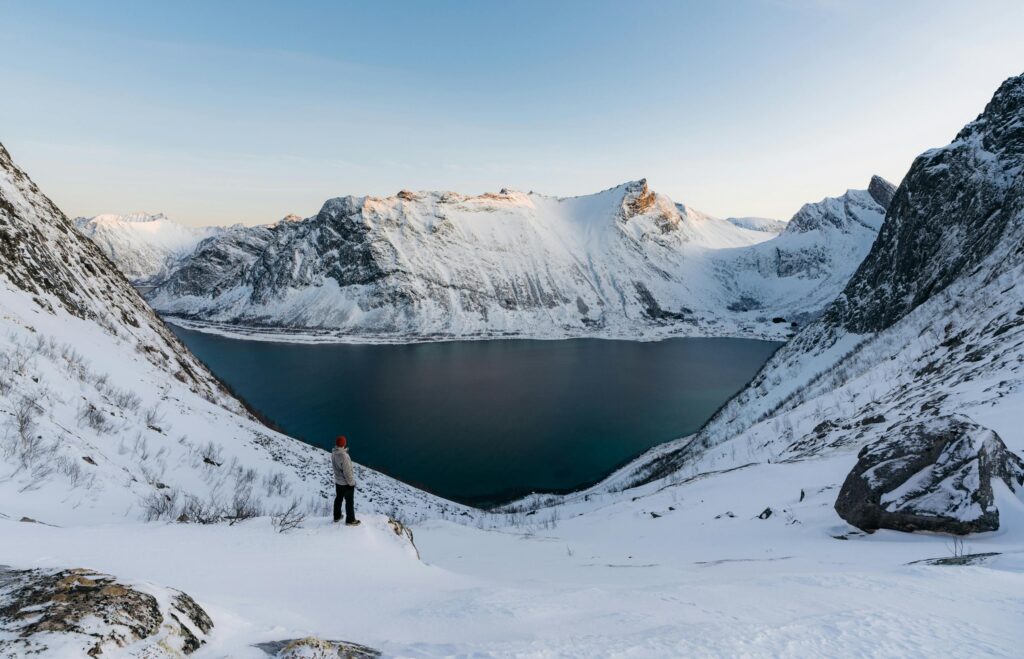
Image: Snow mountain in Norway
Quick Answer: What Are the Best Places to Visit in Norway?
The best places to visit in Norway include the dramatic fjords of Geirangerfjord, Sognefjord, and Hardangerfjord; Arctic destinations like Lofoten, Tromsø, and Svalbard; natural landmarks such as Pulpit Rock, Trolltunga, and the Atlantic Road; and cultural cities including Oslo, Bergen, and Trondheim.
For first-time visitors, the best Norway itinerary usually combines Oslo, Bergen, one or two fjord regions, and either Lofoten or Tromsø if you have enough time. Summer is best for hiking, road trips, and fjord cruises, while winter is ideal for Northern Lights, snow activities, and Arctic adventures.
Best Places to Visit in Norway: Quick Overview
| Place | Best For | Best Time to Visit |
|---|---|---|
| Geirangerfjord | Iconic fjord views, waterfalls, scenic cruises | June to August |
| Sognefjord | Fjord cruises, kayaking, mountain villages | May to September |
| Hardangerfjord | Blossom season, cider villages, scenic drives | May to June |
| Lofoten Islands | Photography, fishing villages, Arctic landscapes | May to September; September to April for Northern Lights |
| Tromsø | Northern Lights, Arctic tours, winter activities | September to March |
| Svalbard | Polar wilderness, glaciers, remote Arctic adventure | February to August |
| Pulpit Rock | Short scenic hike, Lysefjord views | May to September |
| Trolltunga | Challenging hike, iconic cliff viewpoint | June to September |
| Oslo | Museums, architecture, city break | Year-round |
| Bergen | Fjord gateway, Bryggen, mountain views | May to September |
| Trondheim | History, cathedral, colorful old town | May to September |
| Ålesund | Art Nouveau architecture, coastal views | May to September |
| Stavanger | Food, old town, Pulpit Rock access | May to September |
| Røros | Historic mining town, winter atmosphere | December to March |
| Reine | Lofoten photography, red cabins, mountain views | May to September |
Best Time to Visit Norway
Before choosing where to go in Norway, it helps to think about when you want to travel. Norway changes dramatically by season: summer brings long daylight hours, open hiking trails, and fjord cruises, while winter is best for Northern Lights, snowy landscapes, and Arctic activities.
There is no single “bad” time to visit Norway. The best season depends on what kind of trip you want: a summer road trip through the fjords, a winter aurora adventure in the north, or a quieter spring or autumn escape with fewer crowds.
Summer in Norway: June to August
Summer is the best time to visit Norway for fjord cruises, hiking, kayaking, road trips, and outdoor adventures. Days are long across the country, and in Northern Norway, the Midnight Sun keeps the sky bright even late at night.
This is also peak travel season, especially in famous places like Bergen, Geirangerfjord, Lofoten, and the Flåm area. Book accommodation, rental cars, trains, and popular tours early if you plan to visit in July or August.
Summer is best for:
- Fjord cruises and kayaking
- Hiking to viewpoints like Pulpit Rock and Trolltunga
- Road trips through western Norway and the Lofoten Islands
- Outdoor dining, festivals, and scenic train journeys
- Experiencing the Midnight Sun above the Arctic Circle
Winter in Norway: December to February
Winter is the best season for travelers who want to see Norway at its most atmospheric. Snow covers the mountains and villages, Arctic nights grow long, and destinations like Tromsø, Lofoten, Alta, and Svalbard become prime bases for Northern Lights trips.
This is also the season for dog sledding, snowshoeing, reindeer experiences, winter fjord cruises, and cozy cabin stays. Keep in mind that daylight is limited in the north, road conditions can be challenging, and some hikes or scenic routes may be closed.
Winter is best for:
- Northern Lights trips in Tromsø, Lofoten, Alta, and Svalbard
- Dog sledding, snowshoeing, and reindeer experiences
- Snowy landscapes and winter photography
- Cozy cabins, saunas, and slow travel
- Arctic adventures away from peak summer crowds
Spring and Autumn in Norway: May, September, and October
Spring and autumn are excellent times to visit Norway if you want fewer tourists, lower prices, and softer landscapes. These shoulder months are especially good for travelers who prefer a quieter trip and do not mind changing weather.
In spring, waterfalls are powerful, valleys turn green, and Hardangerfjord becomes especially beautiful when fruit trees bloom around May. In autumn, forests shift into red and gold tones, the air feels crisp, and reflections on lakes and fjords can be stunning.
Shoulder season is best for:
– Fewer crowds in popular fjord regions
– Better hotel availability compared with peak summer
– Spring waterfalls and blossom season
– Autumn colors and quieter road trips
– A more relaxed pace in cities like Bergen, Oslo, and Trondheim
Image: Norway’s stunning seasonal landscapes with Midnight Sun in summer and Northern Lights in winter
Chasing the aurora? Here’s how to spot the Northern Lights in Iceland too — the ultimate winter twin destination for Norway travelers.
Best Fjords to Visit in Norway
No Norway itinerary feels complete without time in the fjords. These deep, glacial valleys are some of the country’s most iconic landscapes, with steep cliffs, blue-green water, waterfalls, mountain farms, and small villages tucked along the shore.
For first-time visitors, the best fjords to visit in Norway are Geirangerfjord, Sognefjord, and Hardangerfjord. Each offers a different experience: Geirangerfjord is dramatic and compact, Sognefjord is vast and majestic, while Hardangerfjord is softer, quieter, and especially beautiful during blossom season.
Geirangerfjord – A Real-Life Fairytale
Geirangerfjord is one of Norway’s most famous fjords and a UNESCO-listed landscape known for its steep cliffs, deep blue water, and powerful waterfalls. If you only have time for one classic fjord experience, this is one of the strongest choices.
The fjord is compact enough to explore by boat, but dramatic enough to feel unforgettable. Scenic cruises give you close views of waterfalls and abandoned mountain farms, while the roads above the fjord reveal some of the most photographed viewpoints in Norway.
Highlights in Geirangerfjord include:
- Seven Sisters Waterfall: One of the fjord’s most famous waterfalls, best seen from the water.
- Skageflå Farm: A historic cliffside farm that can be reached by hike, often combined with a fjord cruise.
- Eagle Road Viewpoint: A panoramic viewpoint with sweeping views over Geirangerfjord and the surrounding mountains.
Geirangerfjord is best visited from late spring to early autumn, when boat tours, viewpoints, and mountain roads are easier to access
Image: Seven Sisters waterfall
Sognefjord: The Majestic King of Fjords
Sognefjord is Norway’s longest and deepest fjord, often called the “King of the Fjords.” Stretching more than 200 kilometers inland from the coast, it offers a grander and more expansive fjord experience than Geirangerfjord.
This is one of the best places to visit in Norway if you want scenic boat trips, quiet villages, mountain views, and easy access to some of the country’s most beautiful fjord branches. The region also works well for travelers who want to combine fjord cruises with train journeys, especially around Flåm.
Highlights around Sognefjord include:
- Flåm: A small fjord village known for the scenic Flåm Railway and easy access to fjord cruises.
- Nærøyfjord: A narrow UNESCO-listed fjord branch with steep cliffs and dramatic scenery.
- Aurlandsfjord: A peaceful fjord branch known for calm water, mountain views, and postcard-like villages.
- Stegastein Viewpoint: One of the best viewpoints over Aurlandsfjord.
Sognefjord is ideal for travelers who want a slower fjord experience with plenty of options for cruises, kayaking, viewpoints, and scenic train travel.
Image: Sognefjord’s dramatic cliffs and crystal-clear waters surrounded by mountains
Hardangerfjord: Norway’s Orchard Paradise
Hardangerfjord is one of the best places to visit in Norway if you want a quieter and more poetic fjord experience. While Geirangerfjord and Sognefjord often get more attention, Hardangerfjord offers a softer side of Norway, with fruit orchards, small villages, waterfalls, and mountain scenery.
The region is especially beautiful in spring, when apple and cherry trees bloom along the fjord. Snow can still cover the peaks above, while pink and white blossoms brighten the villages below. It feels like a Nordic version of blossom season, but with dramatic fjord backdrops, fresh air, and peaceful waterfront views.
Highlights around Hardangerfjord include:
- Ulvik: A quiet village known for orchards, cider farms, and fjord views.
- Lofthus: A scenic base for exploring the fjord and nearby hiking routes.
- Vøringsfossen: One of Norway’s most famous waterfalls, often visited on a Hardangerfjord road trip.
- Trolltunga: A challenging but iconic hike near the Hardangerfjord region.
Hardangerfjord is best for travelers who want fewer crowds, local food experiences, blossom landscapes, and a more relaxed fjord itinerary.
Which Norway Fjord Should You Choose?
If this is your first trip to Norway, Geirangerfjord is the easiest fjord to love because it delivers the classic scenery many travelers imagine: waterfalls, cliffs, viewpoints, and scenic cruises.
Choose Sognefjord if you want a bigger fjord region with more itinerary options, including Flåm, Nærøyfjord, Aurlandsfjord, scenic train rides, and longer boat trips.
Choose Hardangerfjord if you prefer a quieter route with orchards, waterfalls, local cider, and beautiful spring landscapes. It is especially rewarding in May and early June when the fruit trees are in bloom.
Northern Norway: Arctic Wonders Await
Northern Norway is where the country feels most wild and otherworldly. This region is known for Arctic landscapes, fishing villages, rugged coastlines, Northern Lights in winter, and the Midnight Sun in summer.
The best places to visit in Northern Norway include the Lofoten Islands, Tromsø, and Svalbard. Choose Lofoten for dramatic scenery and photography, Tromsø for Northern Lights tours and Arctic culture, and Svalbard for a remote polar adventure at the edge of the world.
Lofoten Islands – Where Mountains Meet the Sea
The Lofoten Islands are among the most beautiful places to visit in Norway, especially if you love dramatic landscapes, photography, hiking, and small coastal villages. Here, sharp mountains rise straight from the sea, red fishing cabins sit along quiet harbors, and the light changes constantly across the water.
Lofoten is also one of the best places in Norway for travelers who want both summer and winter experiences. In summer, you can hike under the Midnight Sun, kayak along the coast, and explore scenic villages by road. In winter, the islands become a striking backdrop for Northern Lights photography.
Highlights in the Lofoten Islands include:
- Reine and Hamnøy: Two of the most photographed fishing villages in Norway, known for red rorbuer cabins, mountain views, and quiet harbor scenery.
- Kvalvika Beach: A remote white-sand beach surrounded by cliffs, reached by hiking trail.
- Henningsvær: A charming fishing village with cafés, galleries, sea views, and one of Norway’s most famous football pitches.
- Reinebringen: A popular viewpoint hike with panoramic views over Reine, fjords, and surrounding peaks.
- Midnight Sun: Best experienced from late May to mid-July.
- Northern Lights: Usually visible from September to April when skies are dark and clear.
For the most authentic stay, book a rorbuer, a traditional fisherman’s cabin converted into guest accommodation. Many sit right on the water and offer direct access to Lofoten’s coastal scenery.
Image: Lofoten Islands with red fishing cabins against dramatic mountain backdrop
Tromsø: The Arctic Capital
Tromsø is one of the best places to visit in Norway for Northern Lights, Arctic culture, and winter adventure. Located above the Arctic Circle, the city offers easy access to mountains, fjords, snowy landscapes, and guided aurora tours, while still having the comfort of restaurants, hotels, museums, and nightlife.
For many travelers, Tromsø is the easiest Arctic destination to plan. You can spend the day exploring the city, then join a Northern Lights chase in the evening. In winter, popular activities include dog sledding, snowshoeing, reindeer experiences, whale watching, and fjord cruises.
Things to do in Tromsø include:
– Take the Fjellheisen cable car for panoramic views over the city, fjords, and surrounding mountains.
– Visit the Arctic Cathedral, one of Tromsø’s most recognizable landmarks.
– Join a Northern Lights tour between September and March.
– Learn about Arctic exploration and polar history at local museums.
– Experience Sami culture through guided reindeer visits and storytelling experiences.
– Go whale watching in the wider Tromsø region during the winter season.
Tromsø is best for travelers who want a balance of Arctic wilderness and city convenience. It is especially suitable for first-time visitors who want to see the Northern Lights without planning a remote expedition.
Svalbard: The Arctic Frontier
Svalbard is one of the most remote and adventurous places to visit in Norway. Located between mainland Norway and the North Pole, this Arctic archipelago is known for glaciers, polar landscapes, wildlife, long summer daylight, and the deep darkness of polar night.
Most visitors base themselves in Longyearbyen, the main settlement on Svalbard. From there, guided tours take travelers into the surrounding wilderness for glacier walks, boat trips, dog sledding, snowmobile excursions, ice cave visits, and wildlife-focused experiences.
Things to experience in Svalbard include:
– Longyearbyen: The main base for accommodation, restaurants, museums, and guided tours.
– Glacier and fjord tours: A chance to see Svalbard’s raw Arctic scenery from the water or ice.
– Dog sledding and snowmobile trips: Popular winter and spring activities.
– Pyramiden: A former Soviet mining settlement often visited on guided tours.
– Midnight Sun: A surreal summer period when daylight lasts around the clock.
– Polar Night: A winter period of darkness that creates a unique Arctic atmosphere.
Svalbard is best for adventurous travelers who are comfortable with cold weather, remote conditions, and guided outdoor activities. Because of wildlife and weather risks, travelers should not head into the wilderness alone. Always join qualified guides and follow local safety rules.
Image: Svalbard’s Arctic landscape with polar bears and glaciers
Which Northern Norway Destination Should You Choose?
Choose the Lofoten Islands if you want dramatic coastal scenery, photography, hiking, road trips, and traditional fishing villages. Lofoten works especially well for travelers who want a visually stunning trip and do not mind slower travel between remote places.
Choose Tromsø if your main goal is to see the Northern Lights or experience Arctic activities with easier logistics. It has more hotels, restaurants, tours, and transport options, making it one of the best choices for first-time winter travelers in Norway.
Choose Svalbard if you want a true polar adventure. It is more remote, more expensive, and more dependent on guided tours, but it offers one of the most unique travel experiences in Norway.
Best Natural Landmarks in Norway
Beyond the fjords, Norway is home to dramatic viewpoints, coastal roads, and rock formations that have become travel icons in their own right. These places are especially popular with hikers, photographers, and road-trip travelers.
Three of the best natural landmarks in Norway are Pulpit Rock, Trolltunga, and the Atlantic Road. Pulpit Rock is the most accessible iconic hike, Trolltunga is the most demanding, and the Atlantic Road is one of the country’s most scenic drives.
Pulpit Rock
Pulpit Rock, or Preikestolen, is one of the most iconic natural landmarks in Norway. This flat cliff rises about 604 meters above Lysefjord, creating one of the country’s most famous viewpoints.
The hike is popular because it feels adventurous without being as demanding as Trolltunga. The trail includes rocky and uneven sections, but many active travelers can complete it as a day hike in good weather.
What to know before hiking Pulpit Rock:
- Distance: Around 8 kilometers round trip
- Duration: Around 4 to 5 hours round trip, depending on pace and conditions
- Difficulty: Moderate
- Best season: Usually May to September
- Starting point: Preikestolen BaseCamp area
Start early if you want fewer crowds, especially in summer. Bring layers, water, snacks, and proper shoes, as weather can change quickly even when the hike starts under clear skies.
Pulpit Rock is best for travelers who want a famous Norway hike with a dramatic fjord view, but do not want a full-day expedition like Trolltunga.
Trolltunga
Trolltunga, meaning “the Troll’s Tongue,” is one of Norway’s most famous viewpoints. The rock formation extends out over Ringedalsvatnet lake, creating a dramatic photo spot high above the landscape.
This is also one of the most demanding hikes on a typical Norway itinerary. Unlike Pulpit Rock, Trolltunga requires a full day, strong fitness, proper gear, and careful weather planning. It is not a casual viewpoint stop.
What to know before hiking Trolltunga:
- Distance: Around 27 to 28 kilometers round trip from the main trailhead
- Duration: Around 10 to 12 hours round trip
- Elevation gain: Around 800 to 1,000 meters
- Difficulty: Challenging
- Best season: Usually June to September
- Guided hike: Recommended outside the main summer hiking season
Pack proper hiking shoes, warm layers, waterproof clothing, enough food and water, a headlamp, and a power bank. Weather can change quickly in the mountains, and the trail should only be attempted when conditions are safe.
Trolltunga is best for experienced hikers who want one of Norway’s most iconic viewpoints and are prepared for a long, physically demanding day.
Image: Trolltunga rock formation jutting out over a stunning lake view
Atlantic Road: Engineering Meets Nature
The Atlantic Road, or Atlanterhavsveien, is one of the most scenic drives in Norway. This short but dramatic coastal route connects small islands and skerries with a series of bridges, giving travelers a close-up view of the Norwegian Sea.
The road is especially popular with photographers and road-trip travelers. On calm days, it offers wide coastal views and reflections across the water. In rough weather, the scenery becomes more dramatic, although drivers should always follow local safety advice and road conditions.
Highlights along the Atlantic Road include:
- Storseisundet Bridge: The route’s most famous bridge, known for its unusual curved shape.
- Coastal viewpoints: Several pull-off areas allow you to stop safely for photos.
- Island scenery: The drive passes low islands, open sea, fishing areas, and rugged coastline.
- Road trip access: The Atlantic Road works well as part of a western Norway itinerary between Ålesund, Molde, and Kristiansund.
The Atlantic Road is best for travelers who enjoy scenic drives, coastal landscapes, photography, and slower road trips through western Norway.
Pulpit Rock vs Trolltunga: Which Hike Should You Choose?
Choose Pulpit Rock if you want a shorter and more accessible hike with a famous fjord view. It is still a real hike, but it is much easier to fit into a Norway itinerary than Trolltunga.
Choose Trolltunga if you are an experienced hiker and want a full-day mountain challenge. The view is spectacular, but the hike is long, physically demanding, and requires better preparation.
For most first-time visitors, Pulpit Rock is the more practical choice. Trolltunga is better for travelers who are building their Norway trip around hiking and have enough time to plan around weather conditions.
Best Cities to Visit in Norway
Norway is famous for fjords and Arctic landscapes, but its cities add culture, history, food, architecture, and easier travel connections to any itinerary. For first-time visitors, Oslo, Bergen, and Trondheim are three of the best cities to visit in Norway.
Oslo is the best choice for museums, modern architecture, and a relaxed capital-city break. Bergen is the classic gateway to the fjords, with colorful wooden buildings and mountain views. Trondheim offers medieval history, riverside charm, and a quieter cultural experience.
Oslo – Where Tradition Meets Innovation
Oslo is one of the best places to visit in Norway if you want a mix of culture, design, nature, and easy city travel. The capital feels calm compared with many European cities, but it still offers excellent museums, modern architecture, waterfront areas, restaurants, and access to nearby forests and islands.
What makes Oslo special is how close everything feels. You can visit a museum in the morning, walk along the harbor in the afternoon, and take a tram or ferry toward nature before the day ends.
Things to do in Oslo include:
- Oslo Opera House: A modern waterfront landmark where visitors can walk on the sloping roof for city and fjord views.
- Vigeland Sculpture Park: One of Oslo’s most famous attractions, with more than 200 sculptures by Gustav Vigeland.
- Fram Museum: A strong choice for travelers interested in polar exploration and Arctic history.
- MUNCH Museum: A major museum dedicated to Edvard Munch and modern art.
- Akershus Fortress: A historic fortress near the harbor with views over Oslofjord.
- Oslofjord islands: Easy day trips by ferry, especially in warmer months.
Oslo is best for first-time visitors, museum lovers, design fans, and travelers who want a soft landing before heading into Norway’s fjords or northern regions.
Image: Oslo’s modern architecture and cultural attractions including Opera House
Bergen: Gateway to the Fjords
Bergen is one of the most beautiful cities in Norway and a classic gateway to the fjords. Surrounded by seven mountains and facing the sea, the city combines colorful wooden architecture, harbor views, seafood, museums, and easy access to fjord cruises.
The most famous area is Bryggen, the historic Hanseatic wharf and UNESCO-listed district. Its colorful wooden buildings are one of Norway’s most recognizable city scenes and make Bergen a rewarding stop even if you are mainly visiting for the fjords.
Things to do in Bergen include:
– Bryggen: Bergen’s historic waterfront district, known for colorful wooden buildings and narrow alleyways.
– Fløibanen Funicular: A popular ride to Mount Fløyen for city, harbor, and mountain views.
– Mount Ulriken: A higher viewpoint and hiking area for travelers who want a more active city experience.
– Bergen Fish Market: A central spot for seafood, casual meals, and local atmosphere.
– KODE Museums: A group of art museums that are especially useful on rainy days.
– Fjord day trips: Bergen is a convenient base for trips toward Sognefjord, Hardangerfjord, and other western Norway routes.
Bergen is best for travelers who want a mix of city charm and fjord access. Pack a rain jacket, as the weather changes often and rainy days are part of the Bergen experience.
Trondheim: Norway’s Historical Heart
Trondheim is one of the best cities to visit in Norway for history, architecture, and a slower cultural experience. As Norway’s former capital, it has deep medieval roots, colorful riverside streets, and a lively student atmosphere.
The city feels more relaxed than Oslo and Bergen, making it a good choice for travelers who want history without the pace of a larger capital. It also works well as a stop between southern Norway and the northern regions.
Things to do in Trondheim include:
- Nidaros Cathedral: Scandinavia’s largest medieval cathedral and one of Norway’s most important historic landmarks.
- Bakklandet: A charming old neighborhood with wooden houses, cobbled streets, cafés, and river views.
- Old Town Bridge: A classic photo spot overlooking colorful wooden buildings along the Nidelva River.
- Kristiansten Fortress: A hilltop fortress with panoramic views over the city.
- Rockheim: Norway’s national museum of popular music.
- Trondheim waterfront: A good area for relaxed walks, cafés, and local dining.
Trondheim is best for travelers who enjoy history, walkable cities, local cafés, and a quieter alternative to Norway’s better-known urban stops.
Image: Trondheim’s colorful wooden buildings along the river and historical sites
Which Norway City Should You Choose?
Choose Oslo if you want museums, modern architecture, restaurants, and the easiest international arrival point. It is the best city for starting a Norway itinerary.
Choose Bergen if you want the most classic combination of city charm and fjord access. It is one of the best bases for exploring western Norway and works especially well for first-time visitors.
Choose Trondheim if you prefer history, local atmosphere, and a quieter city experience. It is a strong choice if you are traveling north or want to see a different side of Norway beyond Oslo and Bergen.
Hidden Gems and Small Towns in Norway
Some of the best places to visit in Norway are not major cities, but smaller towns, coastal villages, and historic communities with a strong sense of place. These destinations are ideal if you want slower travel, local character, scenic views, and fewer crowds.
Ålesund is known for Art Nouveau architecture and coastal scenery. Stavanger combines old wooden streets, food culture, and access to Pulpit Rock. Røros offers one of Norway’s most atmospheric historic towns, while Reine captures the classic beauty of the Lofoten Islands.
Ålesund – Norway’s Art Nouveau Wonder
Ålesund is one of the most visually distinctive towns in Norway. After a major fire in 1904, the town was rebuilt in Art Nouveau style, giving it a unique look with decorative facades, towers, pastel buildings, and elegant details.
Set across islands on Norway’s west coast, Ålesund is also a strong base for coastal views, fjord trips, and road routes toward Geirangerfjord. It feels smaller and quieter than Bergen, but still offers plenty of charm for travelers who enjoy architecture, photography, and scenic viewpoints.
Things to do in Ålesund include:
– Fjellstua Viewpoint: Climb the steps to Aksla viewpoint for one of the best views over Ålesund, the islands, and surrounding mountains.
– Art Nouveau Centre: Learn how the town was rebuilt and why its architecture is so unique in Norway.
– Ålesund harbor: A scenic area for walks, photography, seafood, and waterfront views.
– Day trips to Geirangerfjord: Ålesund works well as a starting point for exploring one of Norway’s most famous fjord regions.
Ålesund is best for travelers who want coastal scenery, architecture, photography, and a quieter western Norway base.
Stavanger: Culinary Capital with Coastal Charm
Stavanger is one of the best places to visit in Norway if you want a mix of coastal charm, food, history, and easy access to Pulpit Rock. The city is smaller than Oslo or Bergen, but it has a strong identity shaped by the sea, old wooden streets, and a growing food scene.
Old Stavanger, or Gamle Stavanger, is one of the city’s most atmospheric areas. Its white wooden houses, cobbled lanes, and quiet corners make it a lovely place to explore on foot. The harbor area adds restaurants, cafés, and easy access to boat trips along the coast.
Things to do in Stavanger include:
- Old Stavanger: Walk through one of Europe’s best-preserved wooden house districts.
- Norwegian Petroleum Museum: A surprisingly engaging museum about Norway’s oil history and offshore industry.
- Stavanger harbor: A central area for restaurants, boat trips, and waterfront views.
- Sola Beach: A long sandy beach near the city, good for coastal walks.
- Pulpit Rock access: Stavanger is one of the main bases for travelers planning to hike Preikestolen.
Stavanger is best for travelers who want a smaller city with character, good food, coastal scenery, and convenient access to one of Norway’s most famous hikes.
Røros: Living Mining History
Røros is one of Norway’s most atmospheric historic towns. This former copper mining town is a UNESCO World Heritage Site, known for its preserved wooden buildings, mining heritage, traditional streets, and strong local character.
Walking through Røros feels very different from visiting Norway’s larger cities or fjord villages. The town has a quiet, historic mood, with old timber houses, small shops, cafés, and museums that help tell the story of its mining past.
Things to do in Røros include:
- Explore the historic wooden town center and preserved mining buildings.
- Visit the Røros Museum to learn about the town’s copper mining history.
- Walk the old streets for photography, local shops, and traditional architecture.
- Visit in winter for snow-covered rooftops, Christmas atmosphere, and cozy cafés.
- Try local food, as Røros is known for strong regional food traditions.
Røros is best for travelers who enjoy history, winter scenery, small-town atmosphere, and destinations that feel slower and more local.
Image: Røros’ well-preserved historical wooden building in winter snow
Reine: Lofoten’s Picture-Perfect Village
Reine is one of the most photographed villages in Norway and one of the most beautiful stops in the Lofoten Islands. Surrounded by sharp mountains, calm water, red fishing cabins, and dramatic coastal scenery, it captures the classic image many travelers associate with northern Norway.
Although Reine is small, it is worth including in a Norway itinerary if you are visiting Lofoten. The village works especially well for photography, slow walks, scenic drives, and nearby hikes.
Things to do in Reine include:
– Photograph the classic Reine viewpoint from the E10 road.
– Stay in a rorbuer cabin for a traditional Lofoten experience.
– Explore nearby fishing villages and coastal viewpoints.
– Hike Reinebringen if conditions are safe and you are prepared for steep steps.
– Visit at sunrise, sunset, or during the Midnight Sun for beautiful light.
Reine is best for photographers, nature lovers, couples, and travelers who want one of the most iconic village views in Norway.
Which Small Town or Hidden Gem Should You Choose?
Choose Ålesund if you want architecture, coastal views, and a quieter base for exploring western Norway. It is especially useful if your itinerary includes Geirangerfjord.
Choose Stavanger if you want food, old wooden streets, coastal walks, and easy access to Pulpit Rock. It works well for travelers who want both city comfort and outdoor adventure.
Choose Røros if you want history, winter atmosphere, and a traditional small-town experience. It is one of the best choices in Norway for travelers who enjoy heritage destinations.
Choose Reine if you are visiting Lofoten and want one of Norway’s most iconic village views. It is best for photography, dramatic landscapes, and slow travel.
How Many Days Do You Need in Norway?
The ideal length for a Norway trip depends on how much of the country you want to see. Norway is long, mountainous, and spread out, so trying to cover too many regions in a short time can make the trip feel rushed.
For most first-time visitors, 7 to 10 days is enough to experience a good mix of cities, fjords, and scenic transport. If you want to add Northern Norway, Lofoten, Tromsø, or Svalbard, plan for at least 10 to 14 days.
Here is a simple way to think about your Norway itinerary:
- 5 to 6 days: Best for Oslo, Bergen, and one fjord region.
- 7 to 8 days: Good for Oslo, Bergen, Flåm, Sognefjord, and possibly Ålesund or Stavanger.
- 10 days: Enough for a classic southern Norway route with cities, fjords, and one major hike or scenic road.
- 14 days: Better if you want to add Lofoten, Tromsø, or another northern destination.
- 3 weeks or more: Ideal for combining southern Norway, western fjords, Northern Norway, and a slower road trip.
If this is your first trip, avoid trying to see every famous place at once. A focused route through Oslo, Bergen, the fjords, and one northern or hiking destination will usually feel better than a rushed checklist.
Suggested Norway Itinerary for First-Time Visitors
If you are visiting Norway for the first time, build your itinerary around a few strong regions instead of trying to cover the whole country. Oslo, Bergen, the western fjords, and either a major hike or a northern destination make a strong first trip.
7-Day Norway Itinerary
A 7-day Norway itinerary is best for travelers who want a compact first trip with cities, fjords, and scenic transport.
| Day | Destination | What to Do |
|---|---|---|
| Day 1 | Oslo | Visit the Opera House, MUNCH Museum, Vigeland Sculpture Park, and the waterfront |
| Day 2 | Oslo to Bergen | Take the train toward Bergen or follow a scenic route via Flåm if time allows |
| Day 3 | Bergen | Explore Bryggen, ride the Fløibanen Funicular, visit the Fish Market, and enjoy the harbor |
| Day 4 | Flåm / Sognefjord | Take a fjord cruise, ride the Flåm Railway, and visit Aurlandsfjord or Nærøyfjord |
| Day 5 | Fjord region | Continue exploring Sognefjord, Hardangerfjord, or nearby viewpoints |
| Day 6 | Ålesund or Stavanger | Choose Ålesund for Geirangerfjord access or Stavanger for Pulpit Rock |
| Day 7 | Return to Oslo or Bergen | Travel back for your flight or continue to another Nordic destination |
This route works best if you want a classic introduction to Norway without flying north.
10-Day Norway Itinerary
A 10-day Norway itinerary gives you more time to enjoy the fjords without rushing. It also lets you add either Pulpit Rock, Geirangerfjord, or a slower western Norway road trip.
| Day | Destination | What to Do |
|---|---|---|
| Day 1 | Oslo | Explore museums, the harbor, Akershus Fortress, and the Opera House |
| Day 2 | Oslo to Flåm | Travel by train and enjoy one of Norway’s most scenic routes |
| Day 3 | Flåm and Nærøyfjord | Take a fjord cruise and enjoy Aurlandsfjord or Stegastein Viewpoint |
| Day 4 | Bergen | Explore Bryggen, Mount Fløyen, the Fish Market, and KODE Museums |
| Day 5 | Bergen / Hardangerfjord | Take a day trip or drive toward Hardangerfjord for waterfalls and orchards |
| Day 6 | Ålesund | Travel toward Ålesund and explore the Art Nouveau town center |
| Day 7 | Geirangerfjord | Take a fjord cruise or scenic drive around Geirangerfjord |
| Day 8 | Stavanger or Trondheim | Choose Stavanger for Pulpit Rock or Trondheim for history and culture |
| Day 9 | Pulpit Rock or city day | Hike Preikestolen if in Stavanger, or explore Trondheim’s cathedral and old town |
| Day 10 | Return | Fly or train back to Oslo, Bergen, or your next destination |
This itinerary is best for travelers who want a balanced mix of cities, fjords, scenic routes, and one major outdoor experience.
14-Day Norway Itinerary with Northern Norway
A 14-day Norway itinerary is better if you want to combine the classic fjords with Northern Norway. Because distances are long, it is usually better to fly between southern Norway and the north instead of trying to do everything by road.
| Day | Destination | What to Do |
|---|---|---|
| Day 1 | Oslo | Start with museums, the waterfront, and city landmarks |
| Day 2 | Oslo to Flåm | Take a scenic train route toward the fjord region |
| Day 3 | Sognefjord / Nærøyfjord | Enjoy a fjord cruise, viewpoints, and quiet villages |
| Day 4 | Bergen | Explore Bryggen, Mount Fløyen, and the harbor |
| Day 5 | Hardangerfjord or Bergen | Add waterfalls, orchards, or a relaxed city day |
| Day 6 | Ålesund | Visit the Art Nouveau center and Aksla viewpoint |
| Day 7 | Geirangerfjord | Take a scenic cruise or drive around Geirangerfjord |
| Day 8 | Travel north | Fly to Tromsø, Bodø, or another northern gateway |
| Day 9 | Tromsø or Lofoten | Start your Arctic itinerary |
| Day 10 | Tromsø or Lofoten | Join a Northern Lights tour in winter or hike in summer |
| Day 11 | Lofoten Islands | Visit Reine, Hamnøy, Henningsvær, and scenic viewpoints |
| Day 12 | Lofoten Islands | Add beaches, rorbuer cabins, photography, or coastal hikes |
| Day 13 | Northern Norway buffer day | Keep this day flexible for weather, transport, or extra activities |
| Day 14 | Return | Fly back to Oslo or continue to another Nordic destination |
This route is best for travelers who want both the famous fjords and the Arctic side of Norway. In winter, focus more on Tromsø and Northern Lights. In summer, Lofoten is especially strong for road trips, hiking, and Midnight Sun scenery.
Which Norway Itinerary Should You Choose?
Choose the 7-day itinerary if this is your first trip and you want a simple route with Oslo, Bergen, and one fjord region.
Choose the 10-day itinerary if you want a more complete southern Norway trip with fjords, cities, scenic routes, and either Pulpit Rock or Geirangerfjord.
Choose the 14-day itinerary if you want to add Northern Norway, especially Lofoten or Tromsø. This is the better option for travelers who want Northern Lights in winter or Midnight Sun landscapes in summer.
If you are unsure, choose fewer places and spend more time in each region. Norway rewards slow travel, and the best moments often happen between the major stops.
Norway Travel Tips for First-Time Visitors
Once you have a shortlist of the best places to visit in Norway, the next step is planning the practical details. Norway is safe and well organized, but distances can be long, weather changes quickly, and transport often requires more planning than in smaller European countries.
These Norway travel tips will help you decide how to get around, where to stay, how to manage your budget, what to pack, and how to stay connected during your trip.
Getting Around Norway
Norway’s geography is dramatic, which means getting around can take longer than it looks on a map. Fjords, mountains, islands, tunnels, and ferries all shape the way people travel through the country.
The best way to get around Norway depends on your itinerary:
- Rental car: Best for fjord regions, scenic roads, small villages, Lofoten, and flexible road trips. Keep in mind that roads can be narrow, parking can be expensive in cities, and winter driving requires extra caution.
- Trains: Best for scenic journeys between major cities and mountain regions. The Bergen Railway and Flåm Railway are especially popular with visitors.
- Ferries: Essential for many coastal and fjord routes. Some ferries carry cars, while others are passenger-only services used for fjord cruises and local connections.
- Domestic flights: Useful for long distances, especially if you want to combine southern Norway with Tromsø, Lofoten, or other northern destinations.
- Public transport: Good in cities like Oslo, Bergen, and Trondheim, but less convenient for remote nature areas.
For first-time visitors, a common approach is to use trains and ferries for classic routes, then rent a car for fjords, coastal roads, or Lofoten.
Where to Stay in Norway
Norway has a wide range of accommodation, from city hotels and boutique stays to mountain cabins and traditional fishing cottages. Prices can be high during peak season, so it is worth booking early if you are traveling in summer, during holidays, or to popular places like Lofoten, Bergen, Tromsø, and the fjord regions.
Common accommodation options in Norway include:
- City hotels: Best for Oslo, Bergen, Trondheim, Tromsø, and Stavanger. They are convenient for public transport, restaurants, museums, and short stays.
- Boutique hotels and historic inns: Good for travelers who want more character, especially in smaller towns and scenic regions.
- Rorbuer cabins: Traditional fisherman’s cabins in Lofoten and other coastal areas. These are one of the most memorable places to stay in Norway.
- Mountain lodges and DNT cabins: Best for hikers and outdoor travelers. Some are simple self-service cabins, while others offer meals and more comfort.
- Farm stays and rural guesthouses: Good for slower travel, local food, and countryside scenery.
- Unique winter stays: In northern Norway, you can find igloo hotels, glass cabins, and aurora-focused lodges.
If your itinerary includes remote areas, check location carefully before booking. A beautiful cabin may require a rental car, ferry connection, or longer transfer than expected.
Budget Tips for Norway
Norway is one of Europe’s more expensive travel destinations, but you can manage costs with smart planning. The biggest expenses are usually accommodation, restaurants, transport, and guided tours.
Ways to save money in Norway include:
- Travel in shoulder season: May, early June, September, and October often bring lower prices and fewer crowds than peak summer.
- Book transport early: Trains, domestic flights, rental cars, and ferries can become expensive close to departure.
- Mix restaurants with supermarket meals: Grocery stores such as Kiwi, Rema 1000, and Coop are useful for breakfast, snacks, and simple meals.
- Use city passes when they make sense: The Oslo Pass or Bergen Card may be useful if you plan to visit several museums and use public transport.
- Spend time in nature: Many of Norway’s best experiences, including viewpoints, walks, fjord scenery, and scenic drives, do not require expensive entrance fees.
- Bring a reusable water bottle: Tap water in Norway is safe to drink and widely available.
- Use a travel card: Norway is largely cashless, so a card with low or no foreign transaction fees is helpful.
If your budget is limited, focus on fewer regions instead of trying to cover the whole country. A slower itinerary can reduce transport costs and make the trip more enjoyable.
Image: Norwegian accommodation options from luxury hotels to traditional cabins
What to Pack for Norway
Packing for Norway depends on the season, but one rule applies year-round: bring layers. Weather can change quickly, especially in coastal areas, fjord regions, and the mountains.
For most Norway trips, pack:
- Base layers: Useful for hiking, cold mornings, and changing weather.
- Warm mid-layers: Fleece, wool sweaters, or insulated jackets work well.
- Waterproof outer layer: A rain jacket is essential, especially in Bergen, the fjords, and coastal regions.
- Comfortable walking shoes: Cities are walkable, and many viewpoints involve uneven paths or steps.
- Hiking shoes: Important if you plan to hike Pulpit Rock, Trolltunga, Reinebringen, or mountain trails.
- Hat, gloves, and scarf: Useful outside summer and essential in winter.
- Sunscreen and sunglasses: Important in summer, especially during long daylight hours and near snow.
- Power bank: Helpful for navigation, photos, tickets, weather apps, and emergency use.
- Reusable water bottle: Tap water is safe and easy to refill.
For winter trips, add thermal base layers, insulated boots, thick socks, a warm hat, gloves, and a proper winter jacket. For summer hiking, still bring warm layers and waterproof gear, as mountain weather can shift fast.
Image: The Layering System for Norway
How to Stay Connected While Traveling in Norway
Staying connected in Norway is useful for much more than sharing photos. Many of the best places to visit in Norway involve fjords, mountain roads, ferries, hiking trails, remote villages, and Arctic regions where planning can change quickly with the weather.
Reliable mobile data helps you check maps, ferry schedules, train tickets, road conditions, hiking routes, weather alerts, restaurant bookings, translation apps, and Northern Lights forecasts while you travel.
Why Mobile Data Matters in Norway
Mobile data is especially helpful in Norway because many trips involve changing weather, long travel distances, and routes that combine different types of transport.
You may need data for:
- Navigation: Use maps for road trips, city transport, hiking trailheads, and walking routes.
- Ferry and train updates: Check timetables, delays, tickets, and route changes.
- Weather alerts: Mountain and coastal weather can shift quickly, especially in fjord regions and northern Norway.
- Northern Lights forecasts: If you are visiting Tromsø, Lofoten, Alta, or Svalbard in winter, aurora apps and cloud forecasts are useful.
- Translation: Helpful for menus, signs, booking details, and local information.
- Safety: Keep access to emergency contacts, accommodation details, and travel updates.
- Bookings: Manage tours, restaurants, hotels, rental cars, and last-minute itinerary changes.
Using a Norway eSIM or Europe eSIM
One of the easiest ways to stay online in Norway is to use a travel eSIM. Instead of buying a physical SIM card after arrival or relying on expensive roaming, you can install your eSIM before your trip and activate it when you arrive.
For Norway, travelers can choose either a Norway eSIM or a Europe eSIM from Gohub, depending on the itinerary. A Norway eSIM works well if your trip is focused only on Norway. A Europe eSIM is more convenient if you are combining Norway with Sweden, Denmark, Finland, Iceland, or other European destinations.
With a Gohub eSIM, you can:
– Set up mobile data before departure
– Avoid switching physical SIM cards
– Use maps, weather apps, booking platforms, and messaging apps while traveling
– Stay connected across cities, fjords, and many remote travel areas
– Avoid unexpected international roaming charges
Norway eSIM vs. Europe eSIM: Which One Should You Choose?
Choose a Norway eSIM if your entire trip is within Norway. This is the simplest option for travelers visiting places like Oslo, Bergen, Tromsø, Lofoten, Geirangerfjord, or Sognefjord.
Choose a Europe eSIM if your trip includes multiple countries. This is useful if you are adding Norway to a wider Nordic or European itinerary, such as Norway and Sweden, Norway and Denmark, or Norway and Iceland.
Before buying, check your travel dates, expected data usage, device compatibility, and whether your phone is unlocked for eSIM use.
Stay Connected with Gohub
A little preparation makes traveling in Norway much smoother. Install your eSIM before departure, keep your travel apps ready, and make sure you can access maps, tickets, weather updates, and booking confirmations when you need them.
Ready to explore Norway without roaming stress? Get your Norway eSIM from Gohub before you go.
Image: Screenshot of the GoHub eSIM webpage, highlighting the destination input field with “Norway” selected, illustrating how users can easily search for eSIM data plans.
Image: eSIM offers affordable data throughout Norway
Related Articles You May Enjoy
- 🌍 Planning a safari or coastal escape? Discover the Best Places to Visit in South Africa for wildlife, wine, and scenic coastlines.
- 🇺🇸 From national parks to iconic cities – explore the Best Places to Visit in the USA for your next American adventure.
- 🇯🇵 Whether it’s cherry blossoms or neon nights, this guide to the Best Places to Visit in Japan will help you plan the perfect trip.
- 🇸🇪 Curious about Scandinavia? Get inspired by the Best Places to Visit in Sweden, from Stockholm to the Arctic Circle.
Conclusion: Best Places to Visit in Norway
Norway is one of Europe’s most unforgettable destinations, with a rare mix of fjords, mountains, Arctic landscapes, historic cities, coastal villages, and world-class scenic routes.
For a first trip, start with Oslo, Bergen, and one or two fjord regions such as Sognefjord, Geirangerfjord, or Hardangerfjord. If you have more time, add Lofoten or Tromsø for Northern Norway’s dramatic scenery, Midnight Sun, or Northern Lights. Travelers who love hiking can build the trip around Pulpit Rock or Trolltunga, while slower travelers may prefer Ålesund, Røros, Stavanger, or Reine.
However you plan your route, Norway rewards preparation. Book key transport early, pack for changing weather, leave space in your itinerary, and make sure you can access maps, ferry schedules, weather updates, and booking confirmations while you travel.
Ready to explore Norway with less roaming stress? Get your Norway eSIM from Gohub before you go.
For more resources to plan your trip, check out: