





Introduction
Staying online while traveling abroad is almost as essential as carrying a passport. But what is data roaming, how does it work, and why can it sometimes lead to unexpectedly high mobile bills?
Data roaming allows a smartphone to connect to a foreign mobile network when it is outside the coverage of the user’s home carrier. This makes it possible to browse the internet, use maps, check emails, and stay connected while traveling internationally. However, roaming charges can quickly add up if travelers do not understand how the system works.
This guide explains what data roaming is, how it works, why roaming fees can be expensive, and how travelers can avoid unnecessary charges. It also explores smarter alternatives such as local SIM cards, Wi-Fi, and modern travel eSIM solutions, helping travelers stay connected abroad without overspending.
Hate surprise charges? Switch to a prepaid eSIM and skip the roaming traps—no contracts, no bill shock, just smooth internet abroad.
What is Data Roaming and How Does it Work?
Data roaming refers to using mobile data when a device connects to a network outside the coverage of its home carrier. This usually happens when traveling internationally, though it can also occur near national borders or in regions where the home network has limited coverage.
Instead of losing connectivity, the phone automatically connects to a partner network in the destination country through international roaming agreements between mobile carriers. This allows travelers to continue using mobile services such as browsing the web, checking emails, navigating with maps, and accessing social media apps.
How International Data Roaming Works
International data roaming typically follows a simple process:
Network Detection
When a device moves outside the coverage of the home carrier, it scans for available mobile networks in the area.
Connection Through Roaming Agreements
The home carrier connects the device to a foreign partner network through pre-existing roaming agreements between operators.
Data Usage and Billing
Once connected, mobile data works as usual. However, the home carrier records the data usage and applies international roaming charges based on its pricing policy.
While roaming offers convenience and uninterrupted connectivity, it can become expensive if travelers are unaware of how roaming charges are calculated. Understanding how data roaming works is the first step to avoiding unexpected mobile bills during international trips.
Pro Tip: Many travelers choose travel eSIM plans instead of traditional roaming. A travel eSIM provides instant activation and often offers more predictable data pricing across multiple countries.
The Cost of Convenience: Why Data Roaming Can Be Expensive
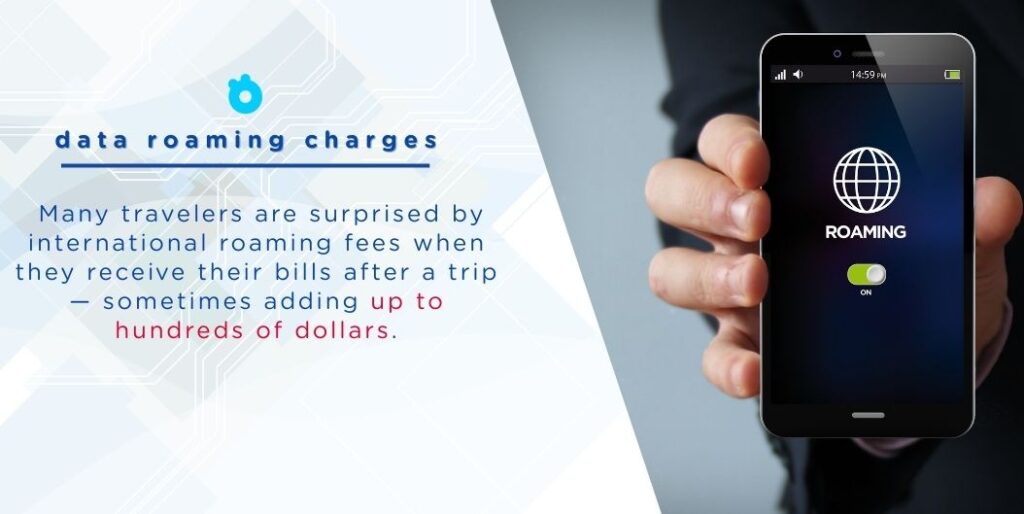
Data roaming provides convenient internet access while traveling, but that convenience often comes at a significant cost. Many travelers only realize how expensive roaming can be after returning home and receiving an unexpectedly high mobile bill.
Why Roaming Charges Are Often High
Several factors contribute to the high cost of international data roaming.
Inter-Carrier Agreements
When a phone connects to a foreign network, the home carrier must pay the local operator for network access. These wholesale charges are then passed on to the customer, often with additional markup.
Limited Competition in Some Regions
In certain destinations, the number of mobile network operators may be limited. With fewer competitors, roaming prices can remain high compared to domestic mobile data rates.
Pay-Per-Megabyte Billing
Many carriers still apply pay-per-MB pricing for roaming data instead of offering predictable flat-rate packages. Even small amounts of data usage — such as opening maps, checking email, or loading social media — can quickly accumulate charges.
For example, some international roaming rates can reach around $2 per MB depending on the carrier and destination. Activities such as video streaming or large file downloads may consume hundreds of megabytes within minutes.
Lack of Pricing Transparency
Roaming fees are often hidden within carrier pricing pages or complex international plans, making it difficult for travelers to estimate potential costs before their trip.
Because of these factors, traditional roaming is often the most expensive way to access mobile data abroad.
Pro Tip: Many travelers avoid unpredictable roaming fees by using travel eSIM plans, which typically offer prepaid data packages, instant activation, and coverage across multiple countries.
Managing Data Roaming: Tips and Strategies
Staying connected while traveling does not have to mean paying expensive roaming fees. By understanding how to manage data roaming settings and monitor mobile data usage, travelers can avoid unexpected charges and maintain better control over their connectivity abroad.
How to Turn Data Roaming On or Off
One of the simplest ways to manage roaming costs is by controlling when data roaming is enabled on the device.
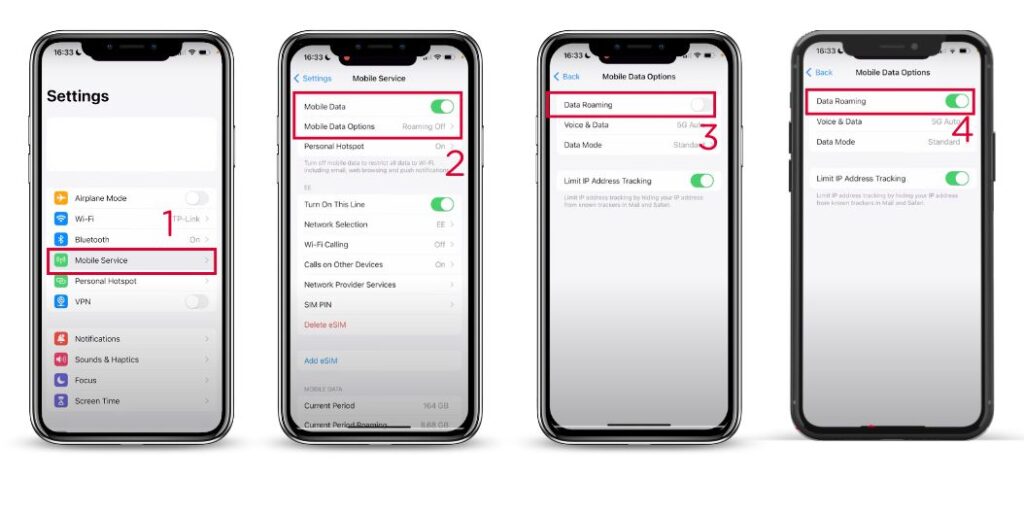
For iPhone
Open Settings
Tap Cellular or Mobile Data
Select Cellular Data Options
Toggle Data Roaming on or off
For Android
Open Settings
Go to Connections or Network & Internet
Tap Mobile Networks
Toggle Data Roaming on or off
Turning off data roaming prevents the device from using foreign mobile networks for data. However, Wi-Fi connections will continue to work normally.
Setting Data Limits and Usage Alerts
Monitoring data usage is another effective way to prevent unexpected roaming charges.
For iPhone
Open Settings
Tap Cellular
Scroll to Cellular Data Usage
Tap Reset Statistics before starting a trip to track usage more accurately
For Android
Open Settings
Go to Connections or Data Usage
Set a data warning and data limit
These alerts notify users when mobile data consumption approaches a predefined limit, helping travelers stay within budget.
Important Note for eSIM Users
Some travel eSIM providers require data roaming to be turned on for the data connection to function properly. In these cases, roaming does not mean traditional carrier roaming charges, because the eSIM already provides a prepaid data plan.
Always check the activation instructions provided by the eSIM provider before turning roaming off.
Alternatives to Data Roaming
High data roaming charges don’t have to ruin your travel experience. Luckily, there are several data roaming alternatives that can help you stay connected abroad without paying premium fees.
Local SIM Cards: The Budget-Friendly Option
Purchasing a local SIM card can be an excellent alternative to data roaming. Here’s why:
- Cost-Effective: Local rates are often much cheaper than roaming charges.
- Better Coverage: Local SIMs typically offer better network access within the country.
- Flexibility: Many providers offer short-term plans perfect for travelers.
However, remember that using a local SIM means you’ll have a new phone number, which can be inconvenient for receiving calls or texts from home.
eSIM Technology: The Future of Travel Connectivity
eSIMs (embedded SIMs) are revolutionizing how travelers stay connected. Here’s what makes them stand out:
- Convenience: No physical SIM card needed; activate plans digitally.
- Multiple Profiles: Keep your home number while using a local data plan.
- Wide Coverage: Many eSIM providers offer plans covering multiple countries.
Gohub’s eSIM solutions provide seamless connectivity across over 100 countries, making it an ideal choice for frequent travelers.
Wi-Fi Hotspots: Free but Limited
Relying on Wi-Fi hotspots can be a free way to stay connected:
- Pros: No data charges, widely available in urban areas.
- Cons: Limited availability, potential security risks, inconsistent speeds.
When using public Wi-Fi, always use a VPN to protect your personal information.
Quick Comparison Table
| Feature | Local SIM | Travel eSIM | Wi-Fi Hotspots |
|---|---|---|---|
| Activation | Buy & swap SIM | Instant QR activation | Manual connection |
| Coverage | Single country | Multi-country (100+) | Location-based only |
| Phone Number | New local number | Keep home number | N/A |
| Cost | Low local rates | Affordable local rates | Free |
| Convenience | Medium | High | Low |
By exploring these data roaming alternatives, you can choose the best way to avoid roaming charges based on your travel style and destination. For most modern travelers, a travel eSIM is the most flexible and cost-effective solution.
Smart Data Usage Habits for Travelers
Even if you rely on data roaming alternatives like eSIMs or local SIM cards, adopting smart data usage habits can further help you reduce data roaming usage and cut unnecessary costs. These data-saving tips while traveling make it easier to stay connected abroad efficiently.
Offline Maps and Content
Before your trip, download essential content:
- Use Google Maps’ offline feature to download city maps.
- Save important documents like boarding passes and hotel reservations.
- Download entertainment content like music, podcasts, or e-books.
These preparations can significantly reduce your need for data roaming.
Data-Saving App Settings
Optimize your apps to use less data:
- Disable auto-play videos on social media apps.
- Turn off background app refresh for non-essential apps.
- Use data compression features in browsers like Chrome.

Messaging Apps for Efficient Communication
Utilize messaging apps that use less data:
- WhatsApp and Facebook Messenger for texts and calls.
- Skype for international calls (uses less data than traditional voice calls).
These apps can help you stay in touch without incurring high roaming charges.
Understanding Roaming Agreements and International Plans
When traveling abroad, your home carrier has to rely on partner networks to keep you connected. These partnerships are managed through roaming agreements, and understanding how they work can help you choose smarter international data plans and avoid unexpected costs.
EU Roaming Regulations
For travelers within the European Union, roaming has become much more affordable:
- “Roam Like at Home”: EU citizens can use their domestic plans in other EU countries without additional charges.
- Fair Use Policy: Limitations may apply for extended stays abroad.
This policy has significantly reduced the cost of staying connected for EU travelers.
International Day Passes
Many carriers offer daily roaming passes:
- Flat Fee: Pay a set amount per day for a data allowance.
- Convenience: Use your regular number and plan abroad.
- Considerations: Can be expensive for longer trips.
For example, some U.S. carriers offer day passes ranging from $5 to $10 per day.
Pro Tip: With Gohub travel eSIMs, you can skip complicated roaming agreements and enjoy high-speed data in over 100+ countries at a fraction of the cost.
3. Roaming Packages and Travel Data Plans
Some carriers provide travel-specific roaming packages designed for short-term international use:
- Data Bundles → Buy a set amount of data to use abroad at a discounted rate.
- Multi-Country Packages → Ideal for trips covering several destinations.
- Travel Data Passes → Usually valid for a fixed period, like 7, 14, or 30 days.
However, these packages can still be costlier compared to local SIM cards or travel eSIMs.
4. Travel eSIMs: A Smarter Alternative
Instead of paying premium international roaming fees, modern travelers are switching to travel eSIMs:
- Affordable local data rates without unexpected charges.
- Instant activation via QR code.
- Multi-country coverage in a single plan.
- Keep your home number active while using local data.
| Option | Cost | Ease of Use | Coverage | Best For |
|---|---|---|---|---|
| EU Roam Like at Home | Included | Seamless | EU Countries | EU Residents |
| International Day Pass | $5–$10/day | Easy | Limited countries | Short trips |
| Roaming Packages | Moderate–High | Moderate | Single or multi-country | Occasional travelers |
| Travel eSIM | Low local rates | Instant | 100+ countries | Frequent travelers |
By understanding international roaming plans and exploring data roaming alternatives like travel eSIMs, you can choose the best way to stay connected abroad without overspending.
The Future of Mobile Connectivity for Travelers
The landscape of international mobile connectivity is evolving rapidly. As technology advances, travelers can expect faster speeds, wider coverage, and more affordable solutions. Here’s what’s coming next:
1. 5G Roaming: Faster Speeds, Smarter Plans
With the global rollout of 5G networks, expect a major shift in international roaming plans:
- Ultra-fast speeds make remote work, video calls, and streaming seamless.
- More competitive pricing as carriers expand their 5G roaming agreements.
- Wider availability in urban hubs and popular tourist destinations.
Pro Tip: When choosing a travel eSIM, look for providers like Gohub that already support 5G roaming plans for a faster, more reliable experience.
2. Satellite Internet: Global Connectivity Anywhere
Emerging solutions like satellite-based internet aim to solve connectivity gaps where traditional mobile networks struggle:
- Always-on coverage in remote regions, deserts, mountains, or open seas.
- Services like Starlink are leading the way for travelers in off-grid areas.
- As prices drop, satellite internet for travelers could become an affordable backup to eSIM or local networks.
3. The Rise of eSIM Technology
As more devices adopt eSIM compatibility, travelers are shifting away from traditional SIM cards entirely:
- Multi-country plans on one device → no swapping SIMs.
- Instant activation from anywhere → scan a QR code and connect.
- Eco-friendly solution → reducing plastic waste from physical SIM cards.
With eSIM adoption accelerating, managing data roaming will become simpler and cheaper in the coming years.
4. Smarter Travel Data Packages
Carriers and eSIM providers are creating flexible global plans tailored for modern travelers:
- Pay only for what you use with smart data bundles.
- Combine multi-country coverage with budget-friendly pricing.
- Real-time usage tracking via apps and dashboards to avoid unexpected charges.
By staying ahead of these trends — from 5G roaming plans to satellite internet for travelers — you can prepare for a future where seamless global connectivity is the norm. For now, switching to travel eSIMs remains the smartest way to avoid data roaming costs and enjoy fast, reliable mobile data anywhere in the world.
FAQs About Data Roaming
1. Should data roaming be on or off?
If you’re traveling internationally, keep data roaming off unless you have a roaming plan or travel eSIM to avoid unexpected charges. When you’re within your home country, you can leave it on without extra costs.
2. What happens if your data roaming is on?
When data roaming is on and you’re outside your carrier’s network, your phone connects to a foreign network. This allows you to browse, stream, and use apps, but it often comes with additional fees unless you’re using a local SIM or eSIM.
3. What is the purpose of data roaming?
The main purpose of data roaming is to keep you connected abroad when you’re outside your home network. It lets you use mobile data for internet access, messaging apps, maps, and emails even in another country.
4. Is data roaming free?
In most cases, data roaming isn’t free. Your carrier charges you based on international roaming agreements. However, you can avoid these fees by using local SIM cards or a travel eSIM with affordable data plans.
Conclusion: Staying Connected Without Breaking the Bank
Understanding what data roaming is and how to manage it is crucial for any traveler in today’s digital age. By employing strategies like using local SIM cards, leveraging eSIM technology, and adopting smart data usage habits, you can stay connected abroad without incurring astronomical fees.
Remember, the key to affordable connectivity lies in planning ahead and choosing the right solution for your travel needs. Whether you opt for Gohub’s flexible eSIM plans or decide to navigate the world of local SIMs, being informed about your options will ensure you stay connected without breaking your travel budget.
Before your next international adventure, take the time to review your connectivity options and set up the necessary safeguards. With the right approach, you can enjoy seamless global connectivity, sharing your travel experiences in real-time without worrying about a startling phone bill when you go back.
✈️ Stop paying double when you travel. Discover how travel eSIMs help you avoid roaming fees entirely and stay connected without stress.