


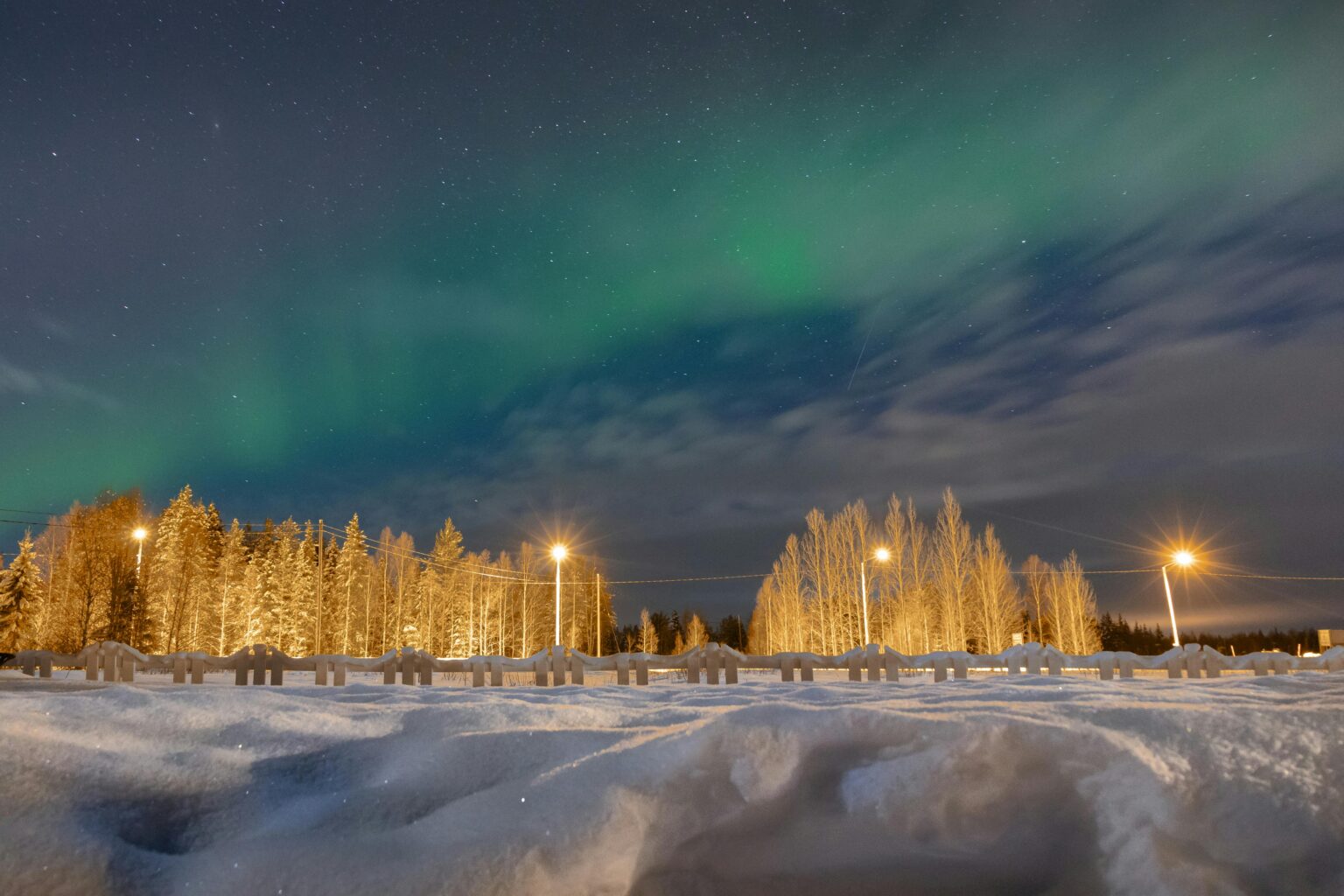


Seeing the Northern Lights in Lapland is one of the most magical winter experiences in the world. During Christmas in Lapland, long polar nights, deep snow, and quiet Arctic landscapes create the perfect setting for viewing the Aurora Borealis. Travelers come from everywhere hoping to catch the glowing green sky, especially around Rovaniemi, the most accessible city on the Arctic Circle.
This Lapland aurora guide explains how to improve your chances of seeing the Northern Lights during the festive season. Christmas is a beautiful time to visit, but it also brings colder temperatures, more clouds, and higher travel demand. With the right planning, a good location, and a little patience, your Christmas trip can include one of the most unforgettable natural displays on Earth.
I. Why Lapland Is One of the Best Places to See the Northern Lights
Right Under the Auroral Oval
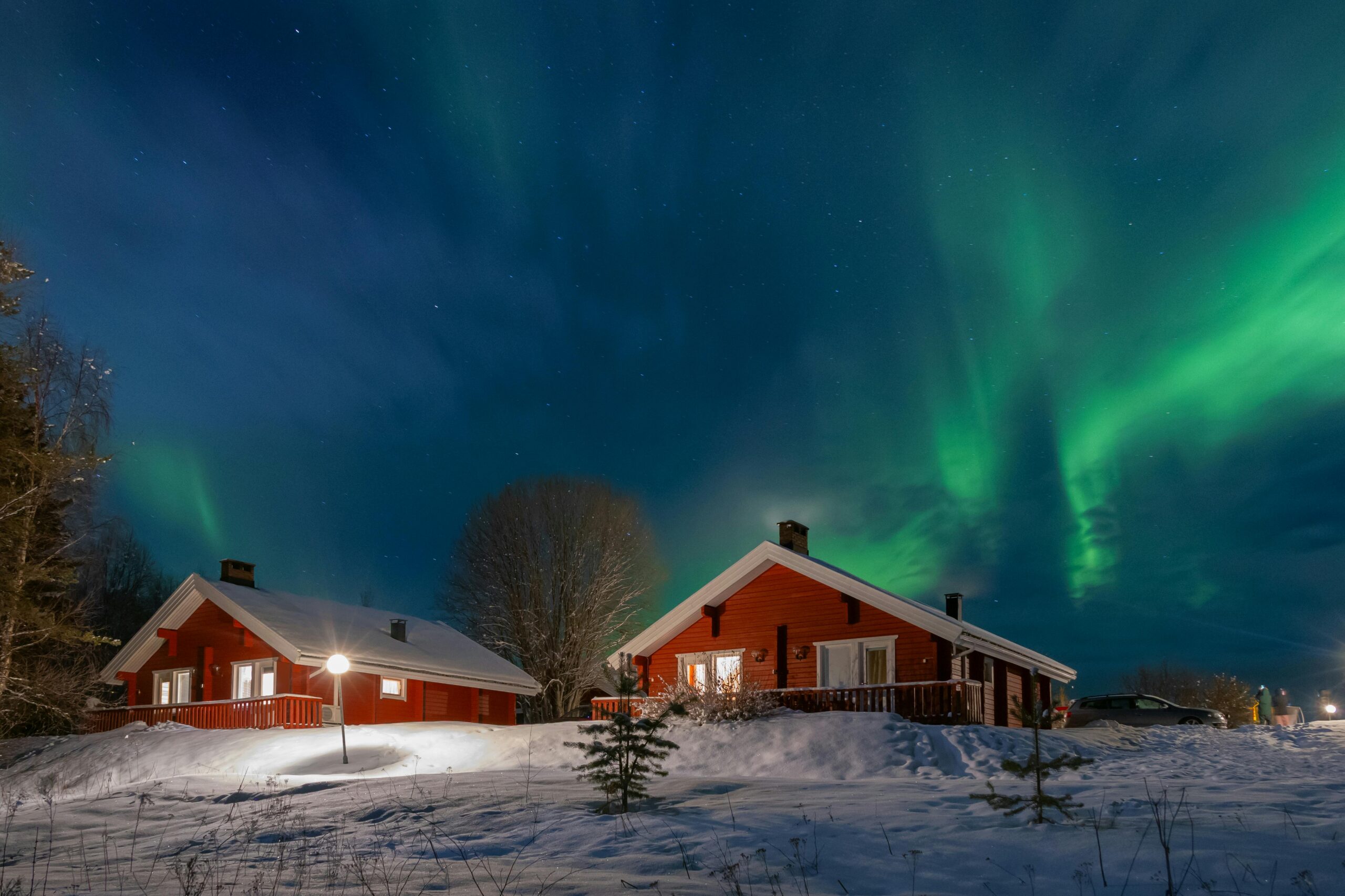
Lapland sits directly under the auroral oval, a ring-shaped zone surrounding the magnetic pole where Northern Lights appear most often. This location gives Lapland a natural advantage: the aurora can be seen on many clear nights throughout winter.
Map of Lapland
Key points
- Lapland offers some of the most reliable aurora visibility in Europe.
- Lights can appear even during moderate solar activity.
- Remote areas have minimal light pollution, making the sky clearer.
Long Nights During the Christmas Season
December brings very short daylight hours and long, dark evenings. These extended night hours give you more opportunities to spot the Aurora Borealis, even if the lights appear only for a short window.
What to expect
- Darkness lasts up to 20 hours in some regions.
- Twilight is soft and brief, leaving a wide viewing window.
- Christmas lights in towns create a festive mood, but darker areas nearby remain easy to reach.
Aurora Activity Is Strong All Winter
While autumn and late winter often have clearer skies, Christmas still falls inside the peak aurora season. Northern Lights can appear any night from late August to early April, and 2025–2026 is expected to be a strong period due to increased solar activity.
Why this matters
- Even faint auroras are visible when skies are clear.
- Solar activity forecasts predict vibrant displays for upcoming seasons.
- Staying multiple nights increases your chance significantly.
II. Aurora Season and Christmas Timing
When the Aurora Season Happens
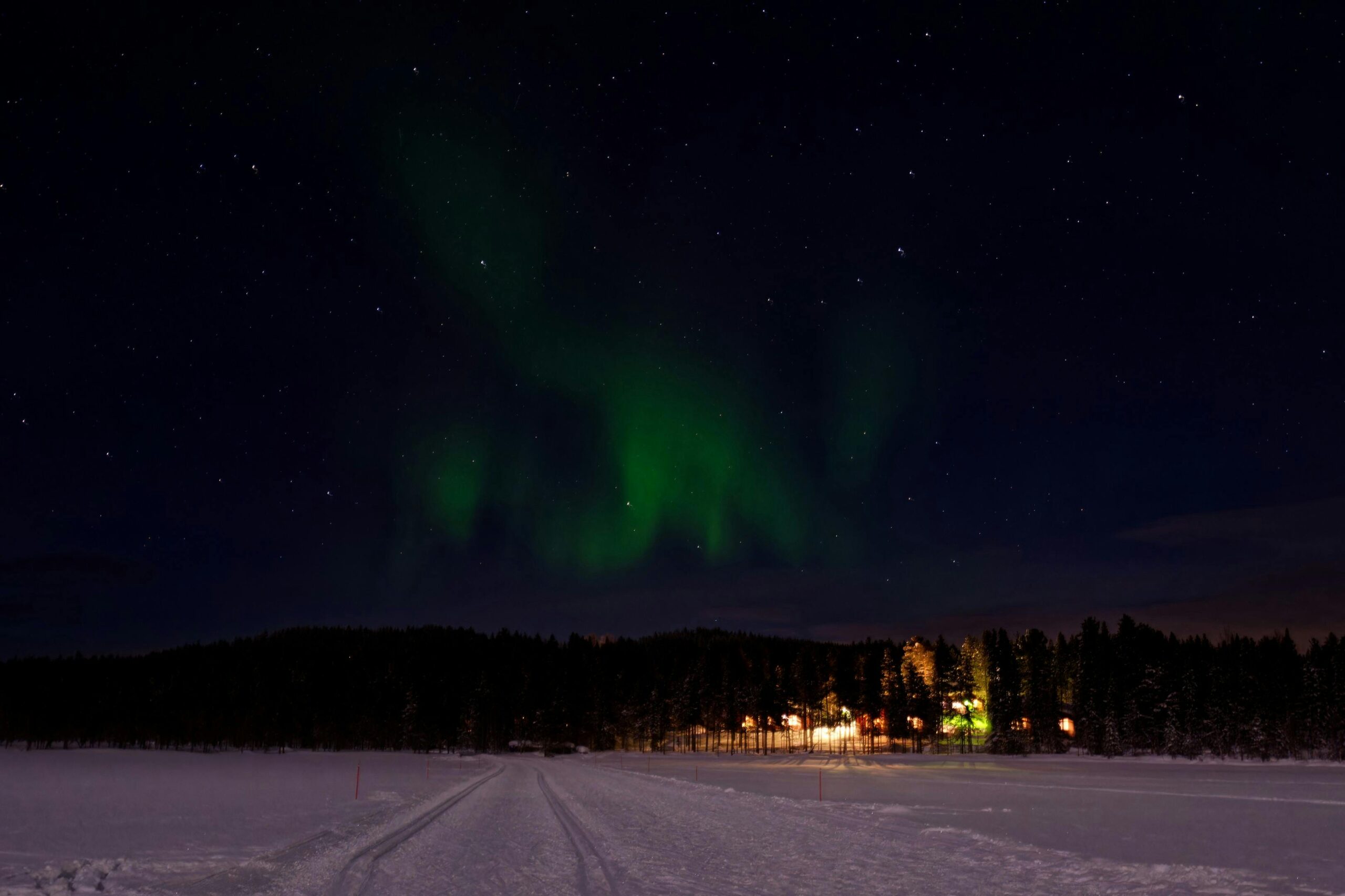
The Northern Lights season in Lapland runs from late August to early April. During these months, the sky becomes dark enough for the lights to appear. This long season gives travelers many opportunities to see the aurora, especially during the deep winter months.
Key facts
- Best visibility is during the darkest period of the year.
- Clear skies are more important than temperature or snowfall.
- Auroras can appear on many nights when cloud cover is low.
What Makes Christmas Week Special
Christmas in Lapland offers long nights, snowy landscapes, and a festive atmosphere. These conditions create a beautiful backdrop for aurora viewing. However, this period also brings more crowds and a higher chance of cloudy weather.
What to expect
- Extended darkness gives you more viewing hours.
- Snow-covered forests make aurora photos look magical.
- Cloudy nights are common in December, so flexibility is important.
Best Time of Night to Look for the Aurora
Northern Lights often appear between 21:00 and 02:00. This window offers the highest chance of activity, but the lights can appear earlier or later depending on solar conditions.
Tips
- Start checking the sky right after dinner.
- Stay outside longer on clear nights.
- Monitor aurora alerts for sudden activity spikes.
III. Best Places to See the Northern Lights in Lapland
Rovaniemi and Nearby Dark Spots
Rovaniemi is the easiest entry point for most travelers, and you can still see the Northern Lights just outside the city lights. The key is to move a little away from bright areas.
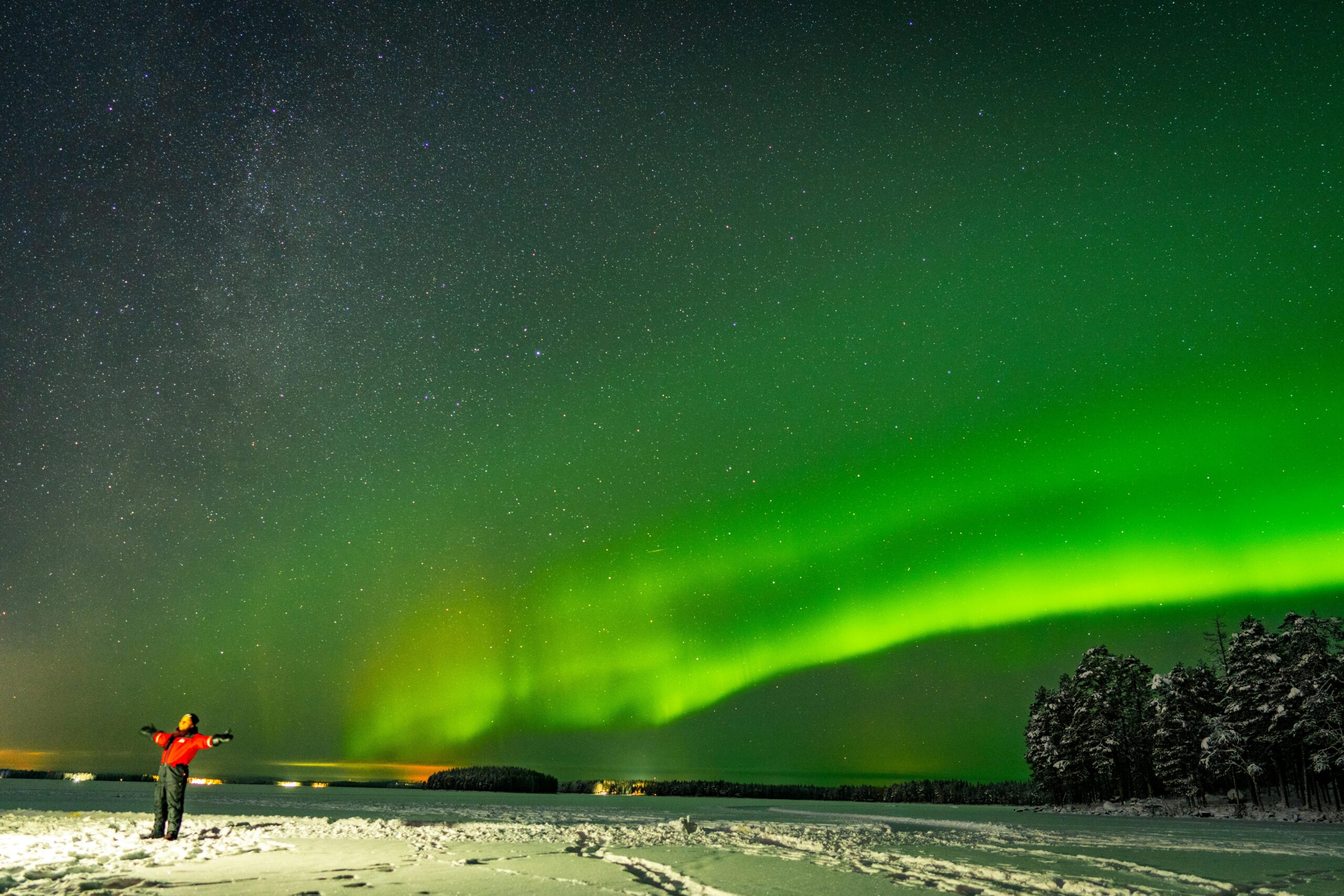
Good nearby viewing spots
- Riverside areas outside the town center
- Open fields toward the outskirts
- Small hills or lakesides with fewer lights
These locations are close, easy to reach, and work well on nights with strong aurora activity.
Santa Claus Village
Santa Claus Village is magical, especially during Christmas, but it has more artificial light. You can sometimes see the aurora here, but it is not the most reliable place for nighttime viewing.
What to expect
- Good for a quick check of the sky
- Convenient for travelers staying nearby
- Better to walk a few minutes away from the central lights for clearer views
Northern Lapland’s Dark Sky Regions
If seeing the Northern Lights is your top priority, heading farther north increases your chances. These areas have darker skies, fewer crowds, and stronger winter landscapes.
Top places
- Levi – A popular resort with many dark-sky viewpoints
- Ylläs – Known for open horizons and beautiful snowy forests
- Saariselkä – Quiet, remote, and excellent for aurora hunting
- Inari – One of the darkest regions in Finnish Lapland
These destinations usually offer better visibility because they sit farther into the auroral oval and have minimal light pollution.
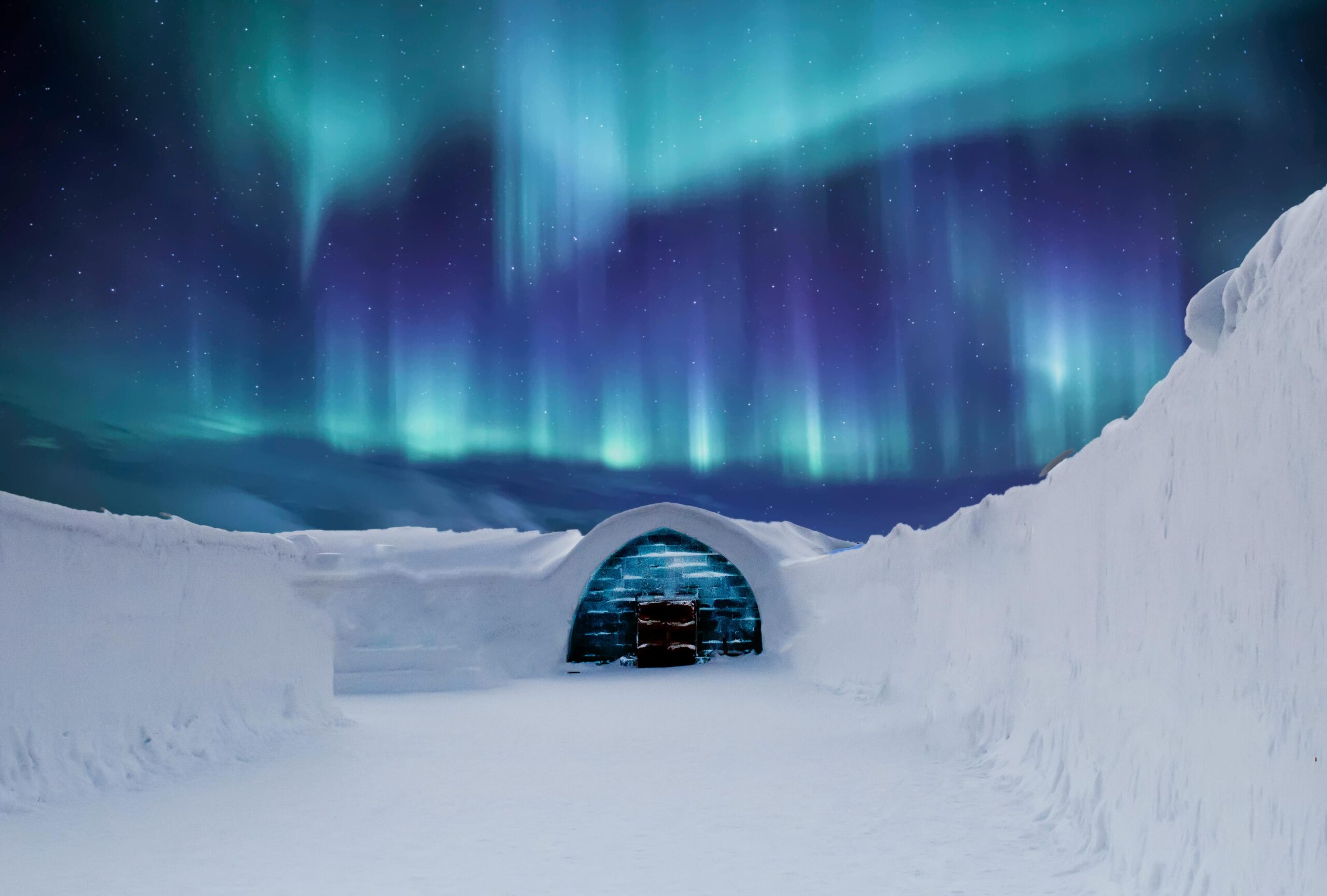
Glass Igloos and Aurora Cabins
Many travelers choose a night in a glass igloo or an aurora cabin for an unforgettable experience. These stays let you watch the sky from a warm bed, making it easier to enjoy long hours of darkness.
Why they are popular
- Clear roof views of the night sky
- Warm and comfortable during cold nights
- Located in quieter, darker areas
IV. How to Increase Your Chances of Seeing the Northern Lights
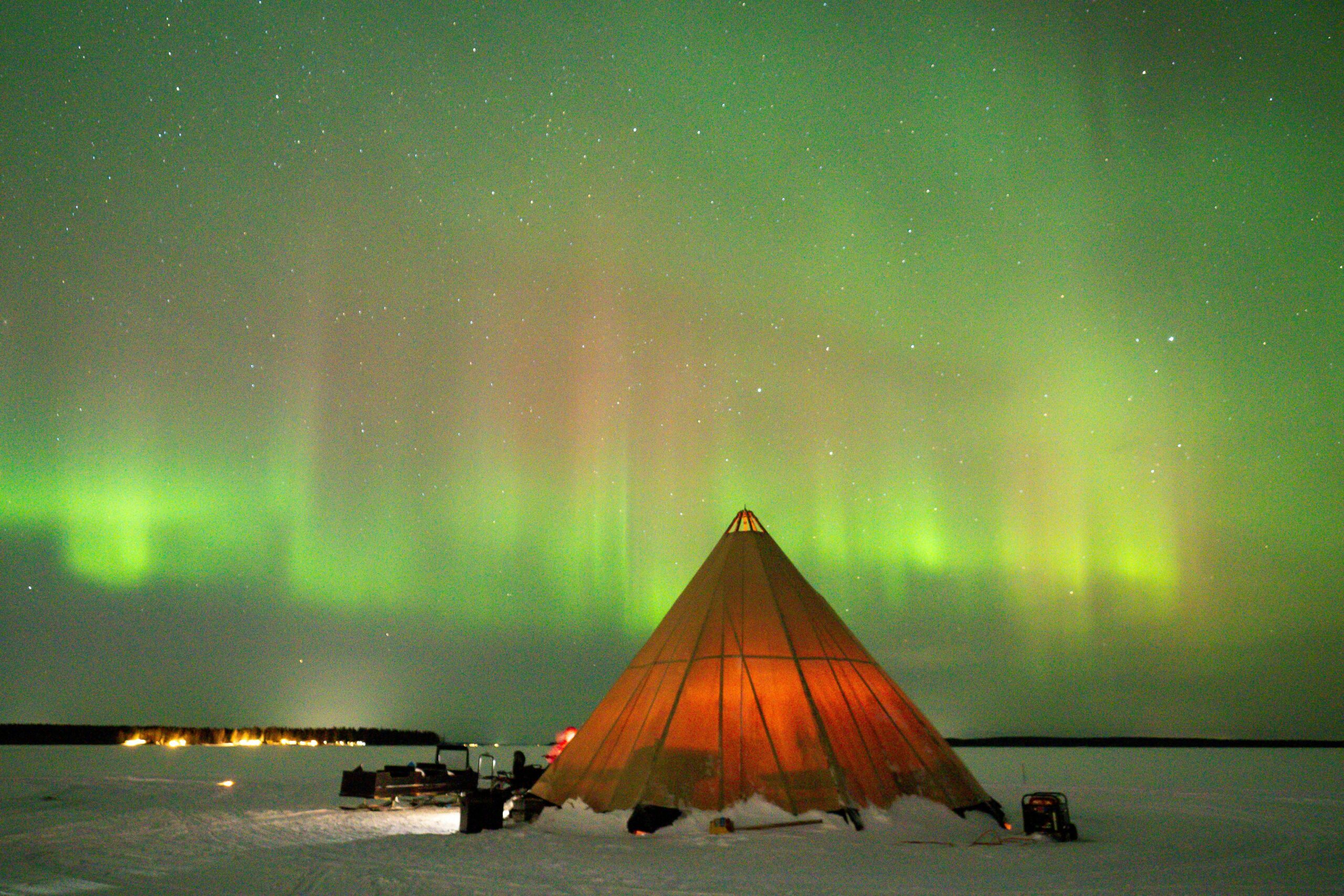
Stay at Least Three to Four Nights
Auroras depend on clear skies and solar activity. Some nights are cloudy, while others may have low activity. Staying multiple nights gives you a much better chance.
Why this matters
- Weather changes quickly in Lapland.
- Aurora activity can rise or fall within minutes.
- Most travelers who stay three to five nights see the lights at least once.
Avoid Bright Lights and Stay in Open Areas
Light pollution makes faint auroras harder to see. Wide-open spaces with clear views of the horizon are ideal.
Best types of locations
- Frozen lakes
- Snowy fields
- Riverside viewpoints
- Small hills outside towns
Move away from buildings, streetlights, and busy tourist areas.
Use Aurora Apps and Cloud Forecasts
You can boost your chances by checking real-time aurora data.
Useful information to follow
- Solar activity (KP index)
- Cloud cover predictions
- Sudden alerts from aurora apps
- Local weather updates
Clear skies are just as important as strong solar activity.
Join a Guided Aurora Hunt
Local guides know where to find the best conditions on any given night. Tours often drive to multiple dark locations.
Common tour options
- Aurora chase by car
- Snowmobile aurora safari
- Snowshoe or forest walk at night
- Photography-focused aurora trips
These tours improve your odds because guides adjust routes based on live weather conditions.
Be Patient and Stay Warm
Auroras can show up suddenly or take hours to appear. Warm clothing helps you stay outside longer.
Tips
- Bring warm layers and hand warmers.
- Take breaks indoors if needed.
- Keep checking the sky every few minutes.
V. What to Wear During an Aurora Hunt
Expect Very Cold Temperatures
Lapland can feel extremely cold in December, especially at night. Temperatures often drop well below freezing, and standing still for long periods makes it feel colder.
What to expect
- Temperatures from –10°C to –25°C
- Wind chill that makes the air feel even colder
- Moisture freezing around rivers and lakes
Essential Clothing Layers
Staying warm is the key to enjoying your aurora hunt.
Base layer
- Thermal top and leggings
- Wool or moisture-wicking material
Middle layer
- Warm fleece or wool sweater
- Insulated pants for winter
Outer layer
- Heavy winter jacket
- Waterproof snow pants
- Windproof outer shell if needed
Important Winter Accessories
Small items make a big difference during long waits outdoors.
Do not forget
- Warm winter boots
- Thick wool socks
- Gloves or mittens
- Beanie and neck warmer
- Hand warmers and foot warmers
Extra Gear to Bring
These items help you stay comfortable and prepared.
Useful items
- Headlamp with red light
- Power bank for your phone
- Thermos with hot drink
- Light snacks for long nights
VI. How to Photograph the Northern Lights
Use the Right Settings on Your Camera
The Northern Lights are easier to capture when you adjust your camera manually. Even faint auroras can appear bright and colourful with the right settings.
Basic starting settings
- Manual mode
- ISO around 800 to 1600
- Shutter speed between 5–15 seconds
- Aperture as wide as your lens allows (f/1.8–f/2.8)
- Manual focus set to infinity
These settings help make the lights clear and sharp in your photos.
Tips for Smartphone Photography
Modern smartphones can capture the aurora, especially when using night or pro modes.
Helpful smartphone tips
- Enable Night Mode or Long Exposure mode
- Use a tripod or place the phone on a stable surface
- Tap to focus on a bright star before taking the photo
- Take multiple shots in case the aurora moves quickly
Protect Your Gear From the Cold
Cold temperatures can affect camera performance and battery life.
Keep equipment safe
- Carry extra batteries because they drain faster in the cold
- Keep your camera and phone warm in an inner pocket
- Use a microfiber cloth to remove frost or moisture
- Avoid moving your camera between warm and cold spaces too quickly
Experiment and Enjoy the Moment
The Northern Lights change shape and colour quickly. Try different angles, adjust settings, and capture both wide landscapes and close sky details.
Simple tips
- Shoot both landscape and portrait orientation
- Include trees, cabins, or snowy fields for better composition
- Take breaks from the camera to watch the sky with your own eyes
VII. Common Mistakes That Reduce Your Chances
Staying Only One Night
Auroras depend on weather and solar activity. Staying just one night reduces your chance significantly.
Why it matters
- Clouds may block the sky.
- Aurora activity changes quickly.
- Most travelers need three to five nights for a good opportunity.
Relying on City-Center Viewpoints
City lights make faint auroras harder to see. Even in a northern city like Rovaniemi, light pollution affects visibility.
What to do instead
- Walk 10 to 20 minutes beyond bright areas.
- Go to riversides, lakes, or open fields.
- Join a guided trip to a dark-sky location.
Not Checking Cloud Cover
Clear skies are essential. Even strong auroras cannot be seen through thick cloud layers.
How to avoid this
- Monitor cloud forecasts throughout the evening.
- Use local weather apps alongside aurora alerts.
- Move to different areas if clouds shift.
Giving Up Too Early
Auroras can appear suddenly, even after hours of nothing. Many people leave too soon.
Tips
- Stay out longer on cold, clear nights.
- Take breaks indoors but return to check the sky.
- Be patient, especially between 21:00 and 02:00.
Not Dressing Warmly Enough
If you get too cold, you will end your hunt early and miss the best moments.
Solution
- Dress in warm layers.
- Bring gloves, a beanie, and hand warmers.
- Use a thermos to stay comfortable during long waits.
VIII. Sample Four Day Aurora Itinerary
| Day | Day Activities | Aurora Night Plan |
|---|---|---|
| Day One | Arrive in Lapland. Check in and adjust to the cold. Explore nearby winter scenery. | Check the aurora and cloud forecast after dinner. Take a short walk to a nearby dark area. |
| Day Two | Visit Santa Claus Village or enjoy daytime activities like reindeer or husky rides. | Join a guided aurora hunt by car or snowmobile to reach darker locations. |
| Day Three | Explore a local museum, enjoy a winter hike, or relax at your accommodation. | Watch cloud movement and choose the clearest area. Stay out longer for a better chance. |
| Day Four | Free day for snowshoeing, skiing, or photography. | Final night for aurora viewing. Keep your camera ready and check alerts frequently. |
IX. Final Tips Before Your Trip
Seeing the Northern Lights in Lapland during Christmas is a dream for many travelers. The long nights, snowy landscapes, and festive atmosphere make the experience even more special. While this time of year brings some challenges like cloudier weather and higher travel demand, you can still enjoy a beautiful aurora trip with good planning and a flexible mindset.
Stay several nights, choose darker viewing spots, check nightly forecasts, and dress warmly. These small steps greatly increase your chances of seeing the Aurora Borealis. Whether you catch a bright display or a more gentle glow, watching the lights move across the Arctic sky is a moment you will remember for years.
Your Christmas trip to Lapland can be both magical and peaceful. Enjoy the winter, enjoy the quiet nights, and enjoy the chance to witness one of nature’s most stunning shows.