






Finding reliable internet in Lesotho for tourists can feel confusing at first. The country is full of mountain roads, quiet villages and beautiful open landscapes, and coverage can change from one valley to the next. Staying online is important for maps, bookings, translation and travel safety, so choosing the right option before your trip makes everything easier.
Most travelers use one of three choices. You can install an eSIM on your phone. You can buy a local SIM card after you arrive. Or you can travel with a pocket WiFi device. Each option works differently, and each has its own strengths depending on your route and how much data you use.

An eSIM is usually the easiest start because you install it at home and connect the moment you land. Local SIM cards give good long term value if you have time to visit a shop in Maseru. Pocket WiFi is helpful for groups but requires charging and careful use in the mountains.
With a little planning, you can enjoy smooth internet during your entire stay. This guide explains each option clearly and shows how to choose the one that fits your trip.
Quick Answer for Internet in Lesotho for Tourists
If you want the fastest option, choose an eSIM. It is the easiest way for most travelers to get internet in Lesotho. You install it before your flight and your phone connects the moment you land. There is no paperwork and no need to wait in a shop. Many tourists use this option because it works well in cities and most travel routes.
A local SIM card is a good choice for long stays. You buy it in Maseru or another major town. It offers local pricing but requires passport registration and a visit to a store.
Pocket WiFi can help if you travel with a group or use several devices at the same time. It works as a portable hotspot. The downside is the battery. You must charge it daily and keep it safe in your bag.
For short trips and easy travel, an eSIM is the most convenient. For extended stays, a local SIM card can save money. For families or groups, pocket WiFi is a simple shared connection. Gohub offers a practical eSIM option that connects to trusted local carriers and activates instantly when you arrive.
Internet Situation in Lesotho What Travelers Should Know
Lesotho is known for its mountains, open landscapes and quiet rural communities. This creates a unique internet experience for tourists. The country has two main mobile operators, Vodacom Lesotho and Econet Telecom Lesotho. Both offer reasonable coverage in cities and town centers, but signal strength changes quickly once you travel into the highlands.
Coverage in cities and towns
Maseru has the most stable internet. You will find stronger four G coverage in hotels, guesthouses and popular areas. Teyateyaneng and Leribe also have reliable signal along main roads and commercial centers. Speeds in these zones are usually enough for maps, messaging, social updates and general travel use.
Public Wi Fi is limited. Some cafes and hotels offer it, but the quality varies. Most tourists rely on mobile data during the day.
Coverage in rural and mountain areas
Lesotho’s dramatic landscapes come with patchy coverage. When you drive into the mountains or visit remote villages, the signal can drop to three G or disappear for short moments. This is normal because the towers are farther apart in high altitude zones.
An eSIM or SIM card that connects to trusted local carriers will give you the best chance of staying online. Even then, expect occasional drops when the road enters deep valleys or long open passes.
Internet speeds you can expect
In city areas, mobile data usually ranges from five to twenty five Mbps. This is enough for navigation, booking apps and social media. Speeds may drop during peak hours or when you move between towers.
In rural zones, speeds change more. You may see slow data in one spot and strong data a few minutes later. Downloading offline maps before your trip is a smart way to avoid stress.
Using an eSIM in Lesotho
An eSIM is the easiest way for most tourists to get internet in Lesotho. You install it on your phone before your flight. When you arrive, your phone connects right away without visiting a shop or switching a physical SIM.
How an eSIM works for tourists
You buy the eSIM online. You receive a QR code by email. You scan it in your phone settings and the plan installs in a few minutes. Once installed, the eSIM works like a normal mobile data plan. You can turn it on or off anytime.
Most modern phones support eSIM, including recent iPhones, Samsung Galaxy models, Google Pixel phones and many newer Android devices.
Pros of using an eSIM
An eSIM gives you internet the moment you land. There is no queue and no paperwork. You do not need Wi Fi to finish activation. You can keep your home SIM active for calls or banking messages while the eSIM handles your mobile data.
Coverage is stable in cities and town areas because eSIMs connect to local carriers such as Vodacom Lesotho and Econet Telecom Lesotho. For tourists, this means smooth navigation and steady performance.
A Gohub eSIM also includes voice minutes and SMS, which is helpful when you want to call hotels or drivers in areas with limited Wi Fi.
Cons of using an eSIM
An eSIM only works on compatible phones. Older models may not support it. Some plans are data only, so you cannot make traditional phone calls unless your provider includes minutes.
Data use depends on your plan size. If you watch videos or share hotspot often, you may use data faster than expected.
Who should choose an eSIM
Choose an eSIM if you want the simplest travel experience. It is ideal for short trips, city visits, road trips with many stops and travelers who want zero stress on arrival. It also suits people who prefer not to handle SIM trays or visit stores in Maseru.
Here is the next section, written in clean, simple English, short sentences, and friendly for travel readers.
Buying a Local SIM Card in Lesotho
A local SIM card is another option for getting internet in Lesotho. It offers good value for long trips, especially if you use a lot of data every day. The two main providers are Vodacom Lesotho and Econet Telecom Lesotho.
Where to buy a local SIM
You can buy a SIM card in official Vodacom or Econet stores. Most of these stores are located in Maseru and other large towns. Airport availability is limited, so many travelers wait until they reach the city.
To register a local SIM, you must show your passport. The process is simple, but it requires a face to face visit. Shops may be busy during peak hours.
Pros of a local SIM card
A local SIM gives you local pricing. This is helpful for long stays or heavy data use. You can top up anytime in stores or through mobile money services. Once activated, a local SIM connects well in all main city areas and most travel routes.
Local SIMs are also good if you plan to stay in Maseru for remote work or extended travel. The cost per gigabyte can be lower than most international plans.
Cons of a local SIM card
The main downside is the time required. You must visit a store, show your passport and complete registration. This can be inconvenient for short trips or late arrivals. Shops may close early in some towns.
Another limitation is coverage in mountain regions. Local SIMs and eSIMs use the same networks. Both experience the same drops in rural areas.
Who should choose a local SIM
Choose a local SIM if you stay in Lesotho for several weeks or if you need heavy daily data. It is ideal for digital nomads, long stay travelers and visitors who spend most of their time in Maseru.
For short holidays, the eSIM option stays simpler because everything is ready before you land.
Using Pocket WiFi in Lesotho
Pocket WiFi is a portable device that creates a personal hotspot. You carry it in your bag and connect your phone, laptop or tablet to it. Some travelers use it when they need several devices online at the same time.
How pocket WiFi works
You rent or buy the device before your trip. It uses a mobile network in Lesotho, just like a SIM or eSIM. You turn it on, wait for the signal and connect your devices through Wi Fi. It works well in city areas where the mobile network is strong.
Pros of pocket WiFi
Pocket WiFi is useful for groups and families. Everyone can use the same hotspot. It also helps when you need to work on a laptop during your trip. The setup is simple. You only need the device and a charger.
It is also a good backup option for travelers who want a separate connection for sensitive work or secure browsing.
Cons of pocket WiFi
The first challenge is the battery. You must charge the device every day. If the battery dies in the mountains or on long drives, you lose all connection. Pocket WiFi can also feel bulky compared to the simplicity of an eSIM.
Rental fees add up quickly, especially when traveling alone. And if you lose or damage the device, replacement costs can be high.
Coverage is the same as a SIM card. In rural or high altitude areas, pocket WiFi will face the same signal drops because it depends on the same networks.
Who should choose pocket WiFi
Pocket WiFi works well for families or groups with many devices. It is also helpful for business travelers who need a dedicated connection. For most solo tourists, an eSIM is easier and lighter to manage.
Comparing eSIM vs Local SIM vs Pocket WiFi
Each option works in Lesotho, but they offer different levels of convenience, cost and flexibility. This comparison helps you see which one fits your trip best.
Convenience
An eSIM is the easiest. You install it before your flight and connect instantly when you land. There is no need to visit a store or handle a physical card.
A local SIM requires time and passport registration. You must visit a Vodacom or Econet shop in Maseru.
Pocket WiFi requires setup, charging and renting the device. It is simple to use but less convenient to manage during busy travel days.
Coverage and performance
eSIMs and local SIM cards use the same local networks. Coverage is strong in cities and towns and weaker in mountain regions. Both perform the same because they rely on Vodacom Lesotho or Econet Telecom Lesotho.
Pocket WiFi depends on the same networks, so you will see identical coverage patterns.
Cost comparison
eSIMs offer medium cost with high convenience. They are ideal for short stays and simple travel plans.
Local SIM cards offer the lowest cost for long stays or heavy data use. They work well for digital nomads or visitors staying several weeks.
Pocket WiFi is usually the most expensive option. Rental fees and deposits can make it less attractive for solo travelers.
Safety and reliability
An eSIM is the safest because it is digital and cannot be lost or damaged. You keep your home SIM active for messages while using the eSIM for data.
A local SIM is reliable once registered and topped up. You must keep it safe when switching SIM trays.
Pocket WiFi depends on battery life. If the device loses power, you lose all connection. You must also protect it from loss or damage during your trip.
Which Option Is Best for Your Trip to Lesotho
The best internet option depends on how long you stay and how you travel. Each choice fits a different style of trip.
For short trips three to seven days
An eSIM is the best choice. It gives you instant data at the airport and removes the need to visit a store. This is helpful when your schedule is tight or when you move between towns quickly. You can install your eSIM at home and enjoy a smooth arrival.
For long stays two weeks to one month
A local SIM card can save money if you use a lot of data. Local pricing is good for extended trips, especially if you stay in Maseru. You can top up easily in official stores.
If you prefer a simple, low effort setup, an eSIM still works well. You can top up or buy another plan if needed.
For multi country trips Lesotho and South Africa
An eSIM is the most convenient because you can switch profiles on your phone. You can keep both plans active and select the right one at each border. This avoids the need to swap SIM trays while traveling.
For groups or family travel
Pocket WiFi can support multiple devices at once. It helps when everyone needs to stay connected. You can share one device, but remember to charge it daily. An eSIM is still useful as a backup for navigation and messaging.
For remote and mountain travel
Both eSIMs and local SIMs give the same coverage because they use the same networks. Choose the one that gives you the easiest setup. Carry offline maps for routes with limited signal.
Tips for Staying Connected in Lesotho
Staying online in Lesotho is simple when you prepare a few essentials before your trip. This table shows the most helpful tips for smooth connectivity from Maseru to the highlands.
| Tip | Why It Helps |
|---|---|
| Install your eSIM before flying | Set it up at home for instant data on arrival. Keep your QR code saved in email or notes. |
| Download offline maps | Coverage can drop in mountain valleys. Offline maps keep navigation smooth without signal. |
| Save booking details offline | Screenshots help when mobile data slows down on long drives or in remote areas. |
| Refresh your network when needed | Turning airplane mode on and off reconnects your phone to the nearest tower. Fixes most signal issues. |
| Use hotspot with care | Hotspot uses more data than expected, especially with laptops. Monitor your data balance. |
| Charge during long days | Mountain routes are long. A power bank keeps your phone active for maps, photos and calls. |
| Use hotel Wi Fi for large uploads | Hotels in Maseru often have Wi Fi. Use it for photos and videos. Mobile data is better for daily tasks. |
| Keep a light backup plan | Carry a second eSIM or saved offline route for remote zones. A Gohub eSIM offers easy activation and quick support. |
Final Recommendation for Internet in Lesotho for Tourists
Choosing the right internet in Lesotho for tourists depends on how you travel and how much effort you want to spend setting things up. Most visitors prefer an eSIM because it is simple, fast and ready the moment you land. You install it at home, keep your primary number active and start your trip with instant data.
A local SIM card works well for long stays. It gives you good value if you use heavy data or stay mainly in Maseru. The store visit and passport registration take time, so it is less practical for short holidays.
Pocket Wi Fi is helpful for groups or families. It provides one shared connection, but it needs daily charging and can be bulky on long mountain routes.
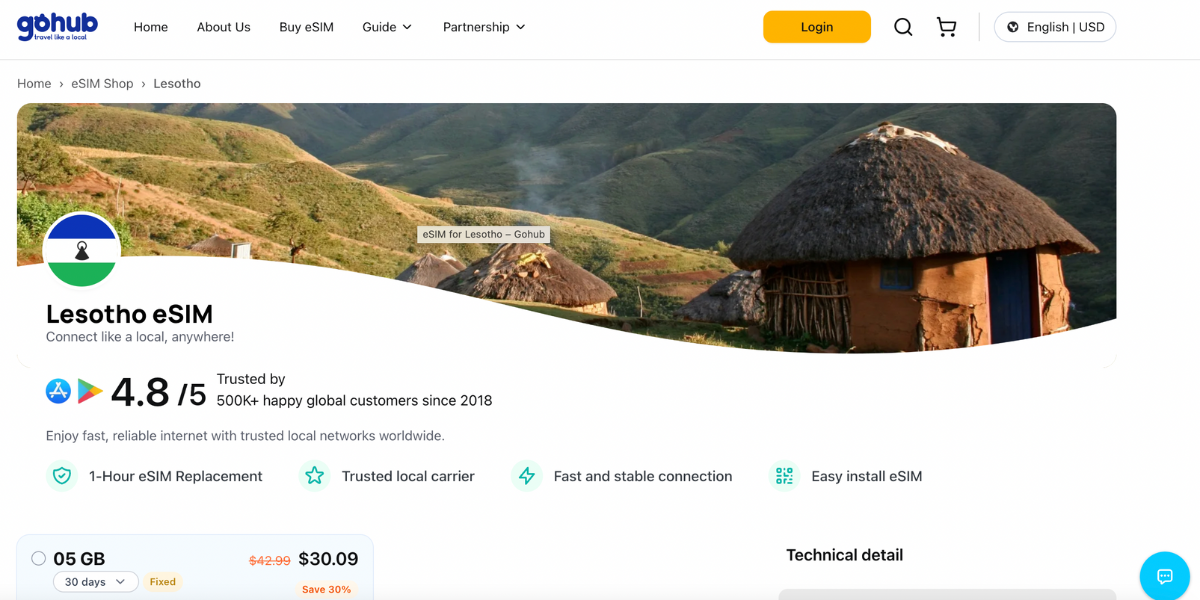
For most tourists, an eSIM offers the easiest balance of convenience and reliability. A Gohub eSIM is a strong option because it connects to trusted local carriers and includes practical features for real travel, such as voice minutes and quick support when you need help.
With the right plan and a bit of preparation, you can enjoy steady internet throughout your journey and focus on everything that makes Lesotho special.
Frequently Asked Questions
What are the best options for internet access in Lesotho for tourists?
Tourists can choose between three main options. You can use an eSIM, buy a local SIM card or carry a pocket Wi Fi device. An eSIM is the easiest because you install it before your trip and connect instantly. Many travelers pick Gohub for this option since activation is simple and the plan connects to trusted local networks.
Can I buy a local SIM card for data in Lesotho, and where?
Yes. You can buy a local SIM card from Vodacom Lesotho or Econet Telecom Lesotho. Their official stores are mainly in Maseru and other large towns. Airport options are limited, which is why some tourists prefer activating a Gohub eSIM before arrival.
Which mobile network operator has the best coverage in rural or mountainous areas of Lesotho?
Vodacom Lesotho and Econet Telecom Lesotho both provide coverage across most regions. In rural and mountain areas, performance changes quickly due to terrain. Gohub eSIMs use these same local carriers, so you get the strongest available signal wherever you travel.
Is Wi Fi widely available in hotels and restaurants in cities like Maseru?
Many hotels in Maseru offer Wi Fi, and some restaurants and cafes provide it as well. Speeds vary, so travelers often rely on mobile data for navigation and daily tasks. An eSIM from Gohub or other providers gives more consistent access throughout the day.
Are eSIMs a viable option for internet access in Lesotho, and which providers offer them?
Yes. eSIMs are one of the best options for tourists. They work well in cities and towns and let you avoid registration lines. Providers such as Gohub, Airalo, Saily and Nomad offer eSIM plans for Lesotho. Gohub stands out for including voice minutes and quick support if you need help during your trip.
How reliable is the internet connectivity in Lesotho, especially outside the capital city?
Connectivity is reliable in Maseru and other towns. Speeds are good for maps, booking apps and messaging. Outside the capital, signal gaps appear in valleys and mountain routes. This affects all networks. A Gohub eSIM or a local SIM will perform the same way because both connect to local carriers.
What are the costs of mobile data and local SIM cards in Lesotho?
Local SIM cards offer good value, especially for long stays. Prices vary by data size. eSIM plans cost more but offer greater convenience and faster setup. Gohub provides a balanced option by offering instant activation and practical features such as included minutes and SMS.
Do I need my passport to buy a local SIM card in Lesotho?
Yes. Passport registration is required for both Vodacom and Econet. This is another reason many travelers choose a Gohub eSIM, which does not require paperwork or in person registration.
Can I use my home country’s mobile roaming in Lesotho, and is it expensive?
Roaming usually works in Lesotho, but it is expensive for most visitors. Data charges add up quickly. Many travelers switch to a Gohub eSIM or a local SIM card to avoid high roaming fees.
Are there any security risks with using public Wi Fi in Lesotho?
Public Wi Fi is fine for light browsing but not ideal for sensitive activities. Using mobile data from an eSIM is safer. A Gohub eSIM, for example, gives direct mobile network access, which is more secure than open hotel networks.