




Germany is home to some of the best Christmas markets in the world, and every winter, millions of travelers come for the lights, mulled wine, and storybook town squares. From world-famous markets like Nuremberg’s Christkindlesmarkt to historic favorites such as Dresden’s Striezelmarkt, Germany offers an unmatched variety of festive experiences between late November and Christmas Eve.
But here’s what many guides don’t tell you: not all German Christmas markets deliver the same experience. Some are magical but extremely crowded. Others are smaller, quieter, and feel far more local. The best Christmas markets in Germany depend on what you value most — iconic traditions, romantic scenery, easy market hopping, or a more relaxed atmosphere.
In this guide, you’ll discover the best Christmas markets to visit in Germany, based on real traveler insights, recent social media trends, and practical planning considerations. We’ll break down the top markets city by city, explain what makes each one special, and share honest tips on when to go, how to avoid crowds, and how to build a smooth Germany Christmas market itinerary that actually feels festive — not stressful.
I. Best Christmas Markets in Germany at a Glance
If you’re short on time or planning your first winter trip, this quick overview helps you choose the best Christmas markets in Germany based on what kind of experience you’re actually looking for.
Germany has hundreds of Christmas markets, but travelers consistently focus on a handful that stand out for atmosphere, tradition, and ease of visiting.
Best Christmas Markets by Travel Style
| Travel Style | Christmas Market | Why It Stands Out |
|---|---|---|
| Most iconic Christmas market | Nuremberg – Christkindlesmarkt | Germany’s most famous Christmas market and the one many people picture first. Expect traditional wooden stalls, historic customs, and a classic festive atmosphere. Beautiful but very crowded, especially on weekends. |
| Most traditional and historic | Dresden – Striezelmarkt | Often described as the oldest Christmas market in Germany. Known for strong traditions, handcrafted goods, and an old-fashioned Christmas feel compared to larger cities. |
| Best for market hopping | Cologne – Christmas Markets | Cologne has several major Christmas markets within walking distance, including the famous one near Cologne Cathedral. Ideal for variety without long travel times. |
| Most romantic, storybook setting | Rothenburg ob der Tauber | A small medieval town that feels like a Christmas postcard. The market is smaller, but the atmosphere is unmatched, especially in the evenings when the streets are lit up. |
| Best big-city variety | Munich or Berlin | Large cities offer multiple market styles, concerts, nightlife, and excellent public transport. Less intimate, but very flexible and full of options. |
🎄 A Quick Planning Tip
For the best overall experience, many travelers recommend combining
one famous market (such as Nuremberg or Cologne) with a smaller or more local market nearby.
This gives you both iconic sights and a calmer, more authentic feel.
Next, we’ll dive into the top Christmas markets in Germany one by one,
starting with the most famous — and how to enjoy them without ruining the magic.
II. Nuremberg Christkindlesmarkt (Germany’s Most Famous Christmas Market)
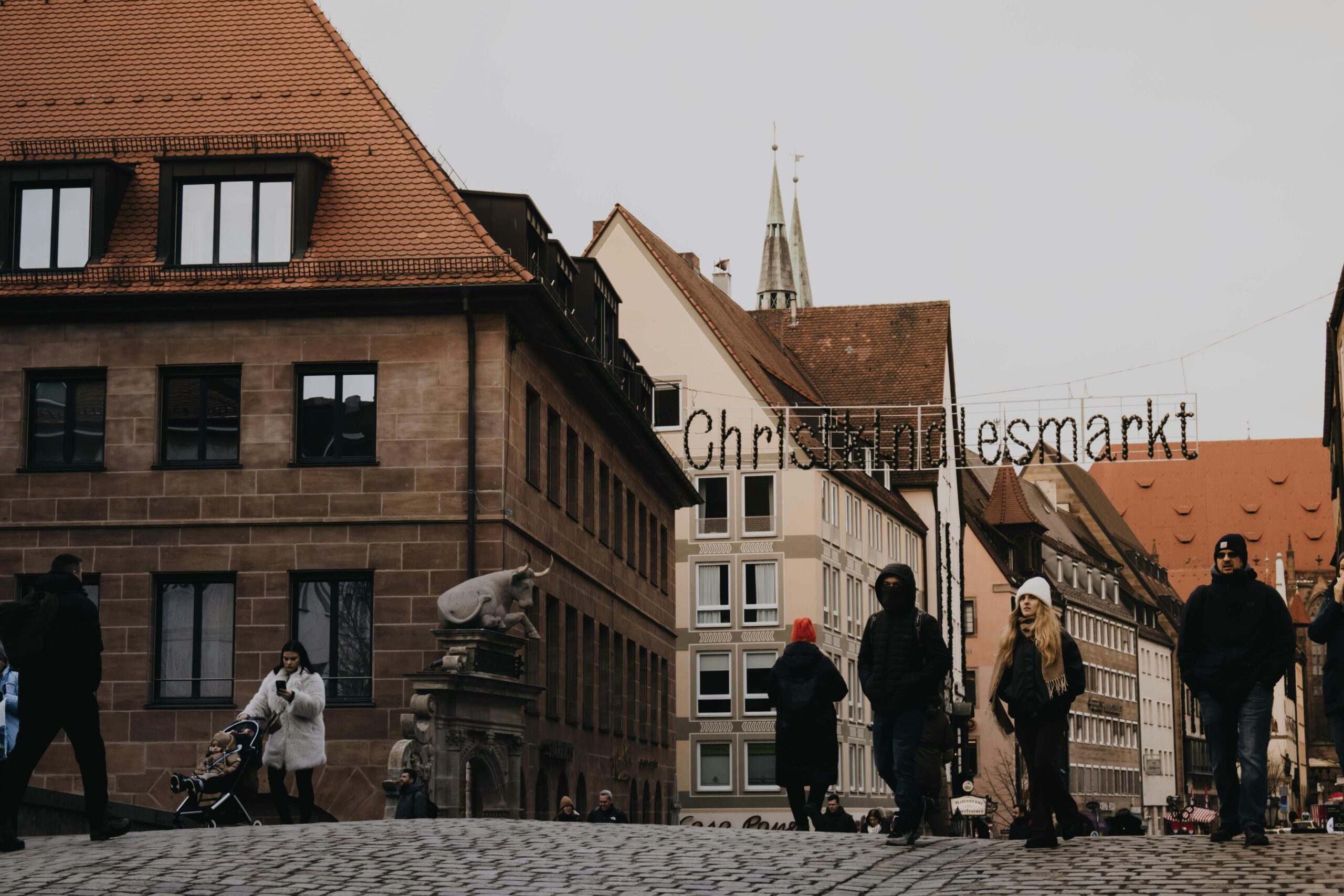
If you’ve ever seen photos of a German Christmas market, chances are they were taken at Nuremberg’s Christkindlesmarkt. This is the most iconic and internationally known Christmas market in Germany — and for good reason.
Held in the main market square (Hauptmarkt) beneath the Frauenkirche, the Christkindlesmarkt delivers exactly what first-time visitors expect: rows of red-and-white wooden stalls, traditional crafts, brass music, and a strong sense of history. The market’s opening ceremony, led by the Christkind in a golden robe, is still one of the most photographed Christmas moments in Germany.
Why Nuremberg is worth visiting
- It’s the benchmark against which other German Christmas markets are judged
- The setting is historic and visually striking, especially after dark
- Food is distinctly local, not generic
Nuremberg is especially known for its Lebkuchen (gingerbread) and small grilled sausages (Nürnberger Rostbratwürste), usually served three in a bun. These are not optional — they are part of the experience.
The honest downside: crowds
This market is busy. Very busy.
On Friday evenings and Saturdays, the Hauptmarkt can feel shoulder-to-shoulder, making it hard to browse stalls or enjoy the atmosphere. Many travelers leave disappointed simply because they visit at the wrong time.
How to enjoy Nuremberg without the stress
- Visit Monday to Thursday, ideally before 4:30 PM
- Go earlier in December rather than the final week before Christmas
- Explore side streets and smaller adjacent markets after sunset
A common tip from experienced visitors is to treat Nuremberg as a daytime market and save evenings for quieter towns nearby.
Smart add-on: Fürth Christmas Market
Just 10 minutes by train, the nearby town of Fürth hosts a smaller, more relaxed Christmas market with a medieval-style atmosphere. Pairing Nuremberg with Fürth gives you the best of both worlds: iconic tradition and local charm.
Best for
- First-time visitors to Germany
- Travelers who want the “classic” Christmas market experience
- Short trips where you want one unforgettable market
Skip if
- You strongly dislike crowds
- You only travel on weekends and evenings
Up next, we’ll look at a market that many seasoned travelers quietly prefer over Nuremberg — Dresden’s Striezelmarkt, where tradition feels calmer and more immersive.
III. Dresden Striezelmarkt (The Oldest Christmas Market in Germany)
While Nuremberg gets most of the international attention, many experienced travelers argue that Dresden’s Striezelmarkt delivers a better overall Christmas market experience — especially if you value tradition without constant crowd pressure.
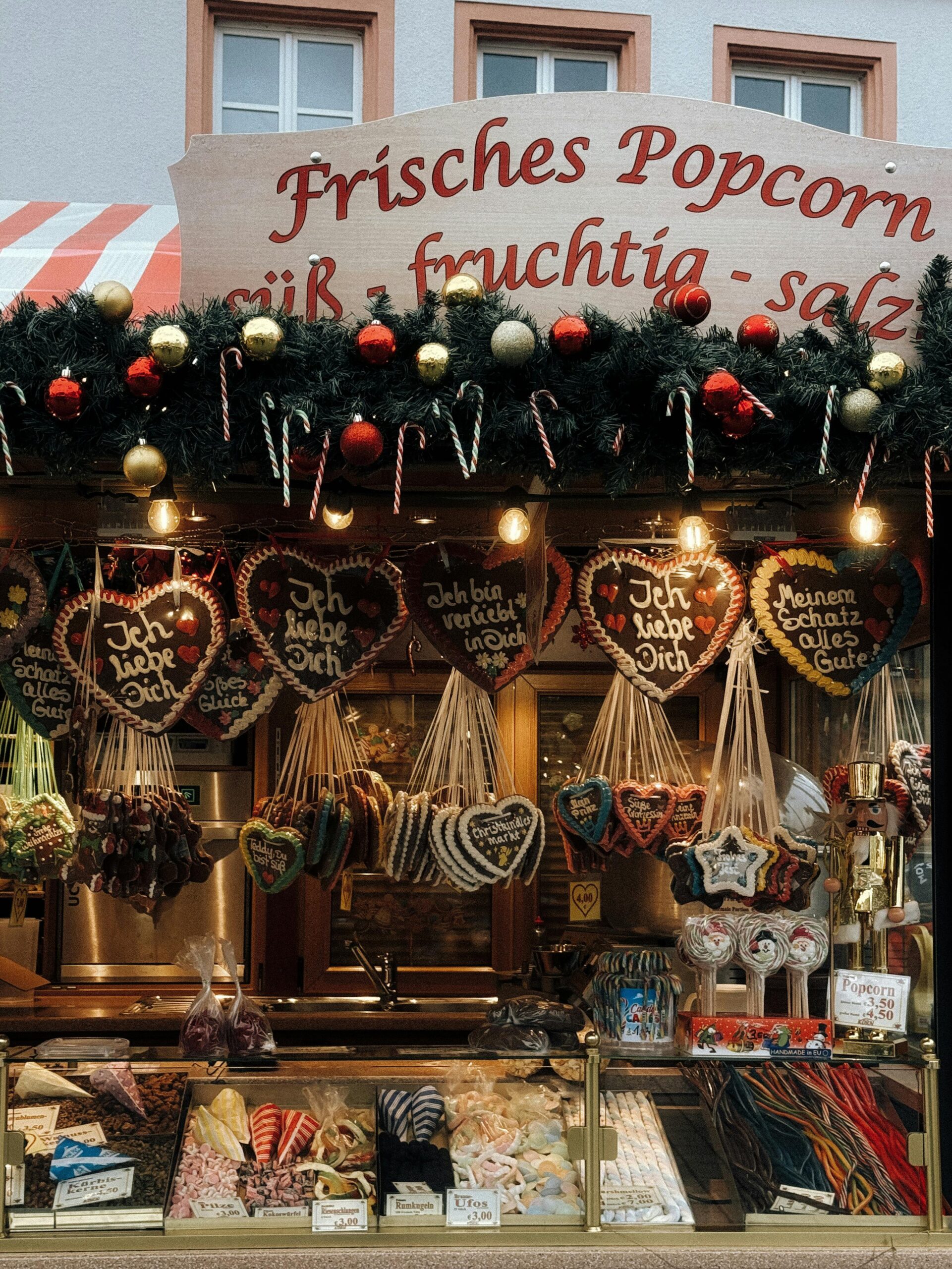
Located on Altmarkt Square in the heart of Dresden, the Striezelmarkt dates back to 1434, making it widely considered the oldest Christmas market in Germany. The market feels deeply rooted in local customs, with a stronger focus on craftsmanship, regional food, and Saxon holiday traditions.
What makes Dresden different
Dresden’s Christmas market stands out for one key reason: the stalls feel more curated. Instead of endless repeats of the same souvenirs, you’ll find:
- Hand-carved wooden figures from the Ore Mountains
- Traditional Christmas pyramids and nutcrackers
- Locally made candles and lacework
This attention to detail is why Dresden often comes up on Reddit and YouTube as a “more authentic” alternative to larger headline markets.
The food you shouldn’t miss
Dresden is famous for Christstollen, a dense fruit bread traditionally baked during the Christmas season. The Striezelmarkt even hosts events celebrating it, and many stalls sell high-quality versions to take home.
You’ll also find:
- Classic glühwein and Feuerzangenbowle
- Saxon sausages and roasted almonds
- Seasonal pastries that aren’t common outside the region
Crowd levels and timing
Dresden is popular, but it handles crowds better than Nuremberg.
- Weekdays are comfortable, even in the evening
- Weekends are busy but still manageable
- The market layout allows for easier movement
This makes Dresden a strong choice if you want a lively atmosphere without feeling overwhelmed.
Beyond one market: Dresden’s advantage
Another reason Dresden ranks highly is that it works well as a base city. In addition to the Striezelmarkt, you can visit:
- Smaller neighborhood markets within the city
- Nearby towns in Saxony and the Ore Mountains known for traditional Christmas crafts
This flexibility is ideal for travelers staying several nights.
Best for
- Travelers who value tradition and craftsmanship
- Visitors who want a calmer, more immersive atmosphere
- Repeat visitors to Germany looking for something deeper than the “headline” markets
Skip if
- You only want the most famous, photo-driven experience
- You prefer big-city nightlife alongside markets
Next, we’ll head west to a city that excels at variety — Cologne, where you can visit multiple Christmas markets in a single afternoon without ever getting bored.
IV. Cologne Christmas Markets (Best for Market Hopping)
If you like variety and flexibility, Cologne offers one of the most enjoyable Christmas market experiences in Germany. Instead of centering everything around a single square, the city hosts several large Christmas markets, each with a different theme — and most of them are within easy walking distance of one another.
This is why Cologne consistently comes up on Reddit, YouTube, and travel forums as one of the most visitor-friendly Christmas market cities in Germany.

Why Cologne stands out
Cologne’s biggest advantage is choice. You can experience multiple styles of Christmas markets in one day without feeling rushed or repetitive.
The most popular markets include:
- Christmas Market at Cologne Cathedral (Am Dom) – the most famous, set directly beside the cathedral
- Heinzels Wintermärchen (Old Town) – fairy-tale themed, with a skating rink
- Harbor Christmas Market – more relaxed, with a maritime feel
- Stadtgarten Market – quieter and more local
Each market has its own atmosphere, which keeps the experience fresh even after several hours.
Cologne Cathedral Christmas Market
The market next to Cologne Cathedral is the visual highlight of the city. The towering Gothic cathedral creates one of the most dramatic backdrops of any Christmas market in Germany, especially at night when the lights come on.
This market is lively and festive, with:
- A large central Christmas tree
- Live music stages
- Plenty of food and drink stalls
It does get busy in the evenings, but the open layout makes it easier to navigate than tighter medieval squares.
The joy of market hopping
What travelers love most about Cologne is the ability to move on when a market feels too crowded. If one area is packed, you simply walk 10–15 minutes to the next.
A popular route is:
Cathedral Market → Old Town (Heinzels) → Rhine promenade
This makes Cologne ideal if you:
- Don’t want to commit to just one market
- Are traveling with friends or family
- Want flexibility without planning day trips
Food and drink highlights
Cologne’s markets are great for sampling a range of seasonal foods, including:
- Classic glühwein and white mulled wine
- Grilled sausages and potato pancakes
- Regional beers for those who want a break from wine
The atmosphere is social and upbeat, with many stalls designed for standing and chatting rather than quick grab-and-go visits.
Crowd levels and timing
- Weekdays are comfortable, even in the evening
- Weekends are busy but manageable due to multiple locations
- Early evenings offer the best balance of energy and space
Best for
- Travelers who want variety and flexibility
- Short trips where you want to see a lot without long travel
- Groups with mixed interests
Skip if
- You want a quiet, medieval village atmosphere
- You prefer one compact, traditional market
Next, we’ll look at Munich, where Christmas markets blend traditional Bavarian charm with big-city energy and cultural events.
V. Munich Christmas Markets (Best Big-City Experience)
Munich offers a different kind of Christmas market experience — one that blends traditional Bavarian charm with the energy and convenience of a major city. Instead of a single standout market, Munich is best experienced by visiting several markets, each with its own character.
This makes Munich a strong choice if you want festive atmosphere during the day and plenty of dining, concerts, and nightlife options in the evening.
What makes Munich different
Munich’s Christmas markets feel more integrated into daily city life. Locals stop by after work, families come early in the evening, and tourists mix easily into the crowd. The result is a lively but not overly tourist-focused atmosphere.
Rather than trying to see everything, most travelers enjoy Munich by choosing two or three markets and taking their time.
Marienplatz Christmas Market (the classic center)
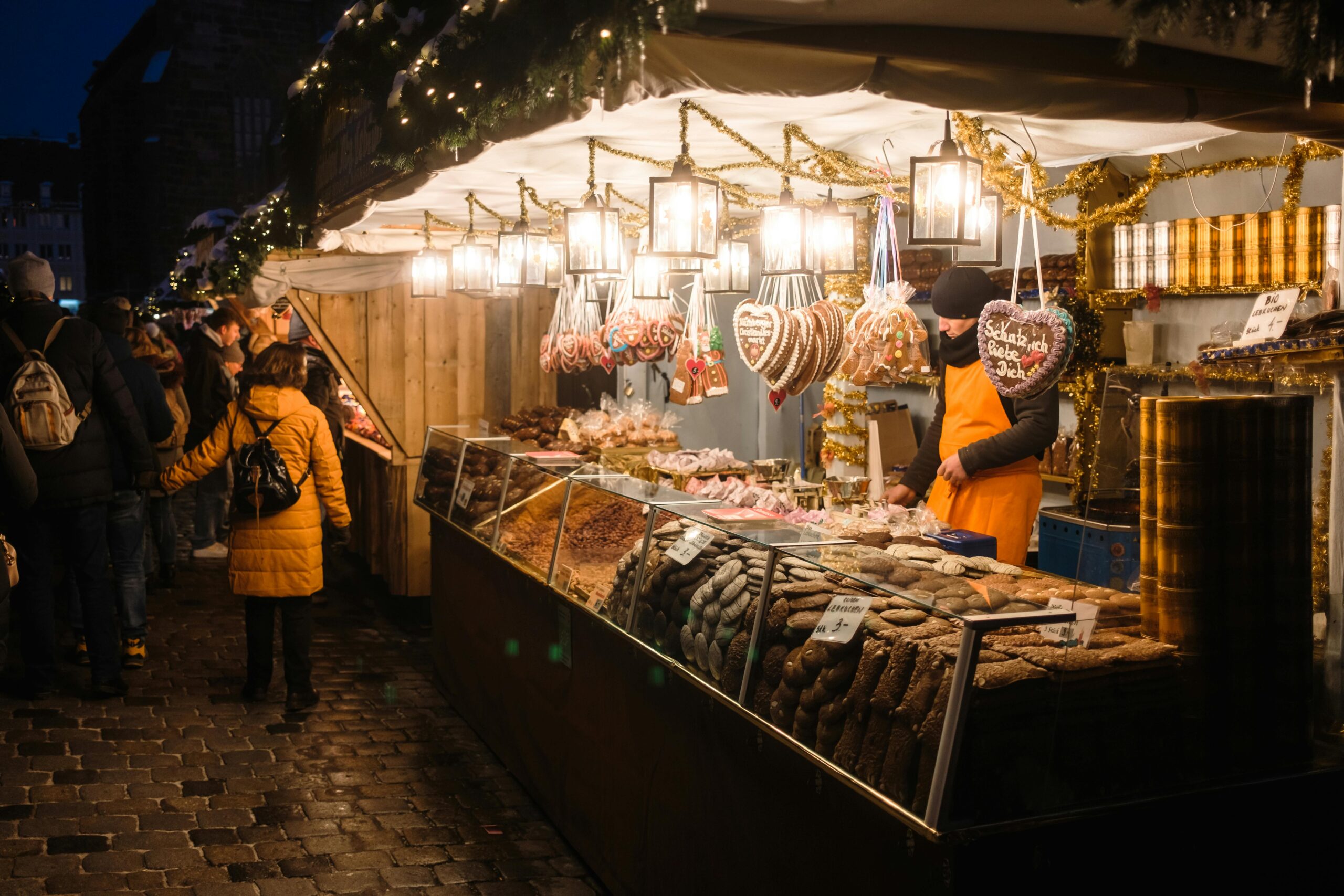
The main Christmas market at Marienplatz, set in front of the New Town Hall, is Munich’s most traditional and centrally located market.
You can expect:
- A large Christmas tree and historic surroundings
- Classic wooden stalls selling ornaments and gifts
- Brass bands and choirs performing regularly
It’s busiest in the early evening, but the square is large enough to handle crowds better than smaller medieval towns.
Medieval and alternative markets
One of Munich’s strengths is its variety. Beyond Marienplatz, you’ll find markets with very different vibes, such as:
- Medieval Christmas Market near Odeonsplatz, with costumed vendors and old-style food
- Tollwood Winter Festival, which blends Christmas stalls with cultural performances, international food, and a more alternative crowd
These options are often mentioned in YouTube travel videos as highlights because they feel less repetitive than standard markets.
Food and drink highlights
Munich’s markets lean heavily into Bavarian comfort food, including:
- Sausages served with mustard and bread
- Roasted chestnuts and almonds
- Mulled wine alongside local beer and punch
Prices are slightly higher than in smaller towns, but quality is consistently good.
Crowd levels and timing
- Early afternoons are relaxed and ideal for browsing
- Early evenings are lively but manageable
- Late evenings quiet down faster than in cities like Berlin
Because markets are spread out, crowds rarely feel overwhelming.
Best for
- Travelers who want Christmas markets plus city life
- Visitors who enjoy variety and cultural events
- Trips where shopping, museums, and food are also priorities
Skip if
- You want a compact, storybook-style old town
- You prefer one iconic market over multiple smaller ones
Next, we’ll head to Berlin, where Christmas markets come in many different styles — from classic and elegant to quirky and alternative — depending on the neighborhood you choose.
VI. Berlin Christmas Markets (Best for Variety and Different Styles)
Berlin doesn’t have one defining Christmas market — and that’s exactly why many travelers love it. Instead of a single historic square, the city offers dozens of Christmas markets spread across different neighborhoods, each with its own style, crowd, and atmosphere.
If you enjoy choice and don’t mind a bit of planning, Berlin gives you the widest range of Christmas market experiences in Germany.
How Berlin’s markets work
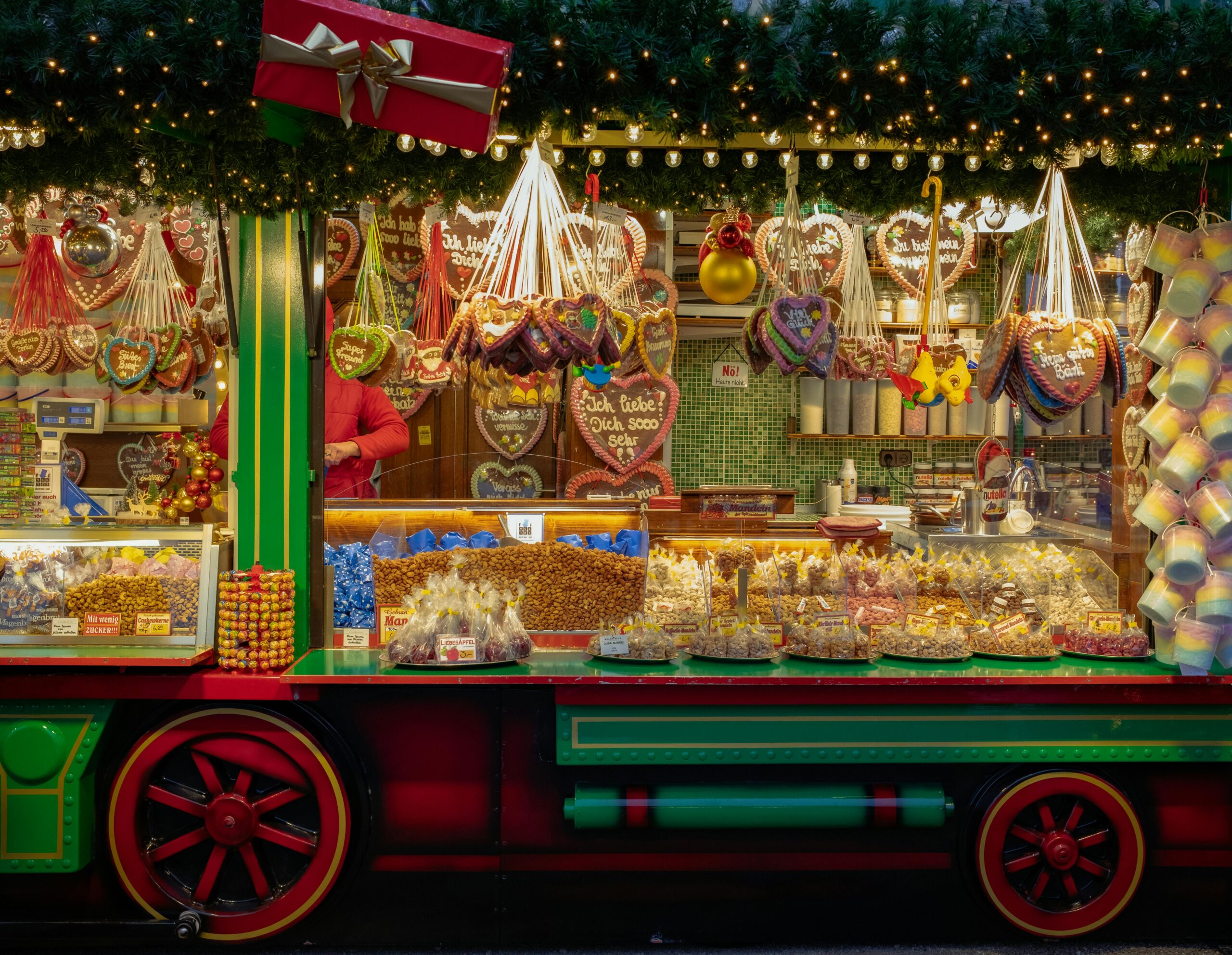
Berlin is large, and its markets reflect that. Each one feels tied to its surrounding neighborhood rather than designed purely for tourists. This means the experience can change dramatically depending on where you go.
Some markets feel elegant and traditional. Others are creative, alternative, or even quirky. The key is choosing the right ones instead of trying to see too many.
Popular and well-loved markets
A few Berlin Christmas markets consistently stand out in traveler discussions and videos:
- Gendarmenmarkt (now often hosted nearby due to renovations)
Known for its elegant setting, higher-quality crafts, and live performances. It’s one of the most refined Christmas markets in Germany. - Charlottenburg Palace Christmas Market
Set in front of a baroque palace, this market feels romantic and visually impressive, especially after dark. - Alexanderplatz and Potsdamer Platz markets
More modern and lively, often with ice rinks and attractions, making them popular with younger travelers.
Alternative and local-feeling options
Berlin also shines when it comes to non-traditional markets. These are frequently mentioned on Reddit and social media as memorable because they feel less touristy.
Examples include:
- Neighborhood markets with local food stalls and handmade goods
- Smaller evening markets that attract Berliners after work
- Markets with a creative or design-focused twist
These don’t always appear in classic guidebooks, but they often leave a stronger impression.
Food and drink scene
Berlin’s Christmas markets offer one of the most diverse food selections in Germany. Alongside classic sausages and glühwein, you’ll find:
- International street food
- Vegan and vegetarian-friendly options
- Creative twists on traditional Christmas snacks
This makes Berlin a good choice if food variety matters to you.
Crowd levels and timing
- Crowds vary heavily by market and neighborhood
- Weekdays are generally relaxed
- Some markets get busy early in the evening, then thin out later
Because markets are spread across the city, crowds rarely feel as intense as in places like Nuremberg.
Best for
- Travelers who want variety over tradition
- Repeat visitors to Germany
- Younger travelers or those who enjoy alternative scenes
Skip if
- You want a compact, classic Christmas postcard setting
- You prefer seeing everything on foot without public transport
Next, we’ll slow things down and visit Rothenburg ob der Tauber, one of Germany’s most storybook Christmas market destinations and a favorite for travelers looking for a truly romantic atmosphere.
VII. Rothenburg ob der Tauber (Most Storybook-Like Christmas Market)
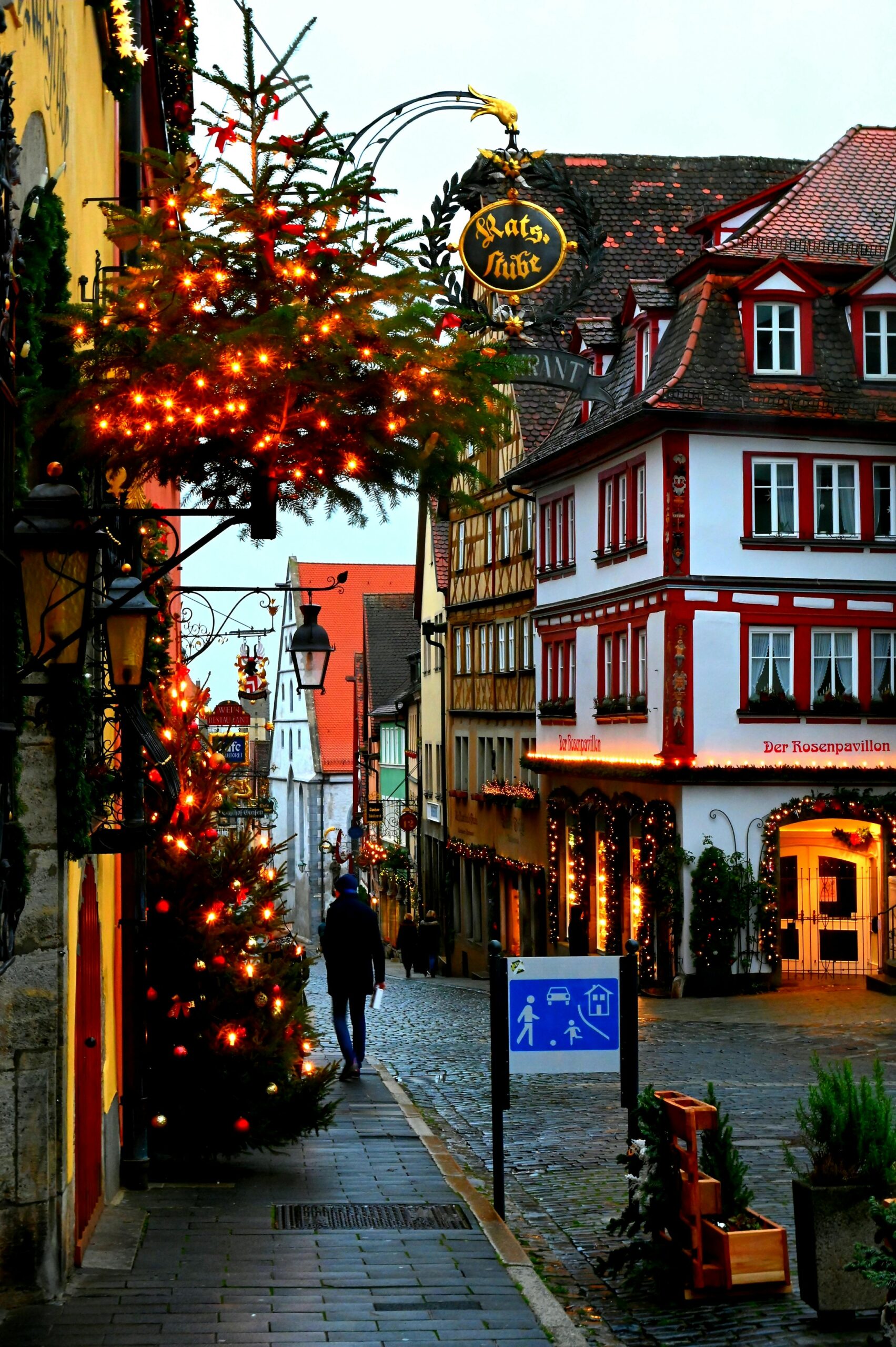
If your idea of the perfect Christmas market looks like a postcard — half-timbered houses, medieval walls, and narrow cobblestone streets — Rothenburg ob der Tauber is hard to beat.
This small town in Bavaria feels like it was built for Christmas. While its market is much smaller than those in big cities, the atmosphere is exceptionally charming, especially in the early evening when the lights come on and the day-trippers leave.
Why Rothenburg feels special
Rothenburg is already one of Germany’s most picturesque towns, and during the Christmas season, that beauty is amplified rather than overwhelmed.
The Christmas market is held in the Marktplatz, surrounded by historic buildings that naturally frame the stalls. There’s no need for elaborate decorations — the town itself does the work.
Travelers often describe Rothenburg’s market as:
- Intimate and cozy rather than grand
- Visually stunning, especially at dusk
- More about atmosphere than shopping
What you’ll find at the market
Because of its size, Rothenburg’s market focuses on quality over quantity:
- Traditional ornaments and handmade gifts
- Local pastries and sweets
- Mulled wine enjoyed slowly rather than on the move
It’s a place to wander, take photos, and soak in the mood — not rush from stall to stall.
Crowd reality
Rothenburg is popular, and day trips can bring brief crowd surges in the afternoon. However:
- Evenings are much calmer once tour groups leave
- Staying overnight dramatically improves the experience
- Weekdays feel noticeably quieter than weekends
For many travelers, one night in Rothenburg becomes a highlight of their entire Germany trip.
How to fit Rothenburg into your itinerary
Rothenburg works best as:
- A 1-night stop between larger cities
- A romantic add-on to Munich or Nuremberg
- A contrast to big, busy markets
It pairs especially well with larger destinations where markets are more crowded and energetic.
Best for
- Couples and photographers
- Travelers seeking a romantic, fairytale setting
- Those who prefer atmosphere over scale
Skip if
- You want a large market with many food options
- You dislike small-town logistics and limited transport
Next, we’ll look beyond the headline destinations and explore hidden-gem Christmas markets in Germany that many first-time visitors overlook — but often end up loving the most.
VIII. Hidden-Gem Christmas Markets in Germany (Quieter, More Local)
After visiting one or two famous markets, many travelers realize something important: the most memorable Christmas markets in Germany are often the smaller ones. These markets may not dominate Instagram or guidebooks, but they consistently earn praise on Reddit and travel forums for feeling calmer, more authentic, and less commercial.
If you want to slow down and actually enjoy the atmosphere, these hidden gems are worth adding to your itinerary.
Esslingen am Neckar (Best Medieval-Style Market)
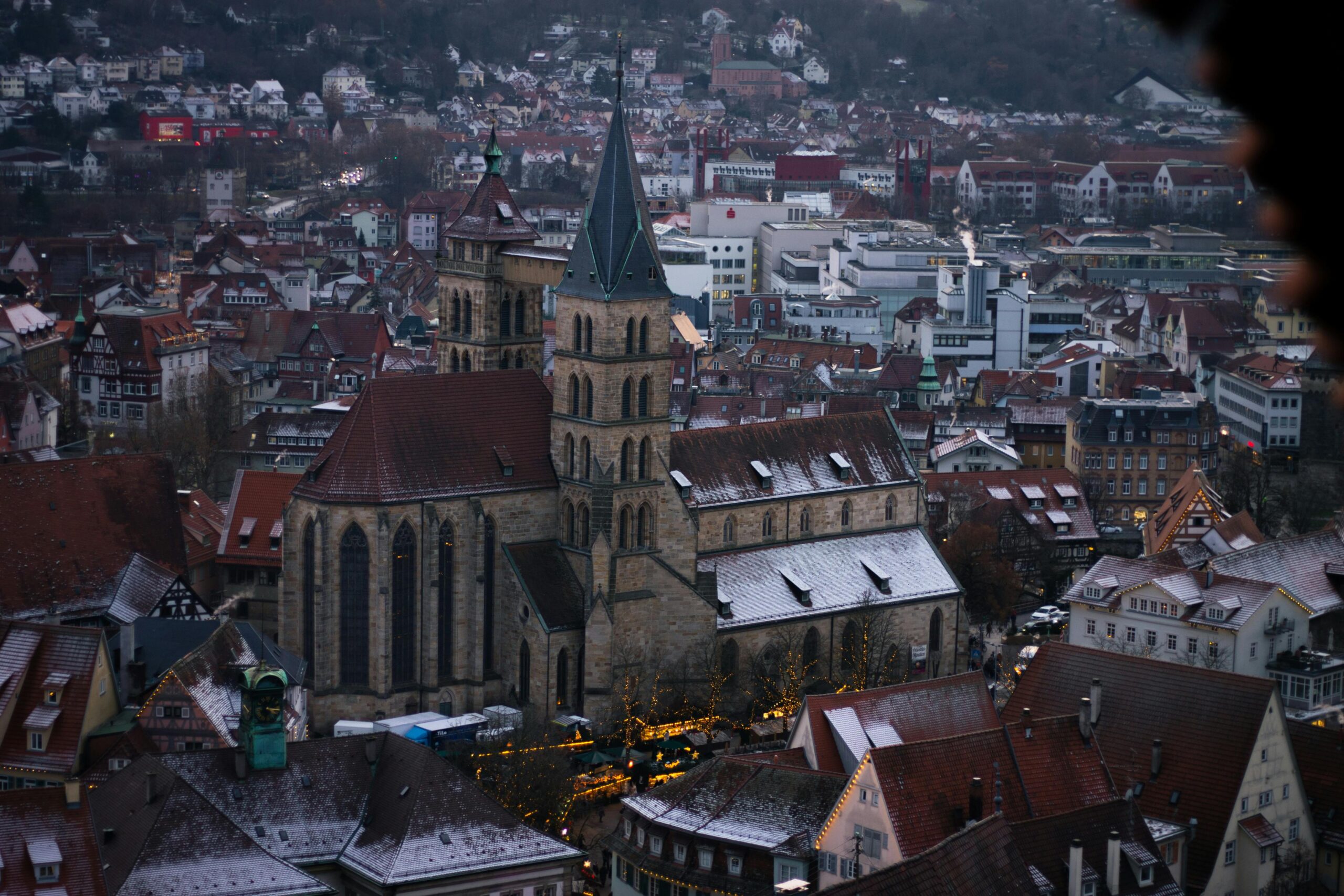
Located near Stuttgart, Esslingen’s medieval Christmas market is one of Germany’s most distinctive.
What sets it apart:
- Vendors wear medieval costumes
- Food is cooked over open fires
- Wooden stalls and torchlight create a historic atmosphere
Unlike themed markets in big cities, Esslingen feels immersive rather than gimmicky. It’s especially popular in the late afternoon when the lights and fire pits come alive.
Best tip: Visit on a weekday to avoid regional weekend crowds.
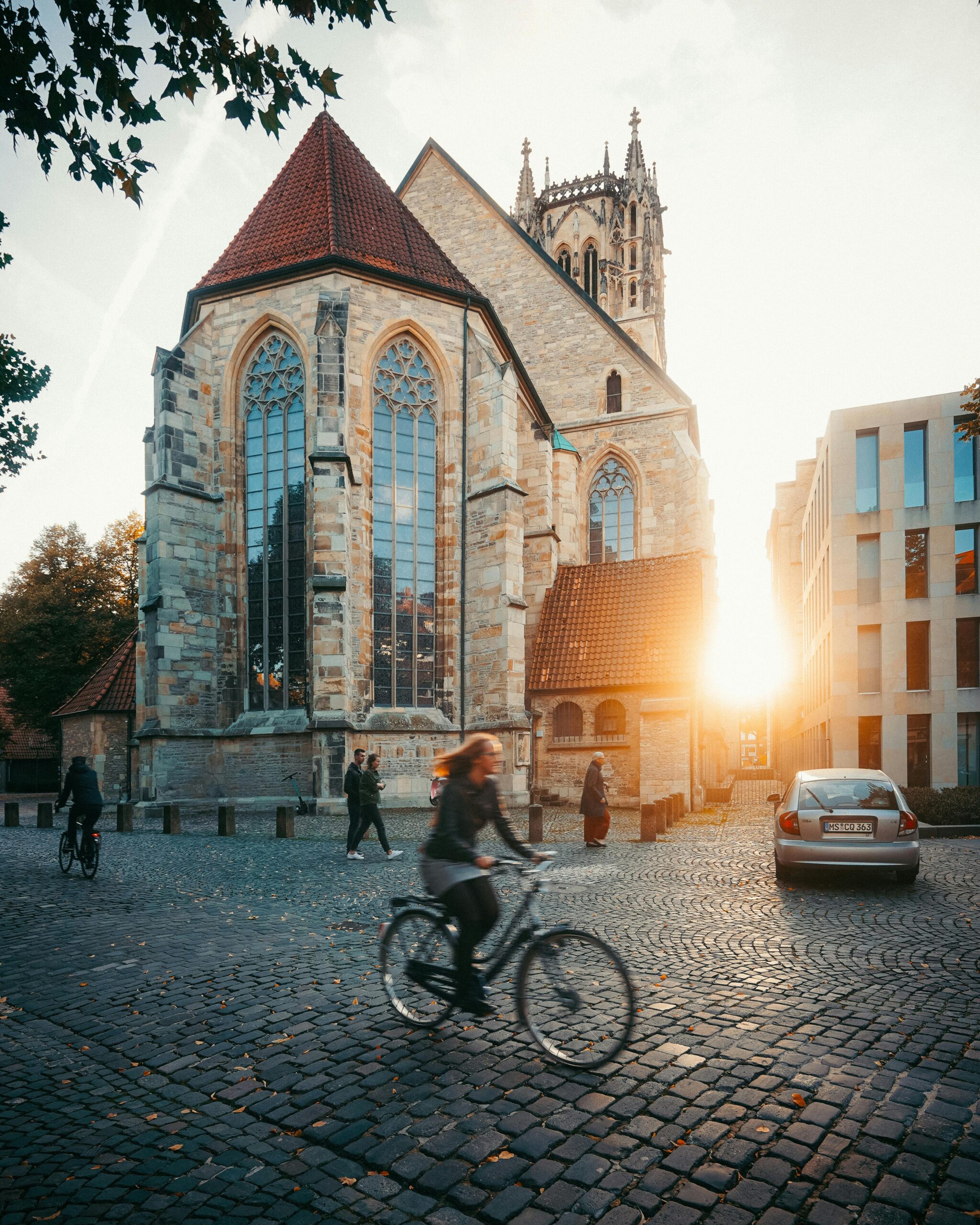
Münster (Underrated and Easy to Explore)
Münster rarely appears on first-time travel lists, but it’s frequently recommended by experienced visitors.
Why people love it:
- Several small Christmas markets spread across the city center
- Easy to walk between markets
- Relaxed, friendly atmosphere with fewer tour groups
Münster is ideal if you want to market-hop without stress, similar to Cologne but on a smaller scale.
Lübeck (Northern Fairytale Feel)
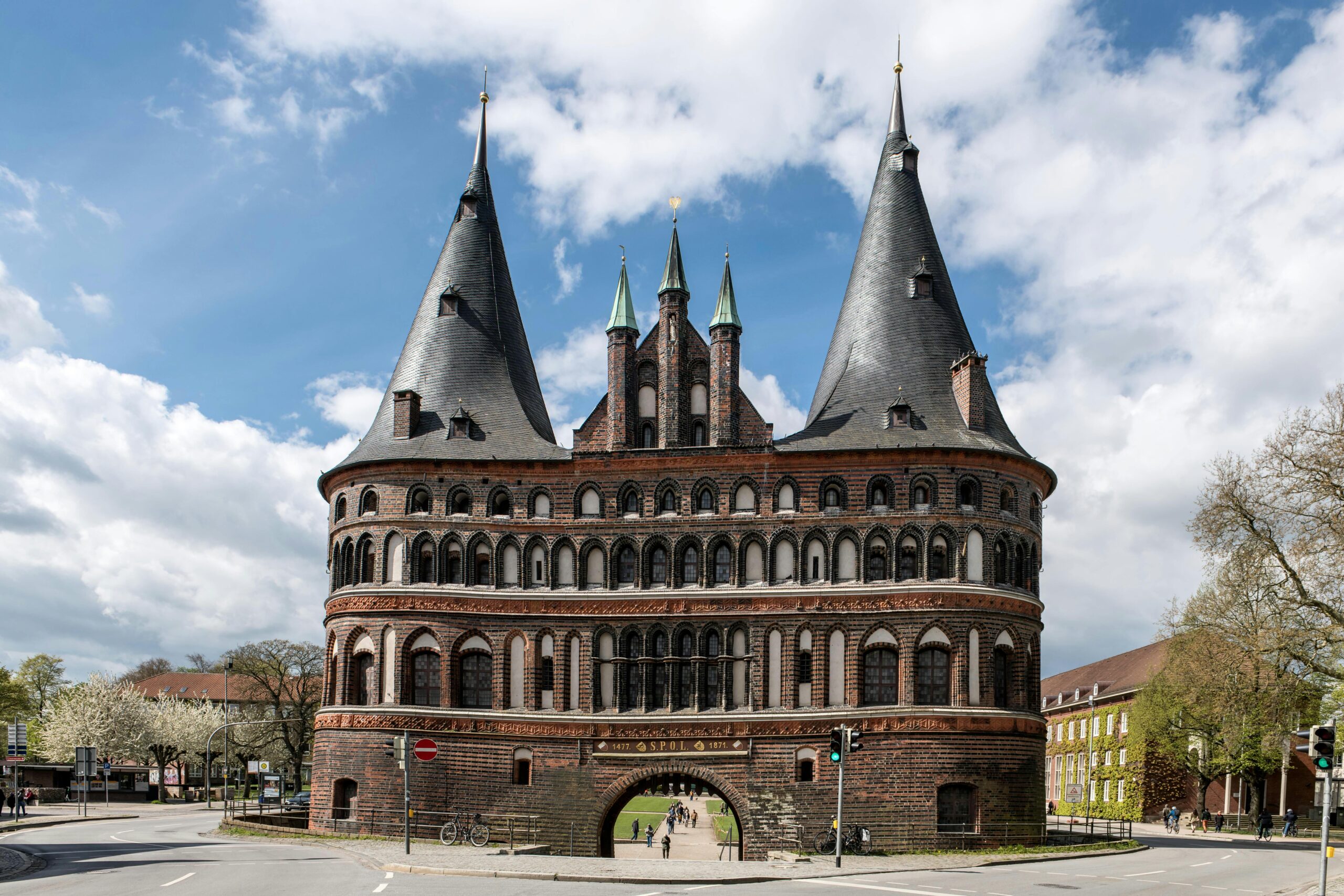
In northern Germany, Lübeck offers one of the most charming Christmas market settings outside Bavaria.
Highlights include:
- A UNESCO-listed old town
- Brick Gothic architecture that looks magical at night
- A cozy, less crowded feel compared to southern markets
Lübeck’s market pairs well with winter trips to Hamburg or Berlin and is often featured in YouTube walking tours for its fairytale look.
Heidelberg (Romantic Without the Chaos)
Heidelberg’s Christmas market stretches through several scenic squares in the old town, with views of the castle above.
Why it works:
- Beautiful setting along the river
- Multiple small markets rather than one large crowd point
- Romantic vibe without overwhelming scale
It’s a solid alternative if you want charm but prefer not to deal with the intensity of places like Nuremberg.
Why smaller markets often win
Across traveler discussions, the same pattern appears:
- Less crowd pressure
- More interaction with vendors
- A stronger sense of local life
Many seasoned travelers recommend this strategy:
Visit one famous market for the “iconic” experience, then spend the rest of your time in smaller towns.
Next, we’ll cover when to visit Christmas markets in Germany, including timing tips that can dramatically improve your experience — even in the most popular cities.
IX. Best Time to Visit Christmas Markets in Germany
Timing matters just as much as destination when it comes to Christmas markets in Germany. Visit at the right time, and even the most famous markets feel magical. Visit at the wrong time, and the experience can feel rushed, crowded, and exhausting.
Here’s how to plan your timing smartly.
When do Christmas markets open and close?
Most Christmas markets in Germany:
- Open: Late November (usually the last week)
- Peak season: Early to mid-December
- Close: December 23 or 24
A few larger cities keep selected markets open until the end of December, but the traditional atmosphere is strongest before Christmas Eve.
The best weeks to visit
Early December (Week 1–2 of December)
This is the sweet spot for most travelers.
- Full decorations and festive energy
- Fewer crowds than the final week
- Better accommodation availability
Late November
A good option if you want:
- Fewer tourists
- Lower prices
- A calmer, more local feel
Some markets may feel slightly quieter at this stage, but the charm is still there.
Week before Christmas (Dec 18–23)
This is the most crowded period.
- Markets are at their busiest
- Prices are higher
- The atmosphere is lively but hectic
Visit during this week only if crowds don’t bother you.
Weekdays vs weekends (this makes a huge difference)
Across traveler reports, one tip appears again and again:
Weekdays are significantly better than weekends.
- Monday to Thursday: Best time to visit any major market
- Friday evening: Crowds increase quickly
- Saturday: The busiest day almost everywhere
- Sunday: Still busy, but slightly calmer than Saturday
If your schedule allows, plan market visits for weekday afternoons and early evenings.
Best time of day
- Afternoon (2–4 PM): Ideal for browsing stalls and shopping
- Early evening (4:30–6 PM): Best balance of lights and atmosphere
- Late evening: Can be crowded in big cities, quiet in small towns
Many experienced travelers visit the same market twice: once in daylight, once after dark.
Weather expectations
Germany in December is cold, but usually manageable:
- Temperatures often range from 0–5°C (32–41°F)
- Snow adds magic but isn’t guaranteed
- Dress warmly and plan short outdoor visits with breaks
Next, we’ll bring everything together with easy-to-follow Germany Christmas market itineraries, so you can turn these ideas into a smooth, realistic travel plan.
X. Germany Christmas Market Itineraries (Easy, Realistic Routes)
Once you know which Christmas markets you want to visit and when to go, the final step is putting everything together into a route that feels enjoyable — not rushed. The good news is that Germany’s train system makes Christmas market trips surprisingly easy, even in winter.
Below are three proven itineraries, based on how most travelers actually move around Germany during Christmas season.
Itinerary 1: Cologne & Western Germany (4–5 Days)
Best for: First-time visitors, short trips, easy market hopping
Base: Cologne
Why it works:
Cologne offers multiple major Christmas markets in one city, so you spend less time traveling and more time enjoying the atmosphere.
Suggested plan:
- Day 1: Arrive in Cologne, evening visit to Cologne Cathedral Christmas Market
- Day 2: Market hop between Heinzels Wintermärchen, Old Town, and the Rhine promenade
- Day 3: Day trip to a nearby town (Bonn or Düsseldorf) for a smaller, local-feeling market
- Day 4: Optional extra market visit or relaxed departure
This itinerary is ideal if you want a festive experience without changing hotels too often.
Itinerary 2: Bavaria’s Classics (5–7 Days)
Best for: Iconic markets, classic Germany experience
Bases: Munich + Nuremberg
Why it works:
This route combines Bavaria’s most famous Christmas markets with big-city variety.
Suggested plan:
- Days 1–3: Munich
- Marienplatz Christmas Market
- Medieval Christmas Market or Tollwood Festival
- Days 4–5: Nuremberg
- Christkindlesmarkt (weekday visit recommended)
- Evening stroll through the old town
- Optional add-on: Day trip to Fürth or Rothenburg ob der Tauber
This itinerary balances headline markets with smaller-town charm.
Itinerary 3: Dresden & Saxony (4–6 Days)
Best for: Tradition, crafts, calmer atmosphere
Base: Dresden
Why it works:
Dresden offers one of the most traditional Christmas markets in Germany and access to nearby craft towns.
Suggested plan:
- Days 1–3: Dresden
- Striezelmarkt
- One or two neighborhood markets
- Days 4–5: Day trips to smaller Saxon towns or Ore Mountains villages
- Optional: Extend your stay for regional Christmas craft shopping
This route is ideal if you prefer tradition over crowds.
A simple itinerary rule that works
Across traveler reports, one strategy stands out:
Choose one famous market, then add one or two smaller markets nearby.
This approach gives you the iconic experience without letting crowds dominate your trip.
XI. FAQs About Visiting Christmas Markets in Germany
What are the best Christmas markets to visit in Germany?
The best Christmas markets in Germany depend on what kind of experience you’re looking for.
If you want iconic and traditional, markets like Nuremberg Christkindlesmarkt and Dresden Striezelmarkt are the most famous.
If you prefer variety and flexibility, Cologne and Munich are excellent because they offer multiple markets in one city.
For a more storybook, local feel, smaller towns such as Rothenburg ob der Tauber, Esslingen, and Heidelberg are often favorites, especially for travelers who want charm without overwhelming crowds.
Many experienced travelers recommend visiting one famous market and then adding one or two smaller towns for balance.
How do I travel between cities, and should I book transportation in advance?
Germany’s train network is the easiest and most efficient way to travel between Christmas market cities.
- Trains are reliable, frequent, and connect all major destinations
- For longer routes, booking in advance can save money and guarantee seats
- Regional trains work well for short day trips to smaller towns
Some travelers use monthly or regional public transport passes, but for visitors hopping between cities, booking standard train tickets online is usually the simplest option. During December weekends, advance booking is recommended.
Do I need to book hotels and flights in advance?
Yes. December is a mini peak season in Germany because of Christmas markets.
- Flights and hotels often fill up early
- Prices rise closer to Christmas
- Smaller towns have limited accommodation options
To avoid stress and higher costs, it’s best to book at least 2–3 months in advance, especially if you’re traveling in early or mid-December.
Will I be able to communicate if I don’t speak German?
Yes, in most cases.
- English is widely spoken in major cities, hotels, restaurants, and tourist areas
- In smaller towns, English may be more limited, but basic communication is usually fine
Learning a few simple German phrases (hello, thank you, please) is helpful and appreciated, but not required for most travelers.
What are opening hours like during Christmas (Dec 24–26) and on Sundays?
This is very important to plan for.
- Sundays: Most shops are closed, but Christmas markets, cafés, and restaurants usually remain open
- December 24 (Christmas Eve): Markets and shops close early
- December 25–26: Almost all shops are closed; some restaurants operate with limited hours
Plan shopping and travel logistics before December 24, and expect a quieter, more local atmosphere during Christmas Day and Boxing Day.
How cold does it get in Germany in December, and what should I pack?
Germany is cold but manageable in December.
- Typical temperatures range from 0°C to 6°C (32°F to 43°F)
- Snow is possible but not guaranteed
Pack:
- A warm, insulated coat
- Sweaters or thermal layers
- Waterproof shoes or boots
- Gloves, scarf, and a hat
Standing outdoors at markets for long periods makes good layering essential.
Which regions are most likely to have snow?
If you’re hoping for a white Christmas, your best chances are in:
- The Bavarian Alps (Zugspitze region)
- The Black Forest
- Higher-elevation towns in southern Germany
- Cities like Berlin, Cologne, or Hamburg may get snow, but it’s less predictable.
How early does it get dark in December?
Daylight is limited in winter.
- Expect about 8 hours of daylight
- Sunset can be as early as 4:00 PM
This works well for Christmas market trips because markets look best after dark. Plan sightseeing for the morning and early afternoon, and save evenings for markets.
What foods and drinks should I try at German Christmas markets?
Some must-try classics include:
- Glühwein (mulled wine) and Feuerzangenbowle
- Bratwurst and regional sausages
- Lebkuchen (gingerbread), especially in Nuremberg
- Stollen, particularly in Dresden
- Roasted almonds, chestnuts, and waffles
Each region has its own specialties, so trying local food is part of the experience.
Are there non-Christmas activities available?
Yes. Christmas markets don’t have to be the only focus.
Popular winter activities include:
- Visiting castles like Neuschwanstein
- Museums and indoor attractions in major cities
- Thermal baths such as Baden-Baden
- Ice skating or winter walks
- Skiing and snow activities in southern Germany
These are great options during daytime or on very cold days.
Is it safe to travel to Germany during Christmas season?
Germany is considered very safe, even during busy holiday periods.
- Violent crime is rare
- The main risk is pickpocketing in crowded markets and train stations
Basic precautions like keeping valuables secure and staying aware in crowds are usually sufficient.
XII. Conclusion: Choosing the Right Christmas Markets in Germany
Germany’s Christmas markets are special because they offer more than just festive decorations. Each market reflects local traditions, regional food, and a different pace of winter life. Whether you’re drawn to iconic markets like Nuremberg, traditional favorites such as Dresden, or storybook towns like Rothenburg ob der Tauber, the best experience comes from choosing markets that match your travel style.
For most travelers, the sweet spot is simple: visit one famous market for the classic experience, then spend time in smaller towns where the atmosphere feels calmer and more personal. Plan for weekday visits when possible, dress warmly, and leave room in your schedule to wander without rushing. With a little planning, Christmas market season in Germany can feel magical rather than overwhelming.
If you’re visiting Germany in December, staying connected also makes the trip smoother. From checking train schedules and navigating between markets to finding nearby cafés or your next hotel, having reliable internet helps you travel with confidence.
Stay Connected in Germany with Gohub eSIM
If you want a hassle-free way to stay online during your trip, Gohub’s Germany eSIM lets you connect the moment you land — no physical SIM cards, no roaming surprises.
With fast data across Germany and other European countries, you can:
- Use maps and public transport apps with ease
- Check Christmas market locations and opening hours in real time
- Stay in touch with travel companions and family
It’s a simple setup that keeps your focus where it belongs — enjoying Germany’s Christmas markets, not worrying about connectivity.
Related Articles;
- Top 5 Christmas Destinations to Visit This Holiday Season
- Lapland Travel Guide: Santa Claus Village in Rovaniemi
- Northern Lights in Lapland at Christmas: What You Need to Know
- New York in December: Rockefeller Tree & Holiday Lights Guide